Tapan Singhel
In a country with severe insurance gap, under-insurance is a faceless behemoth. To the uninitiated, a general insurance policy offers protection to your assets such as health, motor vehicles, property etc. against impending losses. The cover is provided against the sum insured declared, at the time of policy issuance, chosen by the insured, which is the maximum liability to be incurred by the insurance company in the event of a total loss.
As insurance is a legal contract, the insured is expected to insure his assets for their full value and pay premium on that. If in the event of a claim it is found that the asset has not been insured for its full value, the amount of loss payable is proportionately reduced. This is called the Condition of Average, or under-insurance as it is popularly known.
According to this condition, if the sum insured at the time of loss is less than the actual value of the asset, insurers are liable to pay only the proportionate loss that the sum insured bears to the actual value.
Stating the problem
While India’s current insurance penetration rate stands at 3.42 percent, far below the global average of 6.2 percent, the issue is not limited to penetration, but also extends to people who usually do not end up buying appropriate amount of insurance. Let’s take the example of a health insurance policy. With the rising medical costs, an average trip to the hospital will amount to a few thousands grands, but, in case of a critical illness, the bills usually run into lakhs of rupees.
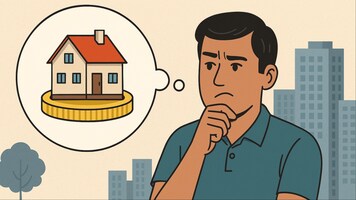
With an average sum insured of Rs 3 lakh, a customer when faced with such a situation is highly underinsured. Similarly, take the case of a home insurance. While it takes years of savings to build a home, a small mishap can gut it down, or it can be washed away in a flood, or ruined by an earthquake. With just 1 percent home insurance penetration in India, the insurance gap is simply appalling. And those who have or want an insurance protection need to be educated on the benefits of availing an Agreed Value Policy rather than one based solely upon the cost of construction of the house. If the sum insured declared is not sufficient enough, and doesn’t take into account the depreciation/ appreciation of the property, significant underinsurance may be applicable during the time of a claims scenario.
Insurance penetration amongst the educated urban class is on the rise, but, majority of the people belonging to the lower income groups are largely unaware of this financial protection tool and its benefits. These people at the bottom of the economic pyramid who encompass majority of the population remain uninsured. This segment suffers the most at the time of floods when their homes are wiped off and they are left stranded due to lack of home insurance or a when a family member falls sick they end up having to spend their life’s savings, sell their jewellery or keep their homes on mortgage to get the treatment due to lack of health insurance. A lack of financial literacy, further leads them into not selecting an appropriate cover for themselves, leaving them open to the risk of underinsurance.
Possible Remedies
Underinsurance predominantly stems due to lack of understanding. People fail to realize that the cost involved in the purchase of the right insurance is far lesser than bearing the repercussions of not having the adequate insurance in the long run.
You may be cost cutting in various areas to save some money, but that shouldn’t be the approach while buying insurance. Being underinsured is as bad as being uninsured. In a bid to reduce the insurance premium people fail to realize that they will have to shell out money out of their pocket at the time of claim since their insurance policy doesn’t provide them sufficient cover. They tend to neglect their requirements while buying and customizing insurance according to their needs, and very little time is spent on buying a policy.
The approach and perception of people towards insurance needs to change. It needs to be perceived as an investment that secures you towards any unforeseen and unfortunate event, and not just as a tax saving tool. Customers often feel that if they don’t claim, they get no returns for the premium they have paid so far. Rather than considering it as a passive investment, insurance should be considered as greater contribution towards the society, wherein many pool in to pay for the few in distress. Thus, it not just helps others but also secures your future in the time of need. Think of it as community protection.
Public Private Partnerships in Insurance
A mass transition in attitude towards the possible benefits of insurance can be bought only through awareness created and implemented by the joint efforts of both the Government and the insurance companies. While the Government is focusing on providing affordable housing and housing for all, it should also introduce an index based scheme for home insurance in synergy with insurers to protect homes of people against natural catastrophes. A pre-decided amount of rainfall in a flood prone area or an earthquake of a certain magnitude in the earthquake prone parts of the country, if crossed, could trigger the property damage claim making the insurance company liable to pay.
It should also make health insurance mandatory for employers, both in organized and unorganized sector. Currently, we have an Employee’s State Insurance scheme for the organized sector however it remains limited to a certain segment of employees. Besides, a national health scheme by the government in line with the Pradhan Mantri Suraksha Bima Yojana (PMSBY) especially for those from the underprivileged sections of the society would ensure that a sizeable population is covered against unforeseen medical exigencies. With a few states implementing such mass schemes for their BPL population, general insurers also need to brace up with technology backed solutions to reach out to the remotest corners of the country. Effective distribution strategies and easy to understand products will help the country bridge its insurance gap.
A word with the Consumer
While the government and insurance companies do their best to get you a financial protection through insurance, make sure to always check for the adequacy of the sum insured. Often, the root cause to under-insurance is cited as the insured being unaware of the policy terms and conditions. Ironically, these are the same terms and conditions that are always mentioned on the face of the policy wordings as regulated by the IRDAI, casually ignored by the policy holders. In the internet era, where information is just a click away, understanding what your insurance policy covers or does not cover is not an elephantine task.
With insurance companies just a phone call away, clarifications and endorsements are easy, albeit you take adequate steps in this direction. When your financial protection costs you no more than a cup of coffee every day, make sure you use it to its maximum potential. An educated customer, shall always be an insurer’s best customer.
The writer is MD & CEO, Bajaj Allianz General Insurance
Discover the latest Business News, Sensex, and Nifty updates. Obtain Personal Finance insights, tax queries, and expert opinions on Moneycontrol or download the Moneycontrol App to stay updated!

Find the best of Al News in one place, specially curated for you every weekend.
Stay on top of the latest tech trends and biggest startup news.