






Joe Biden’s visit to Kyiv just before the first anniversary of the start of the Russia-Ukraine war was a surprise. But it was not unexpected. Presidents of the United States of America have a habit of declaring victory even before the real battle has begun. Iraq is an example. Six weeks after President George W Bush launched his invasion of Iraq, Bush stood on the deck of the US naval ship Abraham Lincoln on May 1, 2003, and announced that his country had won the priciest of the several wars during his two-term presidency. A banner, which proclaimed “Mission Accomplished,” said it all. What a blunder it was! The battle for Iraq – more importantly for the hearts and minds of the Iraqi people – had barely begun then.
Subsequent to the premature declaration by Bush, American deaths owing to the Iraq war rose by a phenomenal 32 times by the time US combat operations were ended by President Barack Obama. The once prosperous, orderly and disciplined country of Iraq – with its blemishes, no doubt – was wrecked and ruined.
Biden’s visit to Kyiv, which was organised under a cloak of secrecy will be no different in its long-term outcome. The world gets to hear only one side of the Ukraine war story because Russian media has been ruthlessly blocked by the West in most of the world and Moscow’s version of events in and surrounding Ukraine is subject to arbitrary censorship by those in the US and Europe, who have a stranglehold over global media narratives. Biden’s mission in Ukraine is far from accomplished and is unlikely to be accomplished, as one looks back at one year of the conflict.
Message To The WorldBiden’s hug of Ukraine’s President Volodymyr Zelensky and their dramatic joint appearance in front of Kyiv’s enduring symbol, its famed, gold-domed St Michael’s monastery was meant less to please Zelensky and more to send a critical message to the rest of the world: that the war against Russia is going well and that for the US, as a superpower, it is business as usual both in Ukraine and elsewhere.
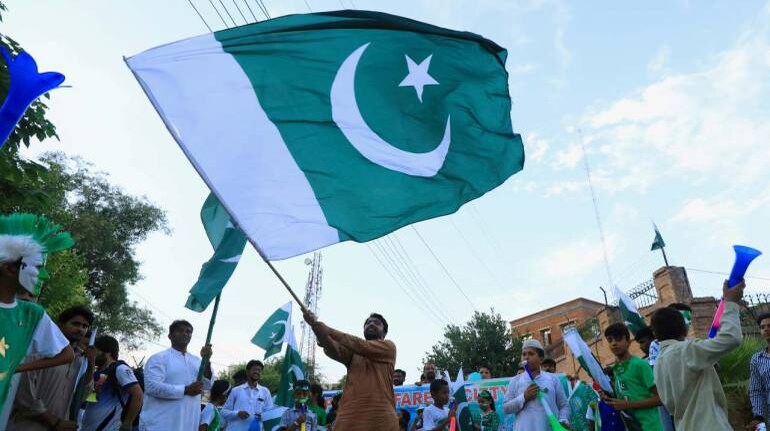
It was not a coincidence that as Biden was preparing for his secret landing in Kyiv, Afghanistan’s one-and-a-half years of relative calm was ending, and Pakistan was once again being rocked by sectarian violence. Nothing happens in Afghanistan without the knowledge and involvement of the big powers. And Pakistan has offered itself since the 1950s as a willing pawn in the “Great Game” by powerful countries in its backyard as it were. As Washington gets bogged down in Ukraine along with its North Atlantic Treaty Organisation (NATO) allies, it sees important parts of the rest of the world slipping out of the grip it has had on them since the end of the Cold War three decades ago. The White House nearly lost several Pacific Islands to China recently, but it has managed to salvage its influence through a series of actions since September. Afghanistan is another key strategic slot, where inaction by Washington since the Taliban takeover in 2021 has cost the US dearly in terms of its geopolitical goals.
The Taliban ChallengeNo country has recognised the incumbent Taliban government in Kabul unlike during the first takeover of Afghanistan by the then nascent militia in 1996. Therefore, the US does not want to act alone and do business with the Taliban, although a variety of options for facilitating this have been proposed by policy wonks inside the Joe Biden administration and outside. Yet, the US cannot just sit back and let Afghanistan’s super-rich mineral resources and other hidden wealth fall into China’s hands, as is happening now. Nor can it let Russia gain the strategic upper hand in Kabul, which is at the crossroads of great power games in Asia, especially South-Central Asia.
This month, a Russian veteran in Afghan policy, Zamir Kabulov, set the cat among the pigeons in Washington and in Brussels – the European Union headquarters – by proposing a Group of Five (G5) to stabilise
Afghanistan. Kabulov, who is now Russian President Vladimir Putin’s Special Envoy on Afghanistan said this new G5 should be made up of India, Pakistan, Iran, China and Russia. Barring Pakistan, these are the countries which helped organise a formidable resistance against the Taliban since the creation of the militia by Pakistan in the years after the Soviet withdrawal from Kabul. A revival of this arrangement – and including Pakistan in it – would mean the US cannot covet Kabul economically or politically in the short to medium-term future, although nothing is ever predictable in Afghanistan.
Afghanistan and Pakistan have been convulsed by new waves of death and destruction because the Joe Biden administration has concluded that in order to thwart Russia and regain its foothold in Kabul, there has to be another familiar episode of regime change there. There are enough straws in the wind that suggest a regime change in the next year or two orchestrated by Washington. But the Taliban will not give up power easily, which would mean a prolonged period of ascending violence.
Saudi Arabia has already relocated its diplomats out of Kabul for security reasons, but under the fiction that they have been pulled out for training. Other embassies are considering similar action, according to the diplomatic grapevine. When there are convulsions in Afghanistan, a fallout in Pakistan is inevitable. The closure of the main border crossing between Pakistan and Afghanistan at Torkham, amidst reports of gunfire, on February 20 may be preventive action by Islamabad to stem such fallout. For India’s volatile neighbourhood, the first anniversary of the Ukraine war may mean a new chapter of violence in Afghanistan and further destabilisation of Pakistan.
KP Nayar has extensively covered West Asia and reported from Washington as a foreign correspondent for 15 years. Views are personal and do not represent the stand of this publication.Discover the latest Business News, Sensex, and Nifty updates. Obtain Personal Finance insights, tax queries, and expert opinions on Moneycontrol or download the Moneycontrol App to stay updated!
Find the best of Al News in one place, specially curated for you every weekend.
Stay on top of the latest tech trends and biggest startup news.




