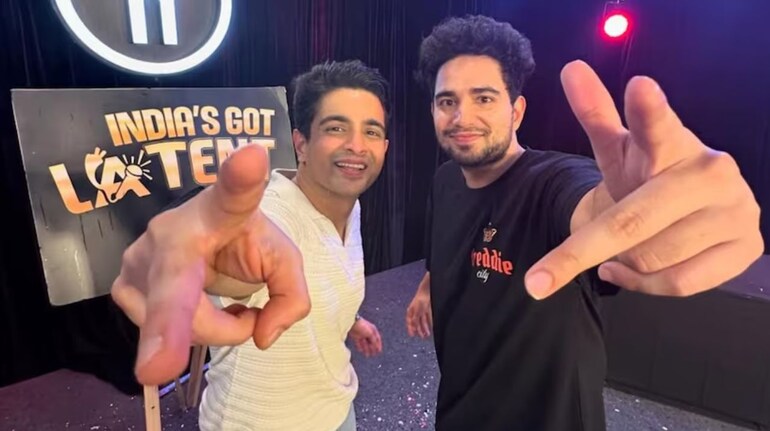
The recent controversy involving the ‘India Got Latent’ show and the strong reaction to it highlights the deteriorating quality of public discourse. Obscenity and vulgarity are being pushed in the name of entertainment on social media platforms as well as OTTs. The biggest challenge is the excessive use of combative language, leading to a deterioration in the quality of discussions, especially those related to the value systems in Indian society.
In this context, it would be pertinent to revisit the ancient Indian tradition of debate, traditionally known as ‘Vaad’. This tradition can offer valuable lessons in the contemporary context as well.
Vaad is rooted in the pursuit of truth, unlike the Western model of debating, which is rooted in competition. Wilhelm Halbfass (1940–2000), the famous German-born philosopher and Indologist, pointed out the problem we face today in the preface of India and Europe: An Essay in Understanding (German edition, 1988): “Modern Indian thought finds itself in a historical context created by Europe, and it has difficulties speaking for itself. Even in its self-representation or self-assertion, it speaks to a large extent in European idioms.”
In the Western model of debate, there has to be a winner and a loser. However, this was never the case with the Indian tradition. It did not follow a unidirectional approach. It embraced both—Samvada (dialogue and communication) and Vivada (disagreement and debate).
The tradition of Vaad has been central to India’s civilisational journey. There is ample evidence in our ancient texts, like the Mahabharata, Ramayana, and Upanishads, where intense debates took place, and the outcome was manifested in the evolution of our philosophical and ethical frameworks that governed society, striking a fair balance between social duties, moral values, personal liberty, and freedom of expression. Radha Vallabh Tripathi aptly states in his seminal work Vada (Vaad): In Theory and Practice: “At the surface level, the culture of Vaad involves verbal duels, attacks, and even violence of speech. But at deeper levels, the Vaad culture imbibes values and harmony.”
“The Vaad traditions have not simply subsisted on refutation. They evolved methods for critiques of reasoning,” added Tripathi.
Vaad in the Ramayana
The Ramayana contains several instances of profound debates where differing viewpoints were discussed with intellectual rigour. Some key debates include the exchange between Sage Vashishta, Sri Rama, Bharat, and Jabali over the annulment of Rama’s exile. There is a detailed discussion between Sri Rama and Sita in Dandakaranya on the concepts of violence and non-violence. The dialogue between Sita and Sri Rama before Sita’s agnipariksha (trial by fire) is also worth reading. Lord Hanuman’s internal deliberation during his search for Sita in Lanka is a classic example of a perfect debate.
Vaad in the Upanishads
The Upanishads also provide numerous examples of philosophical debates. One of the most remarkable debates occurred around 1000 BCE in the court of King Janaka. Sage Yajnavalkya engaged with scholars on profound metaphysical questions in King Janaka’s court.
This debate has been recorded in the Brihadaranyaka Upanishad. It was particularly significant due to the participation of the philosopher and woman sage Gargi, who posed intricate questions to sage Yajnavalkya. Despite a fierce debate between the two, Gargi acknowledged her opponent's wisdom and urged the assembly to honour sage Yajnavalkya as the foremost scholar.
Interestingly, our Upanishads established structured methods for constructive debate. They seem to be the most relevant in the contemporary context. If we adopt them, the level of toxicity in our public discourse can surely be brought down.
For a constructive debate, according to our Upanishads, the following key elements need to be worked on:
1. Prashna – Initiating a dialogue through questions.
2. Anuprashna – Follow-up questions that emerge from discussions.
3. Anatiprashnanivarana – Avoiding excessive questioning that may divert from the main issue.
4. Vyakhya – Providing detailed explanations.
5. Anuvyakhya – Offering supplementary clarifications.
6. Drashtanta – Using illustrations to reinforce arguments.
7. Akhyayika – Narrating stories to elucidate concepts.
8. Urdhapravachana – Assessing a disciple’s level of understanding to facilitate deeper discussions.
Vaad in the Mahabharata
The Mahabharata has no dearth of enriching debates covering a wide range of issues such as life, death, governance, gender equality, duties of rulers, and responsibilities of citizens. One of the most significant debates is mentioned in the Shanti Parva. In this debate, there are 35 cantos in Sanskrit that explore the conflict between jnana (knowledge) and karma (action).
The infamous dice game between Kaurava prince Duryodhana and Pandava prince Yudhishthira led to a powerful debate in Duryodhana’s father King Dhritarashtra’s court, particularly when Draupadi was humiliated by Duryodhana. Draupadi, using her intellect and moral conviction, initiated a debate that forced even her adversaries to acknowledge the injustice. The arguments presented by Vikarna and Vidura in her defence against Duryodhana and Karna remain some of the most intense exchanges in Indian philosophical literature.
Dos and Don’ts
Another significant debate in the Mahabharata is the exchange between King Janaka and the philosopher Sulabha. In this debate, Sulabha identifies 18 flaws of speech that should be avoided in discussions. We can do well to follow them to avoid making our debates and discussions vitriolic, misinformed, vulgar, and obscene.
Sulabha categorises these flaws into two groups:
1) Structural and Stylistic Flaws
# Gurvarthasamutyam – Verbosity
# Paranmukhasukam – Lack of clarity
# Antram – Falsehood
# Trivargena Viruddham – Contradicting fundamental human values (Dharma, Artha, Kama)
# Asamkartam – Unrefined or ungrammatical speech
# Nyunam – Excessively brief statements
# Kastam – Use of strained or awkward phrases
# Vikramabhihatam – Arrogance in speech
# Sesam – Incompleteness in argumentation
# Niskaranam – Making unreasonable claims
2) Intentional Flaws in Expression
These flaws arise due to emotional biases such as:
# Kama – Lust
# Krodha – Anger
# Bhaya – Fear
# Lobha – Greed
# Dainya – Self-pity
# Anaryatva – Dishonour
# Hri – Hesitation or shyness
# Anukrosa – Pity-based argumentation
# Mana – Ego-driven speech
Virtues of Speech in Debate
The Mahabharata also highlights the essential virtues that enhance the effectiveness of arguments:
# Anapetarthata – Completeness
# Abhinnarthata – Coherence
# Nyayarthata – Just reasoning
# Anyunadhikya – Conciseness
# Slaksanata – Gracefulness
# Asandigdhata – Clarity and certainty
Additionally, Sulabha emphasises that not only the main debaters but also the interlocutors must adhere to certain qualities for a fruitful discussion. These include:
# Sauksmya – Precision
# Samkhya – Logical enumeration of points
# Krama – Structured flow of discussion
# Nirnaya – Reaching conclusions
# Prayojana – Keeping discussions goal-oriented
Conclusion
India has always had a well-developed structure for debates where the fiercest exchanges could happen in pursuit of truth. Straying from this path has led to unhealthy traditions of debate influenced by the Western paradigm, where defeating the rival or grabbing more eyeballs to become popular takes precedence over the pursuit of truth. It is time to go back to basics and redeploy our time-tested principles of ‘Vaad’ to ensure more meaningful and productive conversations.
Earlier RSSFACTS columns can be read here.
Discover the latest Business News, Sensex, and Nifty updates. Obtain Personal Finance insights, tax queries, and expert opinions on Moneycontrol or download the Moneycontrol App to stay updated!





Find the best of Al News in one place, specially curated for you every weekend.
Stay on top of the latest tech trends and biggest startup news.