K Yatish Rajawat
Irony was buried the day Huawei decided to seek protection under the United States Constitution to dismiss a US government ban on the sale of its product in the US. Huawei citing constitution law and seeking legal remedies is a new weapon for Chinese companies establishing their hegemony over products, markets and countries.
It was the latest in a series of moves by the US to curb Chinese companies and get a better trade deal. The Trump administration has passed several strictures, including banning any sale of software or hardware by US companies. The US also banned the sale of Huawei’s telecom equipment citing surveillance and security concerns. Such strong headwinds are not new for Huawei.
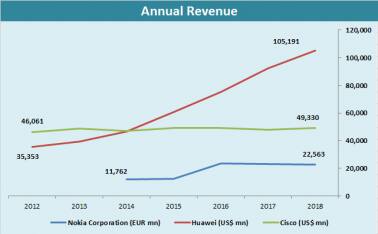
Huawei has swiftly established itself in the competitive telecom equipment space (see graph) and the smartphone market by adopting a unique strategy. It is a scrappy challenger that follows a strategy of low price with a policy of skirting around high-priced patents of competitors. This strategy has helped it carve out a global market share. It has inspired many Chinese companies to follow the same model. Chinese entrepreneurs do not worry too much about patents; if they see a successful product they replicate it at a cheaper price. This has helped China create the largest replica industry. This applies to product design as well.
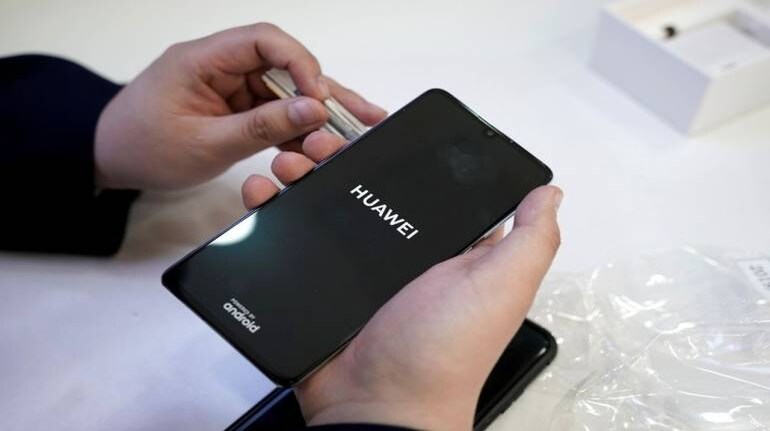
Retail consumers know Huawei through its smartphone brand Honor, which is impacted by the Google ban. While the hardware is important in a smartphone, it is the software which makes the difference, and Google’s Android mobile operating system (OS) has a market monopoly on it, especially in India. Therefore, Google’s ban may affect not just new buyers of Honor smartphones but may also affect some current Honor users who may not get all the OS upgrades. This would effectively make these smartphones dumb.
The more important issue to be considered seriously by Indian policy-makers is China’s surveillance using Huawei equipment. This is a serious charge made by the US; while it was always whispered about in tech circles, it has never been substantiated. Charges of surveillance using both software and hardware is emerging as a big concern. Indian law-makers and even policy experts are often not cognizant of its impact. Hence, the law of data localisation needs to incorporate this element too. If data is not treated as a sovereign resource it becomes difficult to identify any data leak.
India needs to develop the capability to check hardware equipment sold by Chinese companies. This is because it is possible to create back doors in smartphones and other hardware equipment for surveillance. China and Chinese companies do not have the same sensitivity to privacy, security and State surveillance as American and European companies do. Most American and Europeans tech companies are publicly listed and thus are answerable to shareholders, not the government. The same cannot be said for every Chinese company, because of ownership and funding by the government being a norm there. Nearly 80 per cent of the capital raised by Chinese companies come from State-owned banks. The stock markets contribute just 20 per cent of the capital. Interest rates are kept artificially low and even lowered further for Chinese companies identified as global leaders.
The Chinese government’s approach to creating jobs has always been through creating a global scale for its companies. The State is the biggest investor in companies which have ambitions and capabilities to create a global scale. Beijing created 200 business groups called qiye-jituans with the potential of being national champions. Huawei is a national champion and its growth as the largest telecom company is due to government contracts to build telecom infrastructure. According to Foreign Policy, even its expansion of R&D centres in India and US came up due to its captive revenues from Chinese government contracts.
In India, Huawei has had its share of controversies. In2013, state telecom service provider BSNL cancelled its GSM buildout contract with Huawei. Then the home ministry cited surveillance by Chinese government as an issue. The irony here is that Huawei has since grown here under the watch of a government which is more concerned about national security than any previous government.
The cheap price of Chinese products is an allure not just for consumers but also for companies. This is unfolding at a time when the Indian telecom sector is going through its worst phase. Given this, it is important for both companies and the government to be cautious about any choices made on price, as they have long-term impacts. What is cheap now may not be good in the long run for India.
K Yatish Rajawat is a senior journalist and policy analyst. Twitter: @yatishrajawat. Views are personal.



Discover the latest Business News, Sensex, and Nifty updates. Obtain Personal Finance insights, tax queries, and expert opinions on Moneycontrol or download the Moneycontrol App to stay updated!
Find the best of Al News in one place, specially curated for you every weekend.
Stay on top of the latest tech trends and biggest startup news.