



Rashtriya Swayamsevak Sangh (RSS) was one of the first organisations to be banned after the former Prime Minister Indira Gandhi imposed a ‘state of emergency’ in the country on the night of June 25-26, 1975. The Congress government at the Centre had banned the RSS on July 4, 1975. The RSS was led by the third Sarsanghchalak Balasaheb Deoras at that time. Deoras was arrested on June 30, 1975 at Nagpur railway station. He remained in jail throughout the emergency era.
At least 87 RSS workers sacrificed their lives during the Emergency (a list with names and details is available in The People Vs Emergency: A saga of struggle by PG Sahasrabuddhe and Manikchandra Vajpayee).
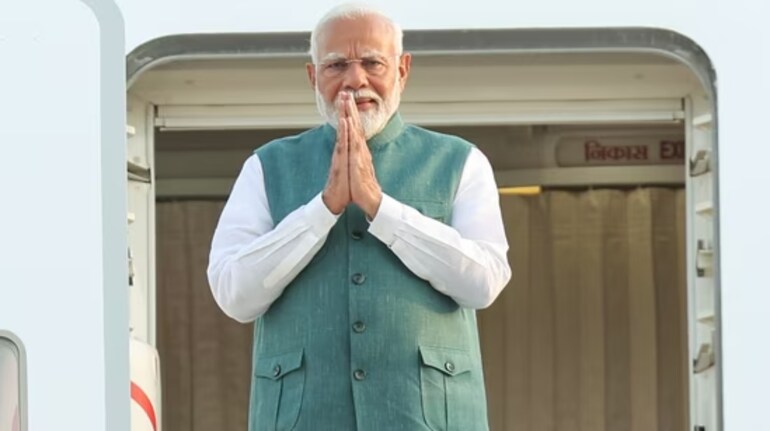
Thousands of swayamsevaks were arrested while many more stayed outside and ran an underground campaign against the emergency. Prime Minister Narendra Modi, who was an RSS Pracharak (full time worker) at that time successfully evaded arrest and played an important role along with Nanaji Deshmukh in steering the underground movement. Modi gave a detailed account of the emergency and how the RSS ran this movement in his book ‘Sangharshma Gujarat’ published in 1978.
Modi mentioned in this book that he used a pseudonym and adorned different looks such as a saint or that of a Sikh to hide his real identity from the police and establishment. The underground literature, that was distributed in Maharashtra, Madhya Pradesh and Rajasthan, against the Emergency was primarily printed in Gujarat.
Elaborating on how this was done, Modi wrote: “Shri Kishanbhaiya, an underground pracharak of the Sangh, came to Ahmedabad from Rajasthan to publish literature on behalf of the Rajasthan Lok Sangharsh Samiti. …this task of getting two lakh copies of a magazine printed in Hindi and sending them to Rajasthan was quite a challenge.”
“The organisation secretary of Jana Sangh, Nathabhai Jhaghda, and I started looking for a suitable press for this work. It was difficult to find such a press in Gujarat that could print such a huge amount of literature in Hindi language... After two days of continuous research, a press owner agreed to this work. We heaved a sigh of relief and thought that once these copies get printed, then we would decide the future course of action,” the book reads.
“The copies started being printed. Two lakh copies piled up. After these copies were ready, they were carefully stocked at four different places in Ahmedabad,” recounts Modi in the book.
After this, two workers from every district in Rajasthan came and carried these magazines in their empty holdalls. When the printed copies were being distributed in Rajasthan, the police kept conducting raids across the state to find the press where these copies were printed.
Nanaji Deshmukh, a senior RSS Pracharak, who has been awarded Bharat Ratna also, wrote to film artistes, urging them to join the movement for restoring democracy during emergency. “….. You have a special position in society. You are a model for the youth. They imitate you; you entertain huge crowds. You lift the spirits. The question is, will you confine yourself to mere entertainment in these difficult times? Will you teach them only to escape from the problems of life? The call of the hour is that you replace the despair of today with hope born of thought. I request you to participate in people’s struggle.”
KS Sudarshan, who later became the fifth Sarsanghchalak of the RSS, wrote an open letter to RSS swayamsevaks, asking them not to flinch and carry on with the fight against the emergency. He wrote, “This is an ideological battle. As seen from her (Indira Gandhi's) statements from time to time, she expects that the opposition should abjectly surrender before her, ask her forgiveness for deeds it has never committed, stand aside from her way forever and give her way for absolute rule…. No one among us will be ready for such a surrender... We have to courageously wait for the right moment with the faith that ultimately truth and Dharma will triumph.”
While the Indian press was gagged during the emergency, the foreign press continued to report about the stellar role played by the RSS in this movement.
The Economist wrote on January 24, 1976, in an article titled ‘Yes there is an Underground’, “In formal terms, the underground is an alliance of four opposition parties: The Jana Sangh (the RSS’ political wing), the socialist party, the breakaway fraction of the Congress party and the Lok Dal. The shock troops of the movement come largely from the Jana Sangh and its affiliate RSS, which claim a combined membership of 10m (of whom 80,000, including 6,000 full-time party workers, are in prison).”
In another article, reproduced in the underground journal Satyavani, The Economist wrote: “The underground campaign against Mrs Gandhi claims to be the only non-left wing revolutionary force in the world, disavowing both bloodshed and class struggle. Indeed, it might even be called right-wing since it is dominated by Jana Sangh and its banned cultural affiliate the RSS but its platform at the moment has only one non-ideological plank — to bring back democracy to India.”
It added, “The truth of this operation consists of tens of thousands of cadres who are organised down to the village level into 4-man cells. Most of them are RSS regulars… the other opposition parties which started out as partners in the underground have effectively abandoned the field to the Jana Sangh and the RSS. The function of the RSS cadre network… is mainly to spread the anti-Gandhi word. Once the ground is prepared and political consciousness raised, so the leaders are ready, any spark can set off the revolutionary Prairie fire.”
Earlier RSSFACTS columns can be read here.
Discover the latest Business News, Sensex, and Nifty updates. Obtain Personal Finance insights, tax queries, and expert opinions on Moneycontrol or download the Moneycontrol App to stay updated!
Find the best of Al News in one place, specially curated for you every weekend.
Stay on top of the latest tech trends and biggest startup news.