By Ankit Mehta
As the global defence landscape evolves, the importance of resilience, intelligence, and technological superiority has never been greater. The future of warfare is unmanned, resilient, and dominant. High-performance unmanned aerial vehicles (UAVs) are at the forefront of this transformation, offering the military cutting-edge solutions that remain effective in dynamic combat environments. Future-proofing the force is not just about deploying advanced tools; it’s about creating systems that can evolve in the field, if need be, in the face of changing tactics of war.
Shaping the Future of Warfare
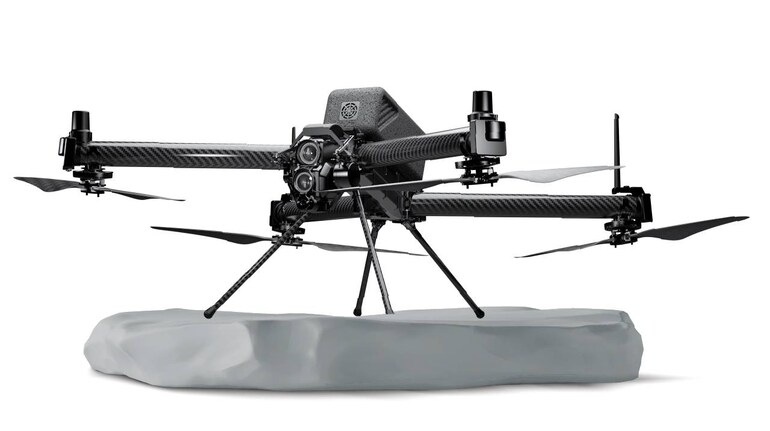
Uncrewed systems epitomise the shift toward autonomy and intelligence, reducing the risk to human life while increasing operational efficiency. UAVs are designed to excel in precision delivery/targeting, intelligence-gathering, and providing real-time situational awareness—capabilities critical for modern military applications. These drones redefine the battlefield with their scalability, adaptability, and ability to execute complex missions with unparalleled precision, making them true force multipliers for the defence forces.
Defence forces increasingly rely on UAVs to secure borders, conduct reconnaissance, perform tactical operations in hostile terrains, and even for counter-insurgency and counter-terrorism operations. Drones’ ability to operate in extreme conditions and gather critical intelligence makes them indispensable tools for ensuring security for any nation. Even in India, from monitoring the remote and vast expanse of the Himalayas to providing real-time intelligence in urban conflict zones, these systems are transforming defence operations.
Resilience in Disruption
Reliability and resilience define the core needs of any modern UAV. Given the modern battlefield and the reality of Electronic Warfare, failure is not an option. The drones need to perform under the most rugged and contested environments, ensuring operational continuity during critical missions. Whether navigating adverse weather, performing high-altitude surveillance, or enduring protracted engagements—even in highly contested airspace—UAVs need to embody high performance, reliability, and resilience. The need for resilience has become a cardinal characteristic of UAVs in modern warfare and conflict scenarios where operational environments are replete with Electronic Warfare and Counter-Drone measures.
The sanctity of supply chains also plays a crucial role in ensuring the reliability and security of UAV systems. For India, domestically developed/indigenous technologies and rigorous supply chain control protocols, eliminating critical sub-systems emanating from land-border-connected nations, can help create robust and secure supply chains. This approach can ensure that mission-critical operations remain uncompromised, even in the face of disruption.
Along with resilience in the battlefield and secure supply chains, the question of strategic autonomy is also equally important for India. Strategic autonomy in such a strategic sector is a must-have for our nation, and thus focusing on building our own intellectual property is an imperative for the industry. The government can play a crucial role as a catalyst for R&D in this space by enabling the creation of an R&D fund that can be leveraged by the industry for the necessary upfront capital needed for such endeavours. This is a crucial support needed by the industry to serve as an important sector that has the potential to lead our journey towards becoming a product nation.
Uncompromised Performance for Strategic Advantage
Uncompromised performance is a guiding principle for UAV development. By integrating advanced capabilities like AI-powered autonomy, secure communication systems, and modular payloads, UAVs offer unmatched operational readiness. These features empower the military to maintain a strategic edge, enabling precision strikes, real-time intelligence gathering, and rapid decision-making in dynamic scenarios. As evidenced in ongoing wars, tactics are getting copied at an alarming pace; however, superior technological capability can continue to serve as a strategic advantage.
The adaptability of UAVs extends beyond defence, finding applications in logistics, infrastructure inspection, disaster management, and energy. Their ability to navigate complex environments, analyse vast datasets, and execute missions with efficiency positions them as versatile solutions for diverse challenges.
Indigenised Excellence: Leading the Charge
India’s aspirations for strategic autonomy are bolstered by its burgeoning UAV manufacturing ecosystem. Supported by liberalised regulations like the Drone Rules 2021 for civil use-cases and initiatives like the Production-Linked Incentive (PLI) scheme, India is steadily becoming a global leader in UAV innovation. By prioritising indigenisation, the nation contributes to its defence independence and is on the path to establish itself as a net exporter of advanced drone technologies.
This focus on indigenisation extends beyond military applications. Domestically designed and manufactured drones play a pivotal role in transforming industries such as agriculture, infrastructure, and environmental monitoring, setting global standards for sustainability and efficiency. The continuation and expansion of the PLI scheme for drones has the potential to supercharge these efforts even more in the growing phase of this industry. The industry has requested the government in many forums to consider enhancing the scheme to Rs.1000-2000 crore for at least five years while expanding its coverage within the industry.
Revolutionising Modern Warfare
The future of defence lies in systems that are high performance, autonomous, agile, and adaptable. Features like swarming technology, which enables coordinated operations with multiple UAVs, and AI-driven analytics are shaping the next generation of military capabilities. These advancements allow drones to provide strategic capabilities, offering the armed forces an unfair advantage by reaching adversaries before an attack occurs, minimising risk, and optimising resource allocation.
Additionally, the cost-effectiveness of UAVs compared to traditional military equipment underscores their value. By balancing the cost of war with the cost of equipment, UAVs provide a sustainable solution for maintaining a dominant defence posture.
Prepared for Today, Ready for Tomorrow
Modern UAVs are being built to meet the demands of today while being ready for the challenges of tomorrow. From ensuring resilience and reliability to enabling rapid iterations in technology development, these systems represent a leap in defence preparedness for any nation. With modular designs and scalable capabilities, they are well-suited to address the evolving requirements of defence forces and other sectors.
The future of warfare is uncrewed, and the technology needs to be uncompromised and unstoppable. By leveraging advanced UAV technology, nations are not only securing their borders but also establishing themselves as global leaders in drone innovation. Even in India, with a commitment to resilience, intelligence, and performance, homegrown UAV technology is helping shape a future where drones are integral to national security, defence, and beyond. As we redefine modern warfare, the focus for the industry remains unwavering: performance, resilience, and adaptability for every mission, ensuring that forces stay future-proof, no matter the challenge.
(Ankit Mehta, CEO, ideaForge Technology Limited.)
Views are personal, and do not represent the stand of this publication.
Discover the latest Business News, Sensex, and Nifty updates. Obtain Personal Finance insights, tax queries, and expert opinions on Moneycontrol or download the Moneycontrol App to stay updated!
Find the best of Al News in one place, specially curated for you every weekend.
Stay on top of the latest tech trends and biggest startup news.