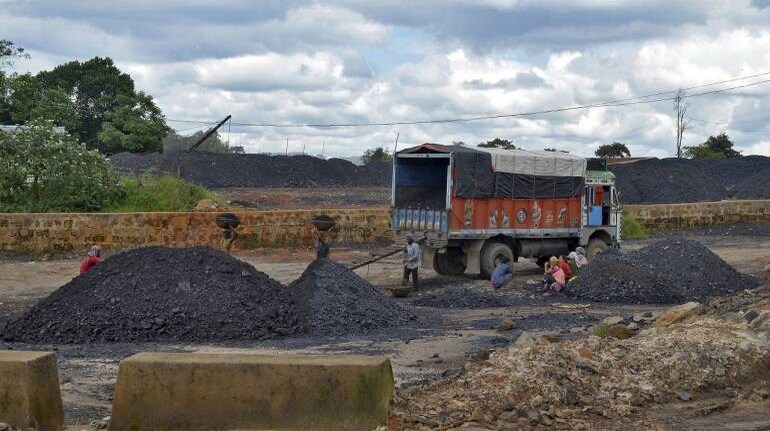
Coal has become a fall guy ever since the global quest for a cleaner environment began. Spurred by the Paris accord of 2015, nations are striving to limit global warming to 1.5 degrees Celsius this century. As green activists and governments step up their crusade against climate change, the clean-energy industry is gaining momentum. Fossil-fuel producers, on the other hand, are being forced to confront their vulnerabilities.
According to The Economist, fossil fuels today are the ultimate source of 85 per cent energy. But this system is dirty. Energy accounts for two-thirds of greenhouse-gas emissions; the pollution from burning fossil fuel kills over 4 million people a year, mostly in the emerging world’s mega-cities.
India, being a prominent player in the emerging world, has been an early proponent of a cleaner environment. It is already working to re-balance its energy-mix in favour of renewable sources.
But given that coal is so deeply entrenched in our energy ecosystem and other industries, it is pretty tough to write off the fossil fuel in a hurry. Like it or not, India’s current coal consumption, in absolute terms, is the second largest in the world after China’s. So, instead of daydreaming about a coal-free country in the foreseeable future, we need to step up our efforts to efficiently manage the fossil fuel in order to make a hassle-free transition to a cleaner environment.
As the book “Future of Coal in India: Smooth Transition or Bumpy Road Ahead?” lucidly argues, before India can phase out the fossil fuel, it must first achieve a plateau in coal. Edited by Rahul Tongia and Anurag Sehgal, with Puneet Kamboj, the book acknowledges the fact that achieving this plateau in a cost-effective manner is not only a technical or economic question but it also depends on the political economy of coal and its alternatives.
To cut dependence on coal, India has set ambitious renewable energy targets for 2030, calling for about four times growth in today’s installed wind, solar, and hydro electricity capacity. But even if we assume that the country doesn't build any more coal power plants going forward, it still means that in 2030 about half of India’s electricity will come from coal. This is why the editors of the book feel that instead of wishing coal away, a wiser option will be to first clean it up.
But how do you clean up the fossil fuel? While “clean coal” is an oxymoron to some, the book suggests, a better phrase is cleaner coal. “Cleaner” recognises that there is a spectrum along which coal-based processes can reduce their impacts and externalities. Clean isn’t just about visible pollution but also about water and, of course, greenhouse gas emissions (especially carbon dioxide). One of the best options is improving the efficiency of coal utilisation, which reduces all forms of externalities.
While the better part of coal is used to generate electricity, the fossil fuel is a vital input for multiple industries, including steel, cement and bricks. Alternatives to coal depend heavily on the sector and what coal offers. For example, coal provides more than just energy to cement and steel. Thus, any transition away from coal may take time and instead a short-term focus should be on improving the efficiency of the processes. Instead of just thinking about the energy, the entire process, including final product, should be re-examined.
Discussing the challenges that the coal sector faces, the book aptly points out that there’s not just one but multiple energy transitions underway. The challenge isn’t simply managing such a transition but making it a just transition.
Moreover, the present regulation of coal creates winners and losers by not just location but also by ownership (private versus public sector) and type of user (power plants versus other users). The locational aspect of coal is a key part of the puzzle. Coal is very cheap per tonne at the mine, but has concentrated deposits in east/central India, which means increased environmental burden in those areas. In contrast, renewable energy is concentrated in South and West India, increasing the spread between states using clean energy and coal.
To sum up, the coal sector is facing a myriad of issues and the book has come up with some constructive suggestions — such as enforcing pollution standards, holistic regulation of carbon, encouraging competition, etc — on how to tackle the challenges.
Going forward, India’s focus will be on monitoring transition, increasing domestic supply, growing renewable energy, and cleaning up coal emissions. How to achieve these in a coordinated manner is the task of policy makers.
At a time when coal transition is already underway, the book offers useful insight on the future coal course. There may be a lot of uncertainty going forward, but what is certain is that the future will not look like the past – and it shouldn’t. The future should be cleaner, more inclusive, more efficient, and more secure, not to mention cost-effective.
Discover the latest Business News, Sensex, and Nifty updates. Obtain Personal Finance insights, tax queries, and expert opinions on Moneycontrol or download the Moneycontrol App to stay updated!
Find the best of Al News in one place, specially curated for you every weekend.
Stay on top of the latest tech trends and biggest startup news.