



Dharmesh Shah
As the politics around air pollution continues to shuttle between ignorance to outright denial, the sheer magnitude of the crisis makes it difficult to disregard it completely. Over the past two decades, various task forces, expert panels and court-appointed committees have strived to solve the multiple facets of the crisis. While our policy makers acknowledge the extent of the problem, there is relatively little investment into crucial elements required for informed problem solving. The success of mitigation strategies relies on five fundamentals — monitoring infrastructure, reliable data, effective communication, investing in health and moving away from end-of-pipeline technological fixes. The current Indian regulatory apparatus has much catching up to do on all these aspects.
Monitoring Infrastructure
Pollution mitigation strategies principally depend upon a competent monitoring infrastructure. A look into the current monitoring infrastructure of the Central Pollution Control Board (CPCB) and a few state pollution control boards highlights some uncomfortable facts. The CPCB operates and maintains merely 200 continuous air monitoring stations in 20 states/union territories. The data from these stations is pivotal to the successful implementation of pollution mitigation programmes. However, according to experts, India needs nearly 4,000 monitoring stations in order to generate statistically significant data. Furthermore, the distribution of the monitoring stations across India is skewed. The entire state of Gujarat hosts just one monitoring station despite having seven critically-polluted industrial clusters. Similarly, of the four stations allocated to Tamil Nadu, three are located in Chennai and one in Coimbatore, while the highly-polluted regions on Cuddalore and Tuticorin have none.
The situation is grimmer in states like Chhattisgarh and Jharkhand where highly-polluting mineral-based industries are located. There are no continuous monitoring stations in these states and the pollution regulatory agencies are also severely under-resourced. RTI applications filed by community members revealed that the Chhattisgarh Environment Conservation Board does not own any equipment to monitor for PM2.5 particulate pollution. Ironically, Korba in Chhattisgarh has been declared the fifth most critically-polluted region in the country by the Ministry of Environment and Forests (MoEF).
Reliability of Data
The Environment Protection Act (EPA) 1986 mandates that all states should have at least one or more recognised labs to carry out environmental monitoring and sampling exercises. Such labs are required to have an accreditation from the National Accreditation Board for Testing and Calibration Laboratories (NABL) and the Occupational Health and Safety Management System (OHSAS). However, as of December 1, only nine state labs have been recognised by the CPCB.
This raises several concerns about the capability of state pollution control boards in testing and generating reliable data to take legal actions against violators. Furthermore, on several occasions the stations fail to generate reliable data due to rampant technical challenges. For instance, in September, Gurugram was left out of air pollution forecast due to poor quality of data and incorrect methodology.
Communication
Air pollution is the number one public health emergency in India. However, the current methods of alerting citizens are not inclusive and fail to apply technology in an intuitive manner. Air pollution advisories are predominantly in English and provide advice such as ‘staying indoors’ which only targets a certain class of citizenry.
Furthermore, technical interventions have remained experimental initiatives. For example, the System for Air quality-weather Forecasting and Research (SAFAR) application launched in 2015 by the Ministry of Earth Sciences merely provides a color-coded advisory to citizens and is available only in Pune, Delhi, Mumbai and Ahmedabad. SAFAR has little over 100,000 android downloads since its launch. Whereas, mechanism to issue alerts to the non-smartphone users are non-existent.
Investing in Health
On bad air quality days, our public health strategies need to go beyond advisories to include appropriate medical interventions. For example, Singapore and the Philippines expect the annual haze to hit their cities every year when Indonesian peat fires begin. In addition to issuing advisories, the ministries of health collaborates with hospitals to build capacity for suitably responding to specific health issues linked to haze exposure. Ultimately, public health could be used as an indicator to gauge the success or failure of interventions on the ground.
Technological Fixes
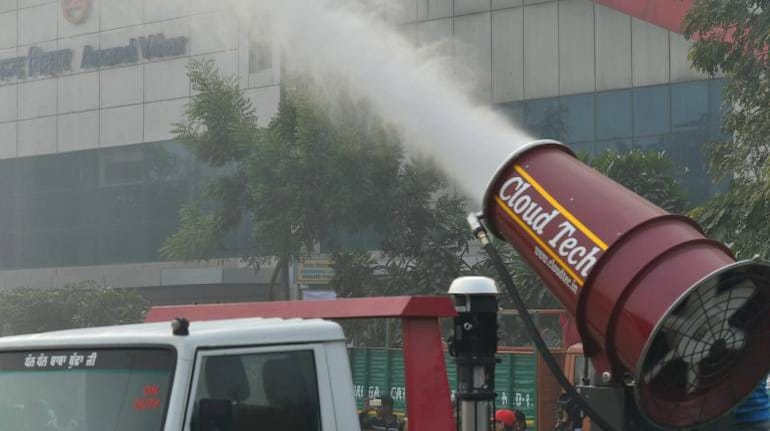
The most-concerning aspect of an all-pervasive problem is the tendency to endorse technological fixes. Delhi has seen its share of such schemes, from the anti-smog spray gun to the Devic Pure Skies system which was deployed at the Delhi Half Marathon. The truck-mounted and diesel-powered anti-smog gun personified the absurdity behind such innovations. The technology that has proliferated the most among the urban households is the air purifier. Its ability to rid indoor spaces of particulates makes it the technology of choice for those who can afford it. However, with most of our energy coming from coal, the sustainability of such technologies is questionable.
Ultimately our air pollution mitigation strategies cannot be isolated in nature. On a fundamental level, solutions need to integrate equity and ultimately take a holistic approach. It also calls for an interrogation of the current economic paradigm and a concerted effort to leap beyond technological fixes.
An effective policy would have to integrate the efforts of urban planning, transport, public health, agriculture, industries and urban local bodies among other agencies. It would also require an inclusive public awareness strategy and citizen’s participation in decision-making. In absence of these structural changes, clean air for all will remain a distant dream.
This is the third and last article in a multi-part series on air pollution.Dharmesh Shah is a Kerala-based public policy analyst. Twitter: @dshah1983. Views are personal.



Discover the latest Business News, Sensex, and Nifty updates. Obtain Personal Finance insights, tax queries, and expert opinions on Moneycontrol or download the Moneycontrol App to stay updated!
Find the best of Al News in one place, specially curated for you every weekend.
Stay on top of the latest tech trends and biggest startup news.