




Anubhav Sahu
Moneycontrol Research
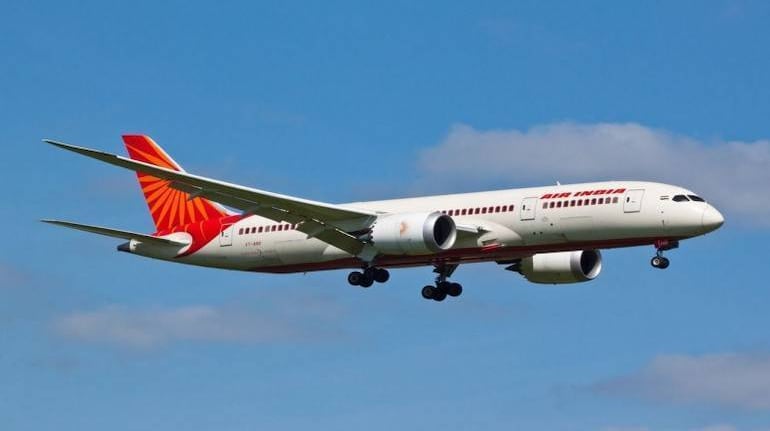
Indigo’s expression of interest for Air India has surprised many. Why would the market leader in the domestic market want to take on huge financial (Rs 52000 crore debt) and non-financial liabilities (bloated workforce), they ask.
What’s on stake?
The government wants to privatise Air India and five of its subsidiaries - Air India engineering services, Air India Air Transport Services, Air India Charter limited, Airline Allied Services, Hotel Corporation of India.
Subsidiaries are expected to be hived off separately, which will help reduce consolidated debt. Indigo has primarily shown interest for the international operations of Air India and Air India express.
This makes sense for Indigo, which has just 9% share in international traffic among Indian carrier, compared to Air India’s 44%.
If Indigo gets the international operations of Air India, revenue contribution (from international flights) would change to about 34% from 9% currently. Not only that, Indigo would also get some intangible benefits:
1, Star Alliance network: Air India joined Star Alliance with effect from 2014 which would provide global connectivity to the airline - 1269 destinations in more than 193 countries.
2, Prime slots for takeoff and landing at international airports: Reportedly Air India has eight pair of slots at London Heathrow (LHR) and some others airports in the USA and Europe. Last year, Oman air had bought a pair of such slot in LHR at USD 75 mn. In our calculation, this brings the valuation of Air India’s international slots at about Rs 4000 cr.
3, Aircraft parking/Hangars facility in most of the important domestic and international airports
4, Air India is the biggest MRO set up in India for all engineering repair requirements for aircrafts.
Chart: Change in revenue mix for Indigo on acquisition of international operations

Further, Indigo gets to access aircraft fleet of 118 including Boeing 787- Dreamliner. Interestingly Indigo itself has place a huge order for fleet expansion (190 by 2019 from 131 currently) and some of fleet asset from Air India may not necessarily be a good fit.
Valuation:
Air India’s five subsidiaries have a consolidated revenue of about Rs 3400 (as per FY 2015 report). Except for Air India Air Transport Services, the rest are loss making and therefore conventional earnings multiples would not be of help.
Keeping a conservative market cap to sales ratio of 2.0 (25% discount to that of Interglobe), we get a valuation of Rs 6800 cr. So government’s estimated stake sale receivables of subsidiaries when adjusted with the consolidated debt (Rs 52000 cr) leaves a residual amount of Rs 45200 cr.
Adjusting the implied value of Air India’s slots in international airports still keeps the debt at Rs 41,200 cr.
Interestingly looking at EV multiples, if Interglobe (Indigo’s operator) operates Air India at the operating efficiency of Indigo and we apply the EV/EBITDA multiple of Interglobe, Air India’s enterprise value is expected to be around Rs 42,218 cr. Another way to look at it - replacement value for the assets. From the latest available annual report (FY 2015) replacement value for the fixed assets are at Rs 35, 000 cr.

As Indigo is keen on international operations of Air India (31% of revenue), valuation in this aspect is expected to be ~Rs 13000 cr (based on EV at Rs 42000 cr).
A back of the envelope calculation shows that if Indigo gradually improves the operational efficiency (revenue per employee: 40% higher than Air India) in five years and stays at the EBITDA of 16% from the year 5 onwards, then breakeven can occur by the end of 11 years. This can substantially improves if Indigo is able to turn around Air India faster. In an optimistic scenario of ramping up improving operational efficiency in 3 years makes it 8 year period to breakeven.
Management control and employee cost
Management control would be key thing here when modalities of the stake sale is decided. Also crucial would be the deal on employee obligations – both running expense (Rs 2466 cr) and retirement benefits (pension liability 691 cr).
Overall, it is early days for the government’s privatization plan for Air India. Moving part to watch are debt restructuring plan, proceeds from the sale of subsidiaries, Air India’s employee obligation management. On strategic level, international operations can be a nice fit along with the various intangible benefits.
However, turnaround of a state giant would be an uphill task even though payback period can be less than 10 year in an optimistic scenario.
Discover the latest Business News, Sensex, and Nifty updates. Obtain Personal Finance insights, tax queries, and expert opinions on Moneycontrol or download the Moneycontrol App to stay updated!

Find the best of Al News in one place, specially curated for you every weekend.
Stay on top of the latest tech trends and biggest startup news.




