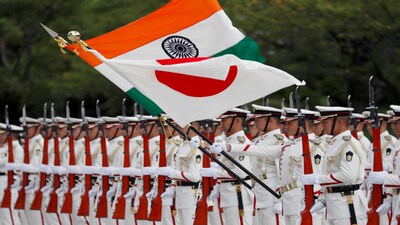
Japan's Big Pivot: Why Modi's visit marks a new chapter in Asian partnerships
Prime Minister Narendra Modi is due to visit Japan at a time when it is dealing with major challenges thrown up by the Trump administration, which is making stiff financing demands on Tokyo. Modi may receive an enthusiastic welcome because Japan is looking for new markers and political partners to reduce its reliance on Washington

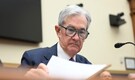
Fed chair's dovish turn sparks rally, but reveals deeper economic worries
Jerome Powell's dovish Jackson Hole speech triggered a market rally despite CME probabilities showing September rate cut odds actually fell from 85 percent to 75 percent, revealing the underlying economic concerns that create a precarious balancing act for investors
Why the 4% inflation target must stay
India has earned hard-won credibility on price stability. Raising or diluting the target now would throw it all away.
Focus turns to execution at Hindustan Aeronautics as orders pour in
The company is expanding manufacturing and repair and overhaul facilities
US’ targeting of Baloch Liberation Army shows its layered approach to Pakistan and China
It underscores three intersecting dynamics: first, the fragility of CPEC projects amid sustained insurgent violence; second, the possibility of a modest US-Pakistan reset on counterterrorism measures; and third, Washington’s careful navigation of its broader rivalry with China in the region
Lord Swraj Paul, an irrepressible personality with a chequered career
The founder of UK’s Caparo Group was not just a successful businessman; he also became the first person of Indian heritage to be appointed deputy speaker of the House of Lords. A journalist, acquainted with him for four decades, shares his memories of the man, including Paul’s version of what happened in one of the most talked about corporate takeover attempts in Indian business history.
Mumbai rains, airplane crashes, stock crashes: How recency bias destroys wealth
Markets move in cycles, not straight lines. One crash—or one rally—never defines the long term.
Moneycontrol Pro Weekender | Powell gives an inch
Ths US Fed chief has one eye on the tariff risks to prices, and the other on a softening job market
The Reading List: August 22, 2025
A look at some articles and social media gems from the world of economy, business and finance, curated by our research and opinion teams for your weekend read
A Constitutional amendment aiming to uphold probity in public life, or to serve as a tool of distraction?
Government’s effort to amend the Constitution to mandate resignation of ministers, CMs or even the PM if they are arrested for 30 straight days, has evoked fierce opposition from its political rivals. While the BJP claims the legislation’s goal is to clean up public life, the opposition sees it as a mortal threat, given their distrust of enforcement agencies. The Bills have a long way to go but the moot point is will it change the political narrative in the forthcoming election season
Brace for a crash before the golden age of AI
History teaches that tech revolutions follow a predictable cycle of installation followed by creative destruction
Technical factors contribute to wider spreads in longer dates G-Secs, what next?
Rising long-end yields driven by elevated SDL issuance, subdued demand from long-term investors, and RBI's neutral stance, may moderate if growth slows or tenor adjustments are made
Sudershan Reddy was a judge committed to upholding human rights and a critic of neoliberalism
Opposition grouping INDIA’s VP candidate described himself as a “liberal Constitutional democrat”. A scrutiny of his most widely discussed verdicts as a Supreme Court judge shows that this description is accurate. His deepest commitment lay in upholding human rights
Why aren’t US universities embracing India as a campus, post Trump’s visa crackdown?
US universities are staring at a tuition fee loss of $7 billion this year
Silent Architects: A rare glimpse into the lives of RSS functionaries
RSSFACTS: Ramesh Prakash, a dedicated RSS organiser, quietly shaped the Sangh’s growth in North India, mentored BJP leaders, and played a key role during the Emergency and in educational initiatives
ESG compliance should not become a barrier to market access for MSMEs
Compliance costs that are marginal for large firms can be existential for small ones
A guide for Indian equity traders entering crypto trading
A lower entry barrier has opened the doors for a wider base of participants to experiment with sophisticated strategies in crypto
Chart of the Day: EM funds circled back to China in July as tariffs sliced Indian valuations
India was the most underweight market among emerging markets in July
Can a fiscal push trump global factors, sustain the stock market recovery?
A fiscal stimulus, a ratings upgrade on one side, facing off against global uncertainty, tepid earnings growth, expensive valuations and selling FIIs. Which side holds the upper hand is the question
Renewable energy is also feeling the impact of climate change
Changing weather patterns are increasingly posing risks to renewable power generation
Strategic Autonomy Needs Influence: Neutrality without engagement is isolation; India’s moment to lead in the Middle East is now
Demonstrating strategic autonomy without influence results in strategic isolation. India’s economic stake in a transforming Middle East is huge. As the West loses its attraction there, India, which doesn’t carry historical baggage, needs to capitalize on emerging opportunities
Be Ready Before GST 2.0: Key challenges Indian businesses must navigate
Businesses have to cope with existing stock and related issues when a new GST rate structure is enforced. It can lead to confusion and possible losses. However, anticipating potential downsides will help them sidestep liabilities
What central bankers must tackle at Jackson Hole
Monetary policymakers are on divergent paths, but face common threats
For stockpickers, AI is already both co-pilot and competitor
Intuition, judgment and a gift for reading people are some of the hardest skills to mimic
Wang Yi’s Delhi visit signals a thaw in Sino-India ties but meaningful progress will depend on political directions of leaders’
A tentative step forward has been taken by both sides but it’s unrealistic to expect quick progress. For now, China holds more cards than India and Delhi will have to move with caution and perspicacity