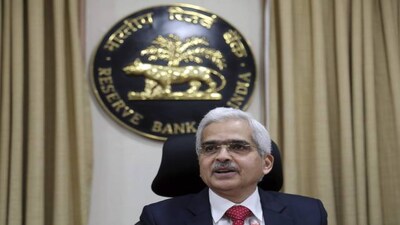
MPC minutes: The many reasons for not cutting rates
Spikes in food inflation and geopolitical and financial uncertainty are holding back the MPC from cutting the policy rate

India's promising future!
In 2019, there were 8,054 candidates representing 673 parties. Parties and candidates spent an estimated USD 8.7 billion to woo more than 900 million eligible voters.
The Reading List: April 19, 2024
Concentrated power at the top of businesses remains a red flag
There remains a logic to separating functions of chair and chief executive
How to deal with rising inequality without appearing anti-wealthy
Piling more taxes on the rich would disincentivise savings in a country like India. Also, the top income tax rate, including cess and surcharge, is already too high at 40 percent. How then can the government check inequality of income and wealth without being 'anti-business and anti-rich'?
The tax twists that emerge on disgorgement of illegitimate profits
When SEBI punishes wrongdoers by asking them to disgorge illegal gains, it raises an important issue of treatment of income tax on these gains as well
Digital deception can cloud India's financial skyline
Financial institutions must invest in tried and tested cybersecurity frameworks, encompassing user education campaigns and sophisticated detection systems for deepfakes
For Indian fliers, it's back to the era of steep fares, limited flight options
Grounding of aircraft due to maintenance, pilot unavailability, shoddy planning are some of the aviation sector’s problems that threaten to continue and bother passengers
Despite tall poll promises, health for all remains a distant dream
While parties give the mandatory nod to imperatives such as healthcare while campaigning, much needs to be done to make quality healthcare easily accessible
IndiGo's market-share steady in Q4 despite grounding of aircraft
The company’s market share in India remained steady at around 60 percent in January-March 2024
How to add mojo to India’s goods exports?
Short- and long-term steps can help India’s merchandise exports tackle the current global economic flux and up their share in world trade
US rate cuts look like a distant dream, India’s stock markets face a tough time ahead
Market conditions point to the risk of near term corrections but if that plays out then it may prove to be an opportunity for long term investors
Lok Sabha elections: What to watch out for in first phase of polling?
The first phase is going to witness an interesting contest between the two main alliances, the BJP-led NDA and the Congress-led INDIA alliance. Who is in the poll fray and what do the past showing reflect? Read on
Chart of the Day: Climate bonds are not as red hot as the weather is
Climate financing has become broad based as niche areas such as water management and waste management have begun to get more funding. Even so, the lion’s share of proceeds from such bonds went towards the energy sector, followed by construction and transport
Do passive investors make markets less efficient? The answer is no
Can markets still be efficient if most investors aren’t even paying attention? Surprisingly, the answer is yes
China’s magical growth of 5.3 percent has puzzled the Chinese
Strong first-quarter numbers are puzzling the Chinese, who witness a stagnant economy daily. Two factors reconcile the difference
Are higher rates inflationary?
Fed rates are high but growth is still chugging on and inflation isn't coming down. So, are interest rates stoking inflation?
What’s driving the rally in metals?
The question investors should ask is whether the rally is because the world economy on a higher growth path or whether it is a flight to safety from emerging risks
The great bet on rate cuts is off
We are trapped in old ways of thinking about inflation
What China’s jibe about Elon Musk’s pivot to India reveals
Musk's patronage used to be precious PR ammunition for China. But the billionaire's upcoming India visit seems to have upset Beijing
Asian currencies can't fight the dollar on a rampage
The greenback is strong because the American economy is vigorous. The region does have choices, none of them easy
After Maldives, Bangladesh sees an ‘India Out’ campaign; why New Delhi must stop China from taking advantage
A movement against Indian products is gathering steam in Bangladesh for allegedly helping Sheikh Hasina become the Prime Minister for a fourth consecutive term against the wishes of the people. But if the boycott intensifies instead of dissipating, China will be laughing all the way to the bank. The way forward for India is to stop playing favourites and engage with the opposition parties
Google, Facebook should use AI to combat conspiracy theories
New research suggests chatbots could combat much of the damage caused by people going down rabbit holes on YouTube and Facebook. But will tech companies use them?
Chart of the Day | Outlook for cotton spinners set to improve
Any adverse movements in cotton prices or demand for yarn need to be closely monitored
Marketing Musings | The corporatisation of election manifestos is complete
Their launch activity rivals that of a consumer product with feature leaks, press conferences, slick presentations and positioning