Invisibilising Taiwan
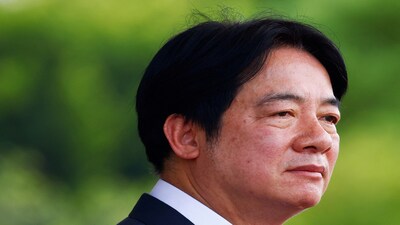
A flawed interpretation of a UN General Assembly resolution has allowed multilateral bodies such as WHO to keep Taiwan out from contributing to its work in full measure. Individual countries too have used this resolution to limit engagement with Taiwan. To counter China’s influence, Taiwan has to expand its diplomatic outreach to ensure it’s not shut out

Is Trump’s doubling of steel and aluminium tariffs a death blow to the industry?
While a 25 percent tariff on these key industrial metals was bad enough, a doubling to 50 percent is a punitive measure to discourage imports and revive lethargic domestic output
How to break China’s stranglehold on critical minerals
One potential fix is using AI to cut extraction costs
Ruchir Sharma: The world’s strongest currency is also super-competitive
Switzerland’s success shows that a nation can revalue its way to prosperity
Chart of the Day: Does the sell in May and go away strategy work in India?
The age-old adage "Sell in May and go away" has long influenced investor behaviour in Western markets. But does this seasonal wisdom hold true in India?
China, Yunus, and the Crisis in Dhaka: Why India’s next move on Hasina matters
Former Bangladesh prime minister Sheikh Hasina’s hopes of political revival appear to have been dashed. A judicial tribunal has indicted her while the Supreme Court has lifted the ban on Jamaat-e-Islami which is believed to be close to Pakistan. On his part, Chief Advisor Mohmmed Yunus is trying to survive the political storm
‘One Nation, One Symbol’ is key to India’s self-reliance
Sanghnomics: Swadeshi Jagaran Manch started a campaign to promote self-reliance and national security, advocating a ‘Made in India’ symbol to curb foreign goods, strengthen the economy, and support domestic industries
India-Nepal Ties: A strong bilateral partnership amid China’s looming presence
India-assisted development projects in Nepal are aimed at addressing pressing needs at the ground level as well as strengthening infrastructure and connectivity
Will Shashi Tharoor leave Congress? Tensions rise ahead of Kerala 2026 elections
Shashi Tharoor’s participation in a national diplomatic delegation has reignited tensions within the Congress party. With Kerala elections on the horizon, internal rivalries and leadership ambitions are back in the spotlight
Trump’s war on US universities will help India only if we can fix our higher education mess
Expenses of Indian students abroad is one the largest contributors to foreign exchange outflow. It also reflects the relatively poor state of higher education here. An inhospitable climate in the US should catalyse a serious strategic approach to universities in India, with private sector playing a bigger role. It should be in sync with national goals, which means it will have to be all about STEM
MedPlus’s generic drug push is yielding tangible benefits
Traction in private label business has infused positive momentum into MedPlus’s stock
Pace of Q4 growth surprises, but RBI will stick to monetary easing
Net indirect taxes have had an unforeseen level of impact on GDP, pushing it higher than market expectation. Among other factors giving it a boost were high government investment spending and a contraction in imports. Given the level of uncertainty arising from global factors, RBI is unlikely to let the GDP trend arrest the ongoing monetary loosening cycle.
Vault Matters | The curious case of IndusInd Bank share price
Strangely enough, barring the single day fall on March 11 by over 20 percent, IndusInd Bank’s stock price has held up quite steady despite a barrage of bad news hitting the counter, denying the underlying negative sentiments around the stock. The logic defying price movement certainly warrants Sebi’s attention
The Reading List: May 30, 2025
Our research and opinion teams have curated a selection of articles and social media gems from the world of economy, business and finance for your weekend read.
Can we ‘nudge’ our way to higher growth?
It’s time to ask whether behavioural science can tackle big problems
Manipur’s fractured society leaves the government in a fix
President’s Rule in the state led to a crackdown against insurgents, a positive development. However, neither has it bridged the ethnic gap in a meaningful way nor has it endeared itself to people in Imphal Valley. It leaves the central government with a conundrum that doesn’t have an answer in sight
Even cinema calls out POCSO misuse; law needs safeguards
While POCSO aims to protect children, courts and reports reveal growing misuse in consensual teen relationships, prompting calls for nuanced reforms that balance child rights with justice and intent
RSS@100: Unravelling the road map for next 25 years and beyond
RSSFACTS: Mohan Bhagwat outlines RSS’s centenary goals: uniting Hindu society, maintaining an apolitical stance, and promoting global transformation rooted in cultural harmony, long-term vision, and inclusive social practices
IndiGo’s record profits overshadowed by Gangwal’s stake sale, a signal to buy or a red flag?
Lifted by the Mahakumbh in Q4 and an extended wedding season, the airline saw 13% growth in available seat kilometres (ASK) and 21% growth in passengers
Can India use America’s MAGA moment to accelerate MIGA?
The unprecedented crackdown on foreign scholars launched by US President Donald Trump has opened up a golden opportunity to attract some of the world’s top talent
Data Story: IBC showed big success in FY25, but its failures are bigger
As of March 2025, the average time for a bankruptcy case from commencement date to approval of resolution plan was a whopping 865 days.
RBI annual report | Gold is a standout performer for the central bank in FY25
The RBI’s gold holdings jumped from 822.1 metric tonnes to 879.58 metric tonnes, a 57.48-tonne increase
Chart of the Day: RBI owes its profits to the forex market volatility
The RBI’s forex market operations have made it a handsome profit in FY25
CLOSING BELL: Nifty at 24,750, Sensex slips 180 points as auto, metal, IT dampen sentiment
Sensex today | Indian benchmark indices ended lower on Friday, weighed down by mixed global cues. Broader markets, which had been resilient so far, gave in to profit-taking, with the Smallcap index snapping a five-day winning run. In contrast, PSU banks outperformed, rallying nearly 3 percent as investors cheered their robust Q4 earnings.
Decisive triumph of hard power, questions over soft power
As Indian parliamentarians tour the globe to set the record straight on Op Sindoor and Indian democracy, there are points to ponder. India has been held up to higher standards than its hostile neighbours for good reason; it’s been the beacon of democracy among countries that emerged out of colonialism after World War II. If parliamentarians have to reiterate that, it’s likely because our own doing has led to doubts in other countries