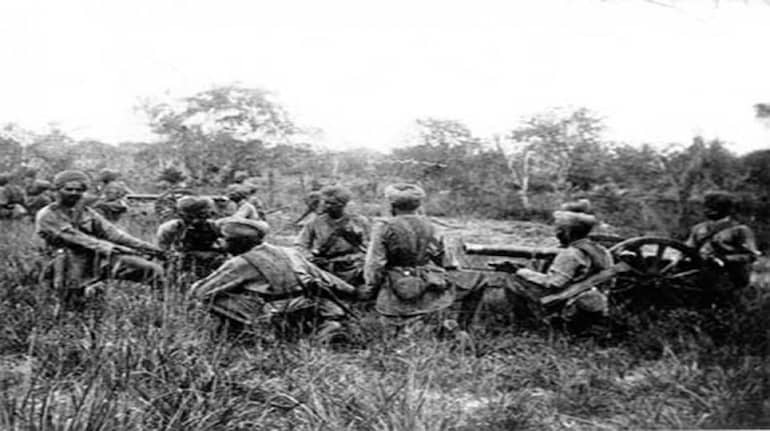
The story of Skardu is among the most poignant and heroic episodes of the 1947-48 conflict — a prolonged defence waged by a tiny, isolated garrison cut off from all support, surrounded by overwhelming enemy forces, and resisting for months in the hope that relief would eventually come. Unlike the Valley, where battles moved quickly from crisis to victory, the struggle for Skardu was slow, grinding, and marked by a level of suffering that has few parallels in the campaign.
From the winter of 1947 until its final fall in August 1948, the defenders of Skardu — drawn from 6 Jammu & Kashmir Infantry and a handful of loyal state troops — stood against tribal lashkars, local rebels and combatants from Gilgit Scouts reorganised under Pakistani command. Their stand delayed the consolidation of enemy forces in Baltistan and tied down large numbers of attackers, but the cost was devastating. When Skardu finally fell, almost the entire garrison was massacred.
This is the story of that lonely garrison and the siege that tested the limits of endurance.
Strategic context: Why Skardu matteredSkardu’s strategic significance lay in its geography. A high-altitude fortress town in Baltistan, perched along the Indus, it commanded the approaches to the Northern Areas and formed the eastern anchor of the Gilgit-Skardu axis. Whoever held Skardu held the gateway into Ladakh from the west.
With the sudden rebellion in Gilgit in November 1947 and the defection of the Gilgit Scouts, Pakistani-aligned forces rapidly gained control of the region. Skardu, however, remained in Indian hands — a thorn in the side of the newly organised assault forces and a barrier to their advance toward Kargil and Leh.
Its capture became one of Pakistan’s main operational goals.
For India, Skardu’s defence was critical. If the garrison fell, the enemy could pour into Ladakh before Indian reinforcements arrived. The stakes were enormous. But Skardu was hundreds of kilometres from the nearest Indian base and separated by high passes that, in winter, became nearly impassable.
This remoteness would seal its fate.
Major Sher Jung Thapa assumed command of the 6 J&K Infantry detachment at Skardu in December 1947. A determined and professionally trained officer, Thapa quickly realised his position was isolated and vulnerable. Communications with Srinagar were tenuous; reinforcements would take weeks, if not months, to arrive; winter was closing in.
By early February 1948, the siege had effectively begun. Enemy forces — strengthened by the defection of the Gilgit Scouts and tribal fighters — surrounded the town. They occupied heights overlooking Skardu, cut supply routes and began probing attacks. Thapa consolidated the garrison inside the fort and nearby defensive positions, knowing he had to ration ammunition and food from the start.
What made Skardu’s defence extraordinary was the utter absence of external support. For weeks at a time, the garrison received no news from Srinagar. Snowbound passes made relief columns impossible. Airdrops of supplies — attempted later — were unreliable and insufficient.
Skardu was alone.
The first assaults: Testing the garrisonThe attackers initially believed Skardu would fall quickly. Early February saw repeated assaults on the fort’s outer positions — intense, aggressive attacks combining rifle fire, grenades and attempts to storm the walls. Each time, the defenders beat them back.
Thapa’s leadership became the anchor of the defence. He moved between posts under fire, encouraging his men, adjusting fields of fire, and reinforcing weak points. The defenders showed remarkable discipline, conserving ammunition and holding their ground despite exhaustion and cold.
By March, it became clear to the attackers that Skardu would not fall easily. The siege tightened further.
Failed relief attempts: The tragedy of the relief columnsBack in Srinagar, Indian commanders understood Skardu’s importance but struggled to find a way to reach it. The route from the Valley to Ladakh required crossing the Zoji La pass — buried under deep winter snows and under enemy surveillance. Attempts to push convoys through were halted by avalanches, hostile fire or logistical breakdowns.
Throughout spring 1948, two relief attempts advanced from Srinagar and Kargil but were ambushed and forced back. The terrain strongly favoured the defenders, and enemy forces dominated the heights. Without control of Zoji La, no relief could reach Skardu.
The garrison, learning of these failed attempts through occasional radio messages, fought on in hope. But supplies were dwindling.
By late April, food had become scarce, medical supplies had run out, and water sources were under fire. Ammunition was rationed to the last round.
Still, the defenders refused to surrender.
The second phase: A siege of starvationBy May 1948, Skardu’s defenders were facing starvation. Airdrops by the Indian Air Force fell wide of the fort or were captured by enemy fighters. Rations were reduced to minimal quantities. Many soldiers weakened from malnutrition, yet remained at their posts.
The attackers, unable to storm the fort and unwilling to risk further losses, tightened the noose. Sniping became relentless. Mortar fire increased. The garrison’s perimeter shrank. Disease began to spread among the defenders.
Despite this, Thapa and his men repulsed every attack — including several major assaults in late May and June.
The siege had turned into a battle of attrition for survival.
Every day Skardu held, it bought time for Indian operations in Zoji La and Leh. But the price was agonising.
Final assault: Breaking the defendersBy July 1948, the situation had become unsustainable. Ammunition was almost exhausted. Men were collapsing from hunger. The walls of the fort were crumbling after months of fire.
The attackers, sensing the weakening of the defence, launched a series of coordinated assaults with greater force and discipline than before. Positions outside the main fort were overrun one by one. The defenders were pushed back to the inner perimeter.
Major Thapa reportedly continued directing the defence with calm determination, urging his men to hold out just a little longer, hoping against hope for the reinforcement that never arrived.
By early August, only a handful of defenders remained capable of fighting. Their ammunition was nearly gone.
The final assault began on 14 August 1948. The attackers breached the fort, overrunning the last strongpoints after bitter hand-to-hand fighting. Many defenders died at their posts.
Thapa, severely weakened, is believed to have been taken prisoner — one of the few survivors.
In the aftermath, the attackers massacred most of the remaining garrison.
Skardu had fallen.
Aftermath: Consequences of the fallThe fall of Skardu opened the path for the attackers to push toward Kargil, threatening the lifeline to Leh. The momentum gained here would shape the early stages of the Kargil–Leh battles weeks later, until India retook the initiative through the Zoji La offensive in November 1948, where tanks were dragged over high mountain passes in one of the war’s most daring operations.
Skardu’s fall was not merely a tactical defeat — it redefined the strategic map of the northern sector. Pakistan gained control over Baltistan, and the loss hardened Indian resolve to hold Ladakh at any cost.
For the defenders, the legacy was darker but no less profound. Their stand, though ending in tragedy, remains one of the most courageous defences in Indian military history.
Legacy: A heroic defence rememberedThe siege of Skardu stands out for several reasons:
It was a defence waged with no hope of immediate relief. The garrison knew reinforcements might not come for months — or at all.
The defenders endured extreme deprivation. Starvation, cold, disease and lack of ammunition shaped the last months of the siege.
Major Sher Jung Thapa’s leadership became legendary. His ability to sustain morale through hopeless odds cemented him as one of the conflict’s great heroes.
Skardu’s stand bought India vital time. It allowed Delhi to reinforce Leh, reorganise the Ladakh axis and prepare the Zoji La breakthrough.
Its fall reverberated across the front. India realised that control of the Northern Areas would require bold, offensive action — leading to operations that secured Ladakh permanently.
Today, Skardu is on the far side of the Line of Control, but the memory of its garrison remains etched in military history as an example of unwavering courage. It is a reminder that wars are not won only by dramatic breakthroughs or decisive victories — but also by lonely, forgotten outposts that hold out long enough to change the course of a campaign.
Discover the latest Business News, Sensex, and Nifty updates. Obtain Personal Finance insights, tax queries, and expert opinions on Moneycontrol or download the Moneycontrol App to stay updated!
Find the best of Al News in one place, specially curated for you every weekend.
Stay on top of the latest tech trends and biggest startup news.