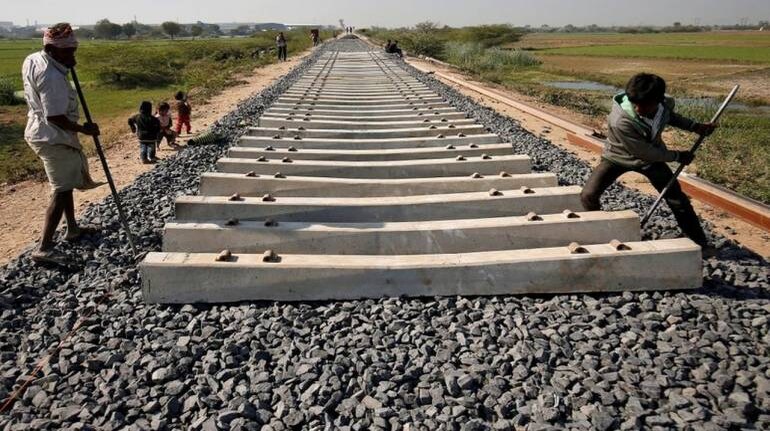
The Railways is planning to scale-up utilisation of MGNREGA for construction and repair of approach roads for level crossings and railway stations to mitigate the employment crisis among migrant workers who have returned to their villages because of the coronavirus pandemic, officials said Thursday.
Railway Minister Piyush Goyal, who discussed the plan at a high-level meeting, has asked the Zones to increase work allotted under the government's flagship rural job guarantee programme and explore ways to hire workers under the scheme, they said.
The Railways has asked Zones to prepare a list of labourers against the kind of work they can be involved in.
While the Railways has made use of the scheme in some district like Katihar in Bihar, Warangal in Andhra Pradesh, Udaipur in Rajasthan, Madurai in Tamil Nadu, Allahabad in Uttar Pradesh and Malda West Bengal, it has largely depended on private skilled labour in other areas, the officials said.
"We are exploring opportunities to generate jobs under MNREGA for migrants who have come back to the villages. It will be a win-win situation for all," said railway spokesperson DJ Narain.
A record 4.89 crore persons belonging to 3.44 crore households sought work under the Mahatma Gandhi National Rural Employment Guarantee Act in May this year, according to government data and the chasm between demand and supply seems to be widening with more and more migrant workers returning home.
Officials said since these workers are largely unskilled, they can be hired to construct and maintain approach roads for level crossings, cleaning silted water-ways, trenches, drains along track, construction and maintenance of approach roads to railway stations, repair of earthwork to the existing railway embankments/cuttings, clearing vegetation growth and take on activities like plantation at extreme boundary of railway land.
"Work under MNREGA for the Railways had not really taken off because the work would be far from the villages, being concentrated in urban areas. There are no railway tracks close to villages, there are hardly any bridges where we could use them.
"Second, these are all unskilled workers, the Railways does not have much use for them because of safety issues. However, these are uncertain times and is the need of the hour, so we want to ensure that we can maximise their employment," another official said.
According to official data, states like Uttar Pradesh (299.3 per cent), West Bengal (214.5 per cent), Odisha (113.5 per cent), Chhattisgarh (68.9 per cent), Madhya Pradesh (65.1 per cent) and Bihar (62.1 per cent) have shown the maximum increase in demand for jobs in May 2020 as compared to the same period last year.
These are all states where maximum labourers have returned.
Follow our full coverage of the coronavirus pandemic here.
Discover the latest Business News, Sensex, and Nifty updates. Obtain Personal Finance insights, tax queries, and expert opinions on Moneycontrol or download the Moneycontrol App to stay updated!
Find the best of Al News in one place, specially curated for you every weekend.
Stay on top of the latest tech trends and biggest startup news.