





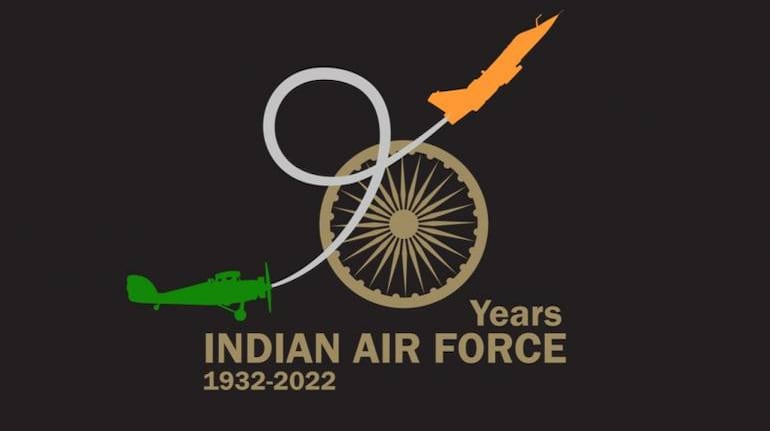
On the Saturday morning of October 8, wet at some places and dry at others, Indian Air Force (IAF) jets of various denominations roared through the skies, celebrating its 90th anniversary.
From Sukhna, Chandigarh, in North India to the Kalaikunda air base in Bengal to all air stations throughout the country, there are on display its prize fighter jets ― Sukhoi Su-30, Rafales, MIGs, and others ― the exhibitions coming in various shapes and sizes.
The day is being celebrated with the same zeal and pride at all air stations, with several states conducting their own parades at their respective airbases. A stickler for traditions, even the military parade will be conducted as per the same schedule and protocol followed each year.
The biggest display of air power, however, was moved from traditional Hindon ― Asia’s largest air base close to the national capital ― to Sukhna near Chandigarh. Eighty-three aircraft are involved in this spectacular show of strength. These include 44 fighter aircraft, 22 helicopters and seven vintage aircraft.
Also Read | All about IAF's new weapon system branch, first since IndependenceThe special feature of this show is the introduction of new indigenously-manufactured light combat helicopters, while nine aircraft will be kept on standby.
IAF Chief Air Chief Marshal, Vivek Ram Chaudhuri, was present on the occasion. The big highlight of the day will be the presentation of the new pattern of combat uniform for its personnel.
“It is a very special day. Real security lies in the prevention of war, and today it is coming through in all its glory. The IAF are true saviours of the air, and we are blessed to live in this country of real heroes,” said Air Commodore JS Sharma (retd).
Like most things put into place by the British, the IAF was established on October 8, 1932, in undivided India. It could scarcely have been divined then that by 2022, it would become the world’s fourth-largest air force in terms of complement of personnel and aircraft assets. The IAF employs over 1,400 aircraft and around 170,000 personnel.
Its primary mission is to secure Indian airspace and to conduct aerial warfare during armed conflict.
Since 1950, the IAF has been involved in four wars with neighbouring Pakistan. Other major operations undertaken by the IAF include Operations Vijay, Meghdoot, Cactus, and Poomalai. The IAF's mission expands beyond engagement with hostile forces, with participation in the United Nations (UN) Peacekeeping Missions.
When it came into being in 1932, the IAF ― or Royal Air Force (RAF) as it was then known ― possessed a strength of six British-trained officers and 19 air soldiers, its inventory including four Westland Wapiti army cooperation biplanes ― a tiny side show as compared to the biggies of the developed world.
But no sooner than four years later, it conducted its first combat mission in North Waziristan against insurgent Bhittani tribesmen. By World War II, the strength of the squad had risen greatly.
The IAF comprises a large number of women fighters, women navigators and officers. Even the Rafale fleet has a women fighter.
Apart from combat, the IAF has participated in relief operations during natural calamities. Foremost among these are the Gujarat Cyclone in 1998, the Tsunami in 2004 and floods in north India. It has created a record by rescuing stranded civilians during the Uttarakhand floods, where it rescued nearly 20,000 people.
The IAF motto comes from the 11th chapter of Bhagavad Gita and is an excerpt from the sermon given by Lord Krishna to Arjun on the battlefield at Kurukshetra during the Mahabharata.
Discover the latest Business News, Sensex, and Nifty updates. Obtain Personal Finance insights, tax queries, and expert opinions on Moneycontrol or download the Moneycontrol App to stay updated!
Find the best of Al News in one place, specially curated for you every weekend.
Stay on top of the latest tech trends and biggest startup news.




