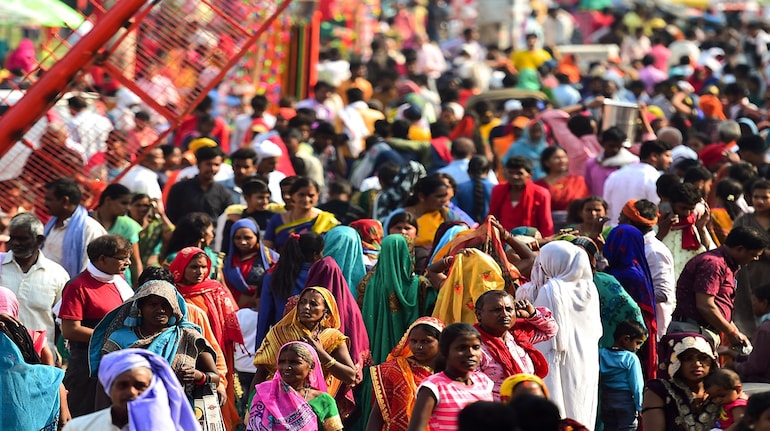

India will conduct its 16th national Census in 2027, marking a major shift as it will be the first Census to be carried out entirely through digital means. Approved by the Union Cabinet at a cost of Rs 11,718.24 crore, Census 2027 will also be the eighth Census since Independence and the world’s largest administrative and statistical exercise.
Two-phase Census exercise
The Census will be conducted in two phases.
The first phase, known as the Houselisting and Housing Census, will take place between April 1 and September 30, 2026. During this phase, enumerators will visit every household to collect detailed information related to housing conditions and amenities.
The second phase, which involves Population Enumeration, will be conducted simultaneously across the country in February 2027. In the Union Territory of Ladakh and snow-bound non-synchronous areas of Jammu & Kashmir, Himachal Pradesh and Uttarakhand, population enumeration will be carried out earlier, in September 2026.
Self-enumeration: A first for Indian Census
For the first time in Census history, citizens will be allowed to self-enumerate. A 15-day window will be provided before the start of the houselisting exercise in each state, as per a notified schedule.
During this period, citizens can fill in their details using a Self-Enumeration Portal or mobile application, reducing dependence on field enumerators and speeding up data collection.
Entirely digital data collection
Census 2027 will be conducted entirely through digital platforms. Data will be collected using mobile applications available on both Android and iOS devices. GIS-based digital maps will be used to create enumeration blocks for all villages and urban local bodies, ensuring complete geographical coverage.
A dedicated Census Management and Monitoring System (CMMS) portal has been developed to enable real-time monitoring and supervision of Census operations across the country.
New digital tools and innovations
Several new digital tools have been introduced for Census 2027. These include the Houselisting Block Creator web map application, which will be used by charge officers to ensure accurate demarcation of Census blocks.
The government has also introduced Census-as-a-Service (CaaS), which will provide ministries and departments with clean, machine-readable and actionable data, enabling faster and more effective policy-making.
Kind of nformation to be collected
During the houselisting and housing census, enumerators will collect 33 categories of information related to housing and household amenities. This includes data on building use, construction materials, number of rooms, ownership status, availability of toilets, sources of lighting and cooking fuel, LPG or PNG connections, main foodgrains consumed, and assets such as telephones, vehicles, televisions and internet access.
All information will be captured digitally through mobile devices.
Caste enumeration in Census 2027
Following a decision of the Cabinet Committee on Political Affairs in April 2025, Census 2027 will include caste enumeration, which will be carried out electronically during the Population Enumeration phase.
Workforce, training and deployment
About 30 lakh field functionaries, including enumerators, supervisors, trainers and census officers, will be deployed nationwide. Enumerators, primarily government teachers appointed by state governments, will conduct Census duties in addition to their regular work and will be paid a suitable honorarium.
Training of Census personnel will be carried out in phases beginning February 15, 2026.
Employment generation and capacity building
To support the digital Census infrastructure, around 18,600 technical personnel will be engaged for nearly 550 days, generating approximately 1.02 crore man-days of employment. The process is expected to significantly enhance digital and data-handling capacity at local, district and state levels.
Data use, access and confidentiality
Census 2027 will provide village-, town- and ward-level data on housing conditions, amenities and assets, demography, religion, caste, language, literacy and education, economic activity, migration and fertility.
The Centre aims to release Census data in the shortest possible time, supported by improved dissemination tools and customised visualisation platforms. All information collected will be kept strictly confidential, in accordance with the Census Act, 1948, and Census Rules, 1990.

Discover the latest Business News, Sensex, and Nifty updates. Obtain Personal Finance insights, tax queries, and expert opinions on Moneycontrol or download the Moneycontrol App to stay updated!
Find the best of Al News in one place, specially curated for you every weekend.
Stay on top of the latest tech trends and biggest startup news.