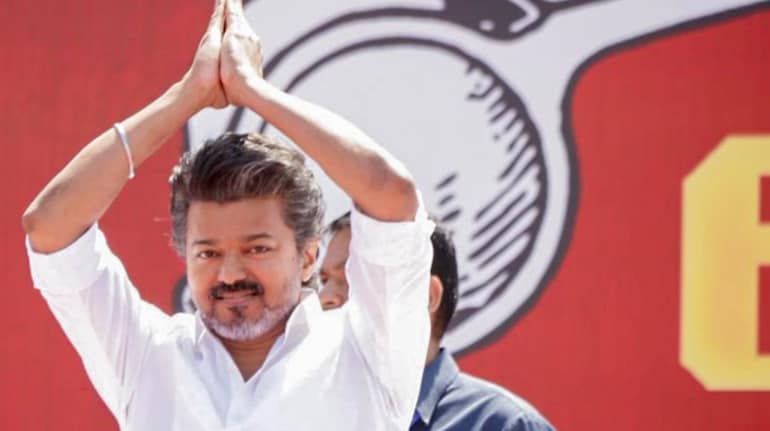

The entry of actor Vijay’s Tamilaga Vettri Kazhagam (TVK) is turning the 2026 Tamil Nadu Assembly election into a far more complex and unpredictable contest, particularly in urban centres like Chennai. What was once a relatively stable bipolar structure now appears headed toward a three-way fight, with TVK positioned as a disruptor rather than a conventional challenger.
Chennai as primary battleground
The most immediate and visible impact of TVK is likely to be felt in Chennai, where all 16 Assembly constituencies were swept by the DMK in 2021. Vijay’s decision to focus heavily on the capital reflects both strategy and symbolism. His expected candidature from Perambur, close to Chief Minister MK Stalin’s Kolathur seat, sharpens the contest into a direct political statement.
TVK functionaries are also targeting key constituencies such as Villivakkam and T Nagar, signalling a coordinated push rather than a symbolic presence. The party’s appeal among younger voters and lower-income groups adds to the uncertainty for the ruling party, especially in dense urban pockets where personality-driven politics can carry weight.
Because the Dravida Munnetra Kazhagam (DMK) currently holds every seat in Chennai, even marginal gains by TVK would come directly at its expense. This makes the city not just competitive, but central to interpreting the broader electoral trend.
From bipolarity to triangular contest
For decades, Tamil Nadu politics has largely revolved around two dominant Dravidian parties. The emergence of TVK introduces the possibility of a three-cornered contest, complicating vote calculations across the state.
Recent vote share estimates underline why TVK’s presence matters. In the 2024 Lok Sabha election, the DMK-led alliance secured around 47% of the vote, while the All India Anna Dravida Munnetra Kazhagam (AIADMK) bloc and the BJP-led alliance lagged behind. Analysts suggest that bridging even a five-percentage-point gap could significantly alter competitiveness -- something only a new entrant like TVK might achieve.
This explains the intense speculation around potential alliances. Yet, TVK has repeatedly rejected such overtures. As one senior party leader put it, “fancy offers” including “90 assembly seats and the post of Chief Minister for one half of the Assembly term of five years” were turned down. Vijay himself reinforced this stance, stating, “There is no such team. We belong only to the people’s team.”
Disruptor effect, vote fragmentation
Historically, third forces in Tamil Nadu have rarely won power but have often influenced outcomes by splitting votes. TVK appears poised to play a similar role, though with a potentially larger footprint given Vijay’s popularity.
Its independent stance could fragment anti-incumbency votes, particularly in urban and semi-urban constituencies. The key question is whether this fragmentation benefits the ruling alliance by dividing opposition votes, or weakens it by drawing away sections of its own support base.
The AIADMK’s declining urban presence further amplifies this uncertainty. As its influence contracts, especially in Chennai, the contest increasingly resembles a direct DMK versus TVK battle in certain pockets.
Ideological positioning, voter messaging
TVK has also attempted to carve out a distinct ideological space. Vijay has emphasised that the party will not compromise on “secular social justice principles,” distancing itself from both major alliances. This positioning aims to appeal to a broad coalition without being subsumed into existing political blocs.
At the same time, the party’s messaging remains personality-driven, anchored in Vijay’s public image and mass appeal. Whether this can translate into sustained electoral organisation remains an open question.
Test of machinery versus momentum
Ultimately, the election -- especially in Chennai -- will test two contrasting political strengths. On one side is the DMK’s entrenched grassroots machinery and established leadership. On the other hand is Vijay’s star power and ability to mobilise new voters.
The outcome may not hinge solely on who wins the most seats, but on how significantly TVK alters vote shares and political equations. Even a modest performance could reshape alliances and strategies in the state going forward.
In that sense, TVK’s biggest impact may not be immediate victory, but its capacity to redraw the contours of Tamil Nadu politics.

Discover the latest Business News, Sensex, and Nifty updates. Obtain Personal Finance insights, tax queries, and expert opinions on Moneycontrol or download the Moneycontrol App to stay updated!
Find the best of Al News in one place, specially curated for you every weekend.
Stay on top of the latest tech trends and biggest startup news.