




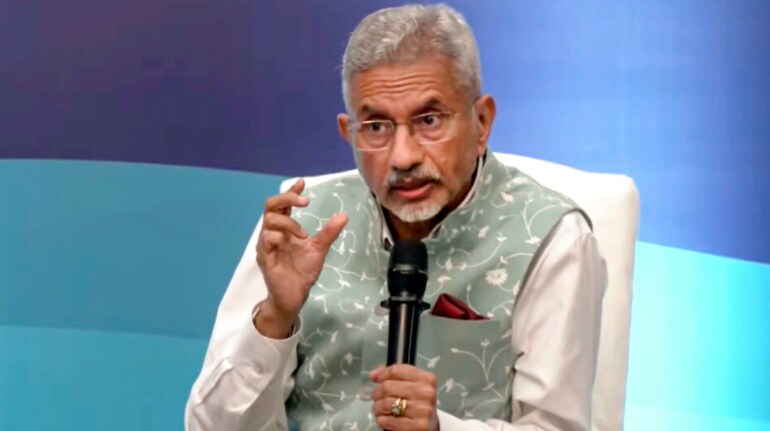
External affairs minister S Jaishankar has said that Indian strikes on the eight Pakistani airbases on May 10 was the turning point in the conflict last month, forcing Islamabad to sue for peace.
In an interview to US website Politico, Jaishankar said that the destruction left behind by India on the airfields is for the whole world to see.
"The fighting stopped on the 10th for one reason and one reason only, which was that on the 10th morning we hit these eight Pakistani, the main eight Pakistani airfields and disabled them," he said, effectively suggesting again that there was no third party mediation, contrary to US President Donald Trump's claims.
He added: "And don't take my word for it, these are images which are available in Google. You can look at those runways and those hangars which have taken the hit".
The minister said that India inflicted far more damages on Pakistani Air Force than the other way around.
Jaishankar said that the "destroyed and disabled airfields on the Pakistani side" are proof of the effecitveness of India's Rafales and other systems.
The remarks also assume significance amid questions over India losing some jets during the military escalation. Chief of Defence Staff (CDS) General Anil Chauhan had earlier revealed that India lost some fighter planes but learned from its mistakes and bounced back quickly.
Jaishankar also underpinned India's new doctrine against terror in a strong message to Pakistan, saying that if barbaric acts like the Pahalgam terror attack continue in the future then there is going to be retribution.
"Pakistan is training thousands of terrorists in the open and "unleashing" them on India. We are not going to live with it. So our message to them is that if you continue to do the kind of barbaric acts which they did in April, then there is going to be retribution, and that retribution will be against the terrorist organizations and the terrorist leadership."
He added: "And we don't care where they are. If they are deep in Pakistan, we will go deep into Pakistan."
During the interview, he also described Pakistan as a country "very steeped in its use of terrorism as an instrument of state policy", adding that this is the major issue behind regional tensions.
India and Pakistan reached a ceasefire understanding on May 10 after four days of intense military conflict triggered by the deadly Pahalgam attack on April 22.
India struck nine terror facilities in Pakistan and Pakistan-occupied Kashmir under Operation Sindoor, which triggered a massive escalation between the nuclear-armed neighbours. India's air strikes on key Pakistani airbased marked the turning point in the conflict.
Discover the latest Business News, Sensex, and Nifty updates. Obtain Personal Finance insights, tax queries, and expert opinions on Moneycontrol or download the Moneycontrol App to stay updated!
Find the best of Al News in one place, specially curated for you every weekend.
Stay on top of the latest tech trends and biggest startup news.