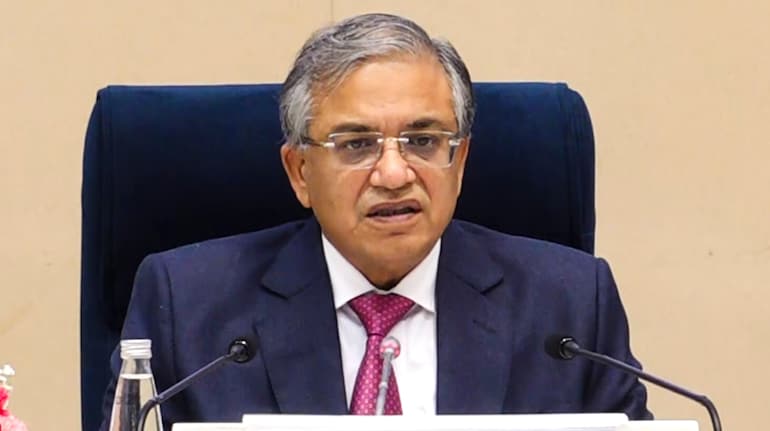

Elections for West Bengal, Tamil Nadu, Kerala, Assam and Puducherry will be held from April 9 to 29 and the results will be declared on May 4, the Election Commission announced on Sunday.
During a media briefing on Sunday, Chief Election Commissioner Gyanesh Kumar said that West Bengal will go to polls on April 23 and 29, Kerala on April 9, Tamil Nadu on April 23, Assam on Arpil 9, and Puducherry on April 9.
"The elections represent the cultural richness of polls and reflect unity and diversity of our nation. Around 17.4 crore electors are going to vote in this elections. We will also see our guests from more than 20 countries from their electoral commissions who will be visiting these elections for witnessing the festive celebrations," Kumar said.
The terms of the Assemblies in all these states and Puducherry end between May and June. The West Bengal Assembly’s term gets over on May 7, Tamil Nadu’s on May 10, Assam’s on May 20, Kerala’s on May 23, and Puducherry on June 15.
Here is the full schedule.
| State/UT | Assembly Seats | Polling Date(s) | Counting Date |
|---|---|---|---|
| West Bengal | 294 | April 23, 29 | May 4 |
| Tamil Nadu | 234 | April 23 | May 4 |
| Kerala | 140 | April 9 | May 4 |
| Assam | 126 | April 9 | May 4 |
| Puducherry | 30 | April 9 | May 4 |
In 2025, the NDA secured victories in both Delhi and Bihar, while the opposition’s INDIA bloc struggled to recover lost ground, finishing the year as a politically weakened front facing an uncertain future.
The 2026 elections carry significant stakes for the two major national parties—the BJP and the Congress—as well as for the LDF and key regional players such as the Trinamool Congress, DMK, and AIADMK.
West Bengal
The state is scheduled to elect members to its 294-seat Legislative Assembly in two phases on April 23 and 29.
Amid protests by the ruling Trinamool Congress against alleged voter roll deletions via Special Intensive Revision (SIR) in West Bengal, the BJP is preparing to unseat the government led by Mamata Banerjee, which has been in power since 2011. In 2021, the Trinamool won 213 seats, while the BJP bagged 77 seats.
Meanwhile, Congress has decided to fight a solo battle against Trinamool and BJP.
The BJP has already launched an aggressive campaign, sensing a strong opportunity to come to power as the ruling Trinamool grapples with multiple challenges, including corruption allegations such as the teacher recruitment scam, public anger over crimes against women including the RG Kar rape case, and growing anti-incumbency.
Official figures released on February 28 show that nearly 63.66 lakh names have been deleted since the SIR exercise began in November last year, reducing the total number of voters from about 7.66 crore to just over 7.04 crore.
Assam
Assam is scheduled to hold elections on April 9 to elect 126 members of the state assembly.
In 2021, Chief Minister Himanta Biswa Sarma secured a decisive mandate, with the BJP-led alliance winning 75 seats.
However, the state government is confronting a few challenges, including signs of anti-incumbency.
While welfare schemes remain popular, there are indications of fatigue among sections of voters. Ethnic tensions in Bodoland and nearby regions continue to simmer, even as opposition parties sharpen their attacks over alleged corruption and the government’s style of governance.
Last month, the state BJP said the Assembly elections would “fundamentally be a contest between the indigenous Assamese populace and the Miya Muslim community of East Bengal (Bangladeshi) origin”.
The rival Congress has stepped up its preparations ahead of the polls, with Gaurav Gogoi, the Lok Sabha Deputy Leader of the Opposition, playing a prominent role in the party’s campaign outreach. Apart from the BJP and the Congress, the AIUDF remains a significant political force, particularly among minority voters.
In Assam, where a Special Revision was held instead of SIR, around three lakh voters were deleted.
Tamil Nadu and Puducherry
The polls to elect all 234 members of the Tamil Nadu Assembly will be held in one phase on April 23 and the 30-member Puducherry Assembly will be held on April 9.
The ruling DMK, led by Chief Minister MK Stalin, is seeking a second term, while the AIADMK remains the principal Opposition pole parry. The electoral contest has also widened with Tamilaga Vettri Kazhagam (TVK), founded by actor Vijay, entering the fray in the state.
For the BJP, the Tamil Nadu polls is an attempt to expand its footprint in a state long dominated by DMK and AIADMK. The saffron party is aiming to strengthen its vote share, build an independent political base and challenge the entrenched Dravidian political order.
In 2021, the DMK-led alliance secured 159 of the 234 seats, while the AIADMK won 66. The AIADMK had allied with the BJP in the last assembly election.
SIR has also emerged as a key issue in the state. The draft roll published last year showed that 97.37 lakh names had been removed, bringing the voter count in Tamil Nadu down from about 6.41 crore to 5.43 crore in the draft list.
Meanwhile, Puducherry also carries political significance, with the Union Territory closely mirroring the developments of neighbouring Tamil Nadu.
A victory or a strong performance by the BJP there would bolster its narrative of expanding influence in southern India.
In 2021, the All-India NR Congress-led National Democratic Alliance government came to power in 2021. This time, it is facing a challenge from the Secular Progressive Alliance—which includes the Congress and the DMK—as it seeks to retain power in the Union Territory.
Kerala
Kerala is set to hold Assembly elections to elect a new 140-member legislature on April 9.
The state is currently governed by the Left Democratic Front under Chief Minister Pinarayi Vijayan, which holds a majority in the Assembly.
The LDF is grappling with anti-incumbency, the shadow of the Sabarimala gold smuggling scandal, and signs of a shift in sections of the Christian vote. It faces a stiff challenge from the Congress-led United Democratic Front (UDF), the other power center in the state.
Meanwhile, the BJP is also hoping to shake up the political landscape after two recent breakthroughs in the state: its Lok Sabha victory in Thrissur in the 2024 general election and its capture of the Thiruvananthapuram Municipal Corporation in December.
Kerala remains the only state currently governed by Left parties.
The LDF returned to power in the 2021 Assembly elections, securing 99 of the 140 seats.
Discover the latest Business News, Sensex, and Nifty updates. Obtain Personal Finance insights, tax queries, and expert opinions on Moneycontrol or download the Moneycontrol App to stay updated!
Find the best of Al News in one place, specially curated for you every weekend.
Stay on top of the latest tech trends and biggest startup news.