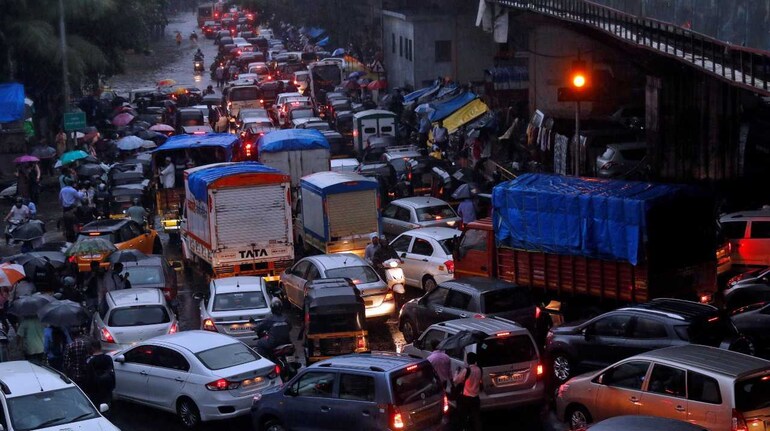
The Delhi government’s crackdown on older vehicles has triggered widespread public backlash, especially from vehicle owners who feel the policy is unfair and financially burdensome.
Under the newly enforced rule, petrol vehicles older than 15 years and diesel vehicles older than 10 years are now barred from refueling at fuel stations across the capital. The move is part of the government’s effort to reduce air pollution and is being implemented using Automated Number Plate Recognition (ANPR) cameras installed at fuel stations to automatically detect and block refueling of such “end-of-life” vehicles.
But the public isn’t buying the reasoning, at least, not all of it.
“Why pay road tax for 15 years?”
A growing number of Delhi residents have taken to social media, questioning why road tax is collected for 15 years on diesel vehicles when they are banned after 10 years.
“Why pay road tax for 15 years if diesel cars are scrapped after 10?” asked one user, Varun Bahl, summing up the frustration shared by many.
Why are we paying road tax for 15 years for diesel cars but the have to be scrapped in 10 years.Please enlighten me — Varun Bahl🇮🇳 (@bahl65) July 1, 2025
Another user posted:
“A 15-year-old car in NCR isn’t even 30% used. This rule is ridiculous. The government needs to reconsider.”
15 years old car in NCR is not even utilised 30% of its actual capacity. This rule is ridiculous. Government needs to reconsider this. — V Tyagi (@tyagipv) July 1, 2025
Some even alleged that the policy benefits the auto industry and government revenue more than the environment.
“GST collection has to be increased! People will buy new vehicles, and the government gets huge GST! Let the poor and middle class go to hell!” said one angry post. “Rich will become richer, and the middle class will suffer.”
GST collection has to be increased ! People will buy new vehicles and government gets huge amount of GST ! Auto industry will thrive more and auto stocks will go up as well ! Let the poor and middle class go to hell ! Rich and extremely rich will become more rich and poor and…— Deepak Chhabra (@deepakchhabbra) July 2, 2025
“What is road tax even for?”
The ban has reignited a long-standing debate on India’s layered taxation system for vehicle owners. Many users questioned the relevance of road tax when GST, income tax, tolls, and fuel taxes are already being collected.
“Why are we even paying road tax? We already pay GST on every item, income tax funds infrastructure, and we pay toll on highways. So what exactly is road tax for? It’s high time this loot stops,” read one viral comment.
Why are we even paying road tax? We already pay GST on every item. We pay income tax, which the govt claims funds infrastructure. And then when we use highways, we pay toll again! So what exactly is road tax for? It’s high time this loot stops. Road tax must be abolished. — Sanathani Soul🇮🇳 (@ShauryaMonk) July 2, 2025
Policy’s real purpose in question
Several users also questioned the true motive behind banning older vehicles, asking if it's really about pollution or just a way to boost new car sales.
“Old cars are being forced off roads in the name of pollution control. But is it really about the environment—or a collaboration between carmakers and the government?” one user asked.
In the name of pollution control, old cars are being forced off roads.🚙🚙 But is it really about the environment, or a hidden collaboration between car makers and the government to boost new car sales?— Preety Gupta (@PreetyGupta90) July 2, 2025
Others pointed out the unreliability of the Pollution Under Control (PUC) certification process, suggesting that a trusted emissions test would be a better solution than blanket bans.
“If pollution is the issue, make the PUC certificate trustworthy. Right now, it’s just a rubber stamp,” said a user urging a PIL (Public Interest Litigation) to be filed against the policy.
Someone needs to take a PIL on this to the courts. If pollution is the issue make the PUC Certificate more trusted and not something you get without even proper testing. — Vidushi🇮🇳 (@Vidushikhanna4) July 2, 2025
Real people, real losses
For many, the policy isn’t just about principle, it’s personal. Delhi resident Ritesh Gandotra was forced to sell his 8-year-old diesel Range Rover, still in excellent condition with only 74,000 km on the odometer, at a heavy loss because of the 10-year rule.
“This rule punishes responsible ownership and ignores the actual condition of the vehicle,” Gandotra said.
What the law says
According to the Ministry of Road Transport and Highways, for private diesel vehicles, road tax is collected one time for 15 years. After that, owners can pay to renew the registration for an additional five years. However, in Delhi, the National Green Tribunal (NGT) order prohibits diesel vehicles from operating beyond 10 years, making the 15-year tax payment moot for many residents.
While authorities argue that the policy is crucial for public health and cleaner air, critics believe it comes at the cost of fairness, transparency, and financial equity for everyday citizens.
Discover the latest Business News, Sensex, and Nifty updates. Obtain Personal Finance insights, tax queries, and expert opinions on Moneycontrol or download the Moneycontrol App to stay updated!
Find the best of Al News in one place, specially curated for you every weekend.
Stay on top of the latest tech trends and biggest startup news.