







This started out as a story on disruption – disrupted supply chains, livelihoods, an entire ecosystem of fashion and craft-based businesses struggling to access artisans and markets. But in the end, it also turned out to be a story of innovation, of exploring new markets and the use of technology.
The facts: The 2011 census put the number of artisans and craftsmen at 7 million, some of them were self-employed, many working with craft-based brands such as Dastakaar and Bandhej, as well as with home-grown fashion labels. Add to that the artisans who work in the jewellery industry, the diamond cutters and the stone setters, and the number could well breach over a crore.

These artisans are the wheels that keep India’s indigenous handmade luxury industry moving. Not to mention small and medium artisans-based enterprises, besides global brands such as Dior and Saint Laurent who outsource their high-end embroidery and craftwork to India without offering any employee benefits.
In the brouhaha surrounding the desperate migrant situation, the artisans have been largely forgotten. Luxury industries such as woven rugs, fashion, jewellery, design, and, to an extent watches, depend on either artisans working from their towns and villages, or those who migrate to urban areas to be close to businesses.
 “According to the Artisan Alliance, the artisanal craft is the second-largest source of employment across the developing world. COVID-19 has threatened global trade flows, artisan groups and local crafts-based communities,” says Suki Dusanj, Country Head, Fashion Revolution India (a not-for-profit global movement that campaigns for systematic reform in the industry).
Among those hardest hit are the self-employed artisans and weavers, dependent on seasonal retail sales and direct orders from global fashion brands. As Dusanj points out, “In the global fashion industry, brands typically pay their suppliers weeks or even months after delivery. Suppliers usually pay upfront for the materials or fibres used to make the products. In response to the pandemic, many major fashion brands and retailers are cancelling orders and stopping payments for orders already placed, taking no responsibility for the impact this has on the people working in their supply chains.”
Disrupted businesses and supply chainsTwo factors have hit the handmade luxury industry hard, besides, of course, the lack of demand which will persist even after the lockdown opens. One is the widespread raw material and supply chain disruptions. “Artisans with a limited supply of raw material will be idle soon. Many are stuck with stock made for exhibitions and marketplaces that are now closed,” says Radhi Parekh, founder of Mumbai’s ARTISANS’ gallery.
 Designer Payal Khandwala, who works with artisans in Benaras, West Bengal and Bhagalpur, even artisans with looms in their homes do not have access to yarn and dyes. And even if they did, there is no way for them to deliver the ready goods. Besides, as K Radharaman, founder of the House of Angadi, points out, pre-weaving processes such as dyeing depend on a few organised dyeing units in the handloom clusters. “We can expect further delays until these units resume work.”
 Reverse migration has only made the situation far more critical. Rahul Mishra, who works with 80 embroiderers at his atelier in Noida and 1,000 craftsmen across various villages, reveals, “Some of the weavers, embroiderers and producers of raw materials, which may be required soon, have reverse migrated to their homes from the urban slums of Dharavi.”
But then, this was expected. As the founders of the haute couture fashion label Leconet Hemant state matter-of-factly, “In a difficult time like this, it is expected for people to fall back on their safety net, be in the company of loved ones back home.”
Most designers and artisans-based entrepreneurs agree that getting the people who have gone home to come back will be a difficult task because of the insecurity and the sheer trauma some of them may have experienced to get back home.
Artisan-based businesses are struggling to make sense of the future. Large-scale cancellations of export orders and the possibility of bankruptcy of big buyers are likely to trigger a dire chain reaction for many of their suppliers in India, creating a crisis in an industry that employs millions, contends K Radharaman, founder of the House of Angadi, a bespoke sari label.
 The niche small-scale end of the segment, which works on slim profit margins, is equally harrowed. Parekh says, “Travellers are our primary customers at the gallery. With few people travelling, even when the market does open, it will be a challenge to kick-start the already sluggish economy. The craft industry has seen an escalation of demand in the last few years, with many young artisans coming back into their family's skilled occupations. We could risk losing India's unique craft skills if we fail to support this sector. The human and economic cost will be great and with it the loss of our heritage.”
Like all businesses, artisan-based businesses are struggling with zero earnings and high outgoings such as rentals, payments and salaries. “Liquidity would be a problem after the lockdown is released, but, I am an inherent risk taker as an entrepreneur. It is the time to innovate, re-calibrate our resources and re-focus on our core philosophies,” says Mishra, who is working on a financial plan to employ additional 30% artisans in the post-COVID opening phase.
Upending through tech and innovationWhile nothing much can be done about cancelled orders by global brands, no one ever said that Indians were not innovative. The situation may force home-grown luxury industries to upgrade on the back of technology and evolution of a more organized work system, besides support a well-oiled and tech-savvy network of artisanal clusters across the country.
 Innovation will be the key to how the industry evolves, believes Anavila Misra, the lady behind the sustainable Anavila brand. “We have to come up with ideas on how the artisans can work and create while living within their eco-system and their communities. And how can businesses/design houses can look at a two-way supply chain.”
Decentralization: Work-from-home will eventually become the bedrock of artisans and weavers-led industries such as fashion. Ankit Mehta, co-founder of The Walking Tree Group (which owns Her Story, a contemporary jewellery label) contends that while artisans will return to work in the short-term, driven by the need for a job, eventually people will choose options that allow them to be closer with their families, as industries move to smaller towns and cities.
For many, Mehta’s long-term is already a reality. Mishra’s team, for instance, has provided many artisans with the raw material required to continue working during the lockdown. “The Khatwa women in Jharkhand have the fabrics and designs, and the weavers in West Bengal have yarn on their loom. A long-continued lockdown would throw up a supply chain challenge. However, we are in the process of evaluating options such as the cargo services of the Indian Railways, when things begin opening up in the next 30 days.” His team is also working on blueprints and designs to share with their weavers and artisans.
Wh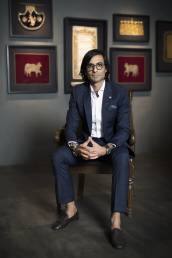 ile the jewellery industry is pretty much at a standstill and jewellers have shuttered their manufacturing units (“We are human labour dependent. Our artisans cannot make jewellery at home,” says Tarang Arora, CEO of Amrapali label), some like Raniwala 1881 have shifted design and handcrafting operations to artisans’ home.

“Considering the costs and logistics, and the transformation in the way we will do business in the future, work-from-home will be a strategy not limited to the urban world,” says the brand’s director, Abhishek Raniwala.
Logging into the digital world: What will also transform how weavers work in the post-COVID world is their eventual mobility into a digital world. Palak Shah, CEO of Ekaya, a bespoke fashion label that works with 8,000 weavers in Benares, says that they are rethinking how the entire business model will run. “Our artisans were not just used to coming in and out of our offices since there is a lot of back and forth on designs, but would also bring the final weaved saris wrapped in potlis. Now that touchpoint could be a source of infection. We are working on a system where the weavers will be invited to meet us once a week and ask all their questions about designs and other things, instead of randomly strolling in and out of the office. We have already started using WhatsApp to give instructions and designs and check their progress. A lot of our work will go digital and we are in the process of familiarising our weavers with the digital world.”
Finding new markets: The local or domestic market would eventually hold the key to revival. “We need to build value for craft and artisanal heritage in India, similar to the Swadeshi movement,” says Parekh.
Organisations such as Fashion Revolution India encourage eschewing fast fashion fixes and investment in locally crafted and Fairtrade pieces by sustainable brands. “A lot of the independent and sustainable brands are asking their communities to buy gift cards for future orders so that the artisans can continue producing,” says Dusanj. “We have worked with incredible independent brands like Iro Iro zero waste in Jaipur, Ka-Sha in Pune and Bodice in Delhi for our Fashion Open Studio dialogues so that our audiences understand the commitment these brands have to sustainability.”
Many artisans-backed design labels such as the haute couture brand Leconet Hemant are brainstorming on how their products can align with the actual need of the moment. “A shift towards safety apparel and protective gear is expected and we should be prepared to offer innovation.”
Designers like Mishra are gearing up for a change in consumer habits. “There will be a shift toward more conscious buying. We are preparing for occasion-led buying, such as weddings and festivals to help the market revive slowly.” E-commerce rather than retail stores will drive businesses. As Anavila says, “Innovative collections sold online will help us reach the right customers.” Ekaya is working on an e-commerce platform that will offer customers a preview of the collection in the store, from which they can choose. “They can come into the retail store, pick what they want from their online choices, buy the sari and leave within 15 minutes.”
Make in India: Handmade jewellery labels such as The Walking Tree group are hoping to leverage a shift of manufacturing away from China, and towards India. “India will be in a good position to get more manufacturing diverted here,” says Mehta.
Artisanal luxury businesses are also hoping that, like China, pent-up demand will kick in at some point. “But until we see some evidence of this post lockdown, it will remain in the realm of speculation,” says Radharaman. “The artisans, meanwhile, at least in some of the clusters have fallen back on their second occupation. They are also agriculturists and will be able to manage for a few months.”
Deepali Nandwani is a journalist who keeps a close watch on the world of luxury.
Discover the latest Business News, Sensex, and Nifty updates. Obtain Personal Finance insights, tax queries, and expert opinions on Moneycontrol or download the Moneycontrol App to stay updated!

Find the best of Al News in one place, specially curated for you every weekend.
Stay on top of the latest tech trends and biggest startup news.




