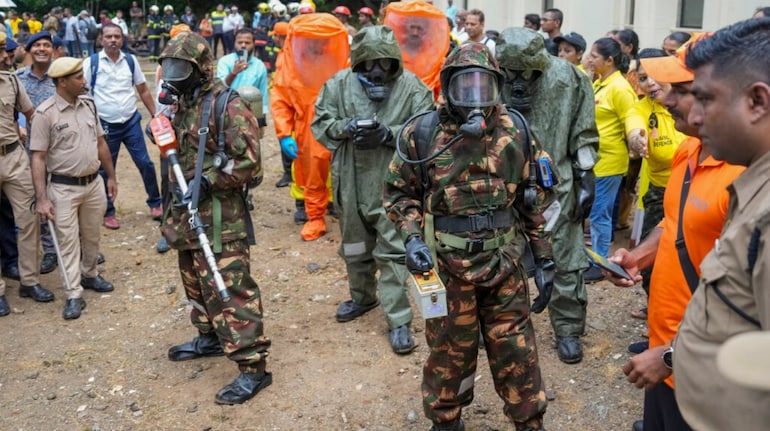
Amid the escalated tensions between India and Pakistan, the Ministry of Home Affairs has instructed the chief secretaries and administrators of all states and Union Territories to invoke the emergency powers provided to them under Civil Defence Rules.
Chief secretaries and administrators have been specifically asked to activate dormant wartime protocols, streamline coordination with central agencies, and ensure critical infrastructure is fully secured.
What Are the Civil Defence Rules?
The Civil Defence Act, 1968, empowers the Centre and state governments to take specific measures to protect civilians and maintain essential services during any threat of war, natural disaster, or enemy attack—including air raids. The Civil Defence Rules, notified under this Act, give authorities the power to:
In essence, the invocation of these powers transforms administrative bodies into war-mode coordination units, integrating civilian and military preparedness.
Why Now?
This escalation comes in the wake of Pakistan’s failed attempts to target Indian military installations in Jammu, Pathankot, Udhampur, Samba, and RS Pura using drones and loitering munitions—attacks that were largely intercepted by India’s S-400 air defence systems. The strikes followed India’s precision Operation Sindoor, which targeted terror hubs in Pakistan-occupied Kashmir after the Pahalgam terror attack.
The MHA's directive indicates that the government is not only preparing for possible attacks in future, but is also anticipating the need to safeguard civilian populations, infrastructure, and communication networks in case of any escalation into conventional warfare.
What Will This Look Like on the Ground?
With Civil Defence Rules in force, the public could see:
Emergency Purchases
One of the most critical implications of this order is that state governments can now bypass bureaucratic delays to immediately procure essential emergency supplies.
Ordinarily, such purchases would go through months of tenders, audits, and departmental clearances. But under the Civil Defence emergency provisions, officials can act immediately—recognizing that in wartime or high-risk situations, delays can cost lives.
Who Will Handle These Powers?
The Director of Civil Defence in each state or Union Territory will now take the lead in activating and overseeing these emergency powers. Local authorities, including district magistrates and municipal bodies, will be allowed to:
Discover the latest Business News, Sensex, and Nifty updates. Obtain Personal Finance insights, tax queries, and expert opinions on Moneycontrol or download the Moneycontrol App to stay updated!





Find the best of Al News in one place, specially curated for you every weekend.
Stay on top of the latest tech trends and biggest startup news.