




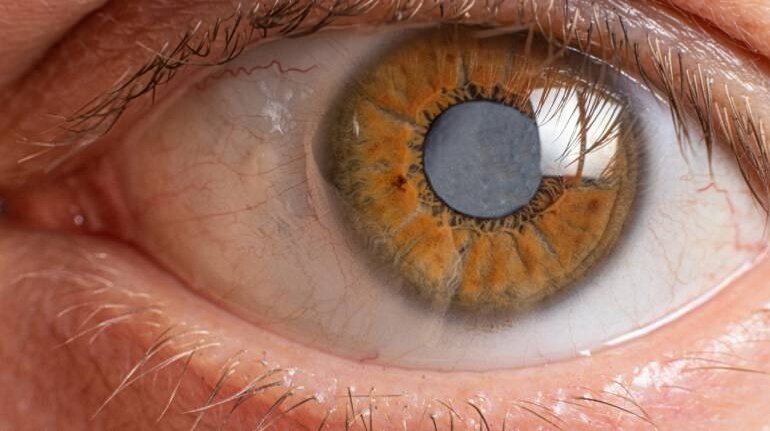
Trouble reading the printed word, no matter how big or bold the letters are? Bright sunlight makes you uncomfortable? Perhaps, you are also scared of driving in the night because you feel your eyesight is weak! Get yourself checked for cataract, a common eye problem mainly observed when you age. It changes your vision and how you see and experience things around you.
Cataract refers to the development of any opacity in the eye's lens that can impair the vision of those affected. It is broadly classified into congenital and acquired.
Cataracts are either present from birth or develop during childhood, but mostly they occur as you get older. When cataracts are present from birth or develop in childhood, they are called congenital or developmental cataracts. These are quite common in the general population and are usually small and don't affect vision much. Nevertheless, if they are dense or linked to other health problems, they can cause vision problems and need to be treated promptly.
Senile cataracts are the most common type of cataracts in older people, usually those over 50 years old. As we age, our body's ability to make important proteins for the lens in our eyes decreases. This causes the lens fibres to become cloudy, leading to the development of age-related cataracts.
An older adult suffering from cataract may experience symptoms like 'glare' or intolerance to bright light. For example, direct sunlight or headlights of a vehicle. Coloured halos can be observed by people, along with black spots or floaters. Blurring of vision and distortion of objects is one of the early signs of senile cataract. When the opacity is present in the centre, the person sees better in dim light or in the evening. In contrast, when the opacity is peripheral, their vision is enhanced in bright light.
The risk factors for the development of senile cataract that one must keep in mind are as follows
Age: As the name suggests, age-related or senile cataract is more common after age 50, and most people above 70 years tend to develop an opacity in the lens.
Sex: Though it can occur in either gender, the prevalence of the cataract has been found more in females. Blindness, a later complication of this disease, also witnesses a gender disparity - women being more susceptible to it.
Heredity: Familial influence has been observed in cases of cataract, where children of those parents who have cataract are likely to develop it during their lifetime. The genetic component also influences the age of onset and maturation of the disease.
Ultraviolet radiation: A direct relation between exposure to UV radiation and cataract has been established. Harmful rays from the sun entering the eyes can damage them, forming an opacity. You must use sunglasses when you step out in the heat and prevent direct sunlight exposure to your eyes.
Dietary deficiencies: A diet that does not include enough proteins, riboflavin, and vitamins E and C can be one of the reasons for the slow deterioration of the lens fibres. It is crucial to include essential nutrients and micronutrients in your meals. A balanced diet with citrus fruits, milk, and yoghurt is recommended.
Loss of water: Prior episodes of diseases that result in a significant loss of water, like, cholera or diarrhoea, can affect the age of commencement of opacification of the lens. It is necessary to bring the electrolyte levels to normal and keep hydrated.
Smoking: Making its way into yet another condition, tobacco accumulates certain pigmented compounds that can lead to yellowing. Substances called 'cyanates' present in smoke can result in the degradation of lens protein. It is advised to keep cigarettes at arm's length and short to chewing gums and meditation to rid yourself of the habit slowly.
Discover the latest Business News, Sensex, and Nifty updates. Obtain Personal Finance insights, tax queries, and expert opinions on Moneycontrol or download the Moneycontrol App to stay updated!
Find the best of Al News in one place, specially curated for you every weekend.
Stay on top of the latest tech trends and biggest startup news.




