India’s delayed climate plan sets weak new emissions goal
The new goal to reduce emissions intensity is calculated against a baseline year of 2005, and makes only an incremental advance on the nation’s prior commitments

Climate justice runs into an accounting wall
Climate finance remains a knotty affair. Rich countries want developing ones to work towards climate goals, but they need money to do that. Worse, rich ones stand accused of creative accounting on their own financing targets
OPINION | The Silent Inflation Driver: How extreme weather is transforming India’s food economy
Extreme weather is raising food inflation in India. It disrupts farming and supply chains. At the same time, it is pushing investment in better storage, technology, and stronger systems
India’s carbon course: Pricing emissions without cutting them?
As New Delhi launches its Carbon Credit Trading Scheme, the real challenge lies in turning climate intent into credible carbon costs that can drive deep industrial decarbonisation
OPINION | India's climate strategy hides in plain sight
Adaptation finance in the country is not merely about carbon markets and tech transfer. It’s about community level changes to make agriculture more resilient and institutional improvements to insulate cities from extreme weather patterns
OPINION | Can India’s carbon market shield exporters from Europe’s climate tax?
With both systems launching in 2026, India’s carbon market could help exporters manage costs and compliance, but its effectiveness will depend on design, credibility, and alignment with EU rules
OPINION | Budget 2026: Turning India’s clean energy ambition into execution
Clean energy value chains need to be free of some tax anomalies and also helped through cleverly designed fiscal incentives
OPINION | Budget 2026 and India’s accelerated climate and sustainability agenda
Budget 2026 is expected to boost clean-tech, renewables, storage, sustainable finance, critical minerals, and social governance reforms, strengthening India Inc.’s resilience and supporting inclusive, low-carbon growth
India’s climate report card signals structural policy challenges
India's dramatic plunge in the 2026 global Climate Performance Index suggests a worrying structural reversal from its vantage position on climate action
Budget 2026 — Can India build the financial backbone for its climate ambitions?
As global climate politics is fractured, India’s next Budget must move beyond capacity creation to fixing the missing pieces of its energy transition
OPINION | The conflict between the carbon offset mechanism and green credit programme
Overlapping registration of forestry projects under India’s carbon and green credit schemes enables double-counting of environmental benefits, threatening market integrity, credibility, and investor trust in the country’s emerging climate frameworks
OPINION | From Risk to Returns: Why adaptation is India’s next climate-business frontier
India’s climate future hinges on adaptation, not just mitigation. By investing in resilient infrastructure, supply chains, and technologies, India can turn climate risks into economic opportunities
Climate action: Why India must shift from targets to outcomes
Grid bottlenecks, coal dependence, and funding gaps show why India’s climate fight now hinges on delivery
OPINION | Mirage of Critical Mineral Diversification: How re-export hubs quietly undermine India’s energy security
Minerals are now often sourced through re-export hubs like Hong Kong. India is therefore indirectly tethered not only to China’s dominance but also to the political and trade dynamics of the intermediary state
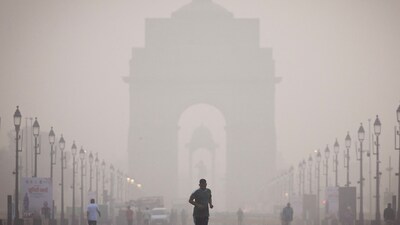
Delhi's air quality turns 'severe' as AQI reading soars to 497
Bawana recorded the highest AQI of 497 at 7 am, placing it in the 'severe' category
Is India ready to face EU’s carbon levy from January 2026?
New Delhi needs to engage with Brussels diplomatically to limit the impact of CBAM till a final solution is achieved
The world’s plastic glut is set to get much worse by 2040: Study
Global plastic pollution will hit 280 million metric tons per year by 2040, or a dump truck’s worth every second.
OPINION | India’s Data Centre Boom: A path to sustainable growth
India's data centre growth can drive sustainability by repurposing waste heat for industrial uses, supporting cooling, agriculture, and manufacturing, while reducing energy costs and emissions By Ateesh Kumar Singh
COP30: Brazil summit ends in ambiguity as leaders dodge hard choices on fossil fuel and finance
The UN climate summit ended with nations stuck over money and phasing out fossil fuels, leaving crucial questions on finance and adaptation unresolved as climate threats intensify
COP30 — China charts climate course to enhance global clout
India and other developing nations have to be assertive to match China’s bid to push forward the Global South narrative at the climate summit
COP30: India slips hard in global climate performance scorecard as pressure mounts
India’s sharp fall in the global climate performance index rankings highlights mounting strain on its energy system and rising climate risks, even as negotiators push for a breakthrough in the Brazil climate summit
COP30: Global climate finance goals miss mark as actual needs far exceed commitments
Developing countries face a huge funding gap for climate action as targets agreed upon at last year’s climate summit are insufficient against actual requirements, a new assessment shows
COP30: Baku to Belém — In search of climate cash
Unless there’s a fundamental change in approach, the latest roadmap on climate financing will largely remain aspirational
Beyond Carbon: Why COP must bring life cycle thinking into the climate conversation
The Life Cycle Assessment (LCA) framework, which evaluates environmental impacts from cradle to gate to well, offers the systemic clarity needed to avoid burden-shifting between sectors or resources
OPINION | One Water, Many Gains: The economics of moderation
India's water crisis demands a shift towards sustainable practices, balancing supply and demand. Through community-led initiatives, improved water management, and climate adaptation, water can be a tool for economic stability and resilience