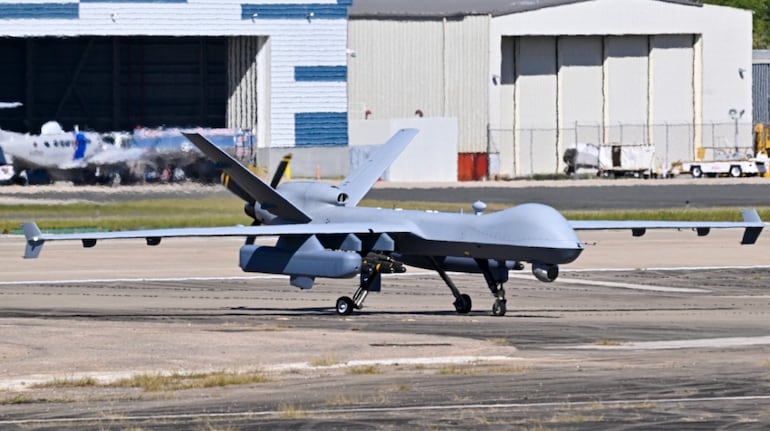

The United States has lost a significant number of its MQ-9 Reaper drones since the start of the Iran conflict, highlighting the rising operational and financial costs of a campaign heavily reliant on unmanned systems. According to CBS News, at least 16 MQ-9 Reapers have been downed since hostilities began, including two near Isfahan earlier this week.
Iranian state media has also circulated footage claiming to show one of these drones being shot down, reinforcing the narrative of increasing resistance to US aerial operations.
Mounting losses and financial impact
The scale of losses represents a substantial financial hit. Each MQ-9 Reaper is estimated to cost roughly $30 million, meaning the total value of drones lost so far could approach $500 million if the reported figures are fully accurate.
CBS News had earlier reported that nine drones were lost by early March. Subsequent updates pointed to additional losses as the conflict intensified, including at least three drones brought down during a separate phase of fighting. The steady increase suggests a pattern of sustained attrition rather than isolated incidents.
Why the MQ-9 matters
The MQ-9 Reaper is one of the most widely deployed drones in the US military’s arsenal. It is used extensively for intelligence gathering, surveillance, and precision strikes, particularly in regions where persistent aerial presence is required.
Its ability to remain airborne for long durations makes it a key asset in monitoring targets and conducting operations without risking pilots. However, its growing losses indicate that even advanced unmanned systems face serious challenges in contested environments.
Rising risks in contested airspace
The recent downing of two drones near Isfahan is particularly significant. The region has become a focal point of military activity, with repeated reports of strikes and counter-strikes around sensitive infrastructure and defence-related facilities.
The increasing frequency of drone losses points to the effectiveness of Iran’s air defence systems, as well as the broader risks posed by electronic warfare and missile threats. Operating in such an environment significantly raises the vulnerability of unmanned aircraft.
A war of attrition
The losses underscore a broader shift in the conflict towards a war of attrition. While drones are often viewed as a cost-effective alternative to crewed aircraft, repeated shootdowns can quickly erode that advantage.
With each aircraft valued in the tens of millions, sustained losses not only strain financial resources but also impact operational capacity, especially when these platforms are central to surveillance and strike missions.
The developments come as the United States continues to evaluate the long-term sustainability of its military engagement in the conflict. As reliance on drones remains high, the growing attrition rate raises questions about how effectively such systems can be deployed in increasingly hostile airspace.
Discover the latest Business News, Sensex, and Nifty updates. Obtain Personal Finance insights, tax queries, and expert opinions on Moneycontrol or download the Moneycontrol App to stay updated!
Find the best of Al News in one place, specially curated for you every weekend.
Stay on top of the latest tech trends and biggest startup news.