HomeNewscoronavirusDeadly Delta wave stole 2,40,000 lives in India between April-June, 'similar episodes' could take place in near term: UN report

Deadly Delta wave stole 2,40,000 lives in India between April-June, 'similar episodes' could take place in near term: UN report

As per the information by India's Ministry of Health and Family Welfare, 1,54,61,39,465 vaccinations have been administered so far.

January 13, 2022 / 22:45 IST
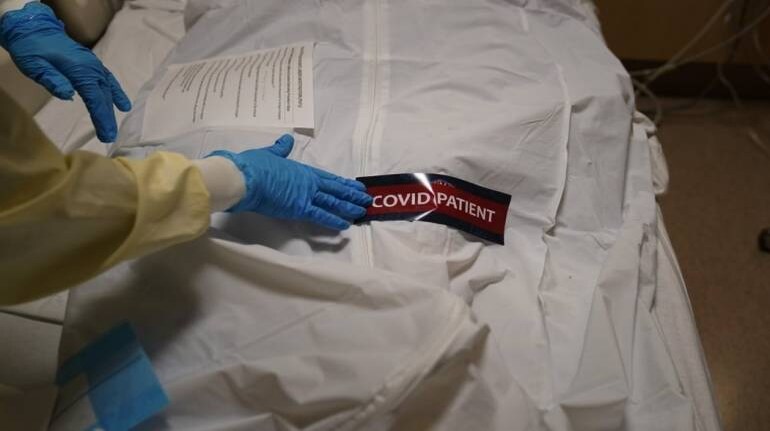
Representative image

A United Nations report said on Thursday that the deadly wave of COVID-19 Delta variant stole 240,000 lives in India between April and June in 2021 and disrupted economic recovery, and warned that "similar episodes" could take place in the near term.

The flagship United Nations World Economic Situation and Prospects (WESP) 2022 report also said that with the highly transmissible Omicron variant of COVID-19 unleashing new waves of infections, the human and economic toll of the pandemic are projected to increase again. "In India, a deadly wave of infection with the Delta variant stole 240,000 lives between April and June and disrupted economic recovery. Similar episodes could take place in the near term, said the report.

ALSO READ: COVID-19 update | Delhi logs 27,561 cases, second-highest daily rise so far; 40 deaths

"Without a coordinated and sustained global approach to contain COVID-19 that includes universal access to vaccines, the pandemic will continue to pose the greatest risk to an inclusive and sustainable recovery of the world economy, Under-Secretary-General of the United Nations Department of Economic and Social Affairs Liu Zhenmin said. As per the information by India's Ministry of Health and Family Welfare, 1,54,61,39,465 vaccinations have been administered so far.

The second wave of the COVID19 pandemic had wrecked havoc across India as the death toll increased exponentially and spike in infections burdened the healthcare infrastructure in the country. The country is now witnessing increasing number of cases of the Omicron variant that is soon overtaking the Delta variant of the coronavirus globally. The report noted that South Asia faces major downside risks that can strengthen headwinds in achieving the 2030 Agenda.

COVID-19 Vaccine

Frequently Asked Questions

View more
How does a vaccine work?

A vaccine works by mimicking a natural infection. A vaccine not only induces immune response to protect people from any future COVID-19 infection, but also helps quickly build herd immunity to put an end to the pandemic. Herd immunity occurs when a sufficient percentage of a population becomes immune to a disease, making the spread of disease from person to person unlikely. The good news is that SARS-CoV-2 virus has been fairly stable, which increases the viability of a vaccine.

How many types of vaccines are there?

There are broadly four types of vaccine — one, a vaccine based on the whole virus (this could be either inactivated, or an attenuated [weakened] virus vaccine); two, a non-replicating viral vector vaccine that uses a benign virus as vector that carries the antigen of SARS-CoV; three, nucleic-acid vaccines that have genetic material like DNA and RNA of antigens like spike protein given to a person, helping human cells decode genetic material and produce the vaccine; and four, protein subunit vaccine wherein the recombinant proteins of SARS-COV-2 along with an adjuvant (booster) is given as a vaccine.

What does it take to develop a vaccine of this kind?

Vaccine development is a long, complex process. Unlike drugs that are given to people with a diseased, vaccines are given to healthy people and also vulnerable sections such as children, pregnant women and the elderly. So rigorous tests are compulsory. History says that the fastest time it took to develop a vaccine is five years, but it usually takes double or sometimes triple that time.

View more
Show

"Relatively slow vaccination progress leaves the region vulnerable to new variants and recurrent outbreaks. Financial constraints and an inadequate global vaccine supply continue to drag down full recovery in some countries, it said. As of early December 2021, Bangladesh, Nepal and Pakistan had less than 26 per cent of their populations fully vaccinated. By contrast, the fully vaccinated population is above 64 per cent in Bhutan, Maldives and Sri Lanka, the report said.

PTI
first published: Jan 13, 2022 10:45 pm

Discover the latest Business News, Sensex, and Nifty updates. Obtain Personal Finance insights, tax queries, and expert opinions on Moneycontrol or download the Moneycontrol App to stay updated!

Subscribe to Tech Newsletters

  • On Saturdays

    Find the best of Al News in one place, specially curated for you every weekend.

  • Daily-Weekdays

    Stay on top of the latest tech trends and biggest startup news.

Advisory Alert: It has come to our attention that certain individuals are representing themselves as affiliates of Moneycontrol and soliciting funds on the false promise of assured returns on their investments. We wish to reiterate that Moneycontrol does not solicit funds from investors and neither does it promise any assured returns. In case you are approached by anyone making such claims, please write to us at grievanceofficer@nw18.com or call on 02268882347