




It’s been over a year since the collapse of a set of apartments at Chintels Paradiso and the degrading structure of the GreenView project by NBCC made news. This led the Haryana government to put in place structural safety guidelines that developers have to follow for construction of high-rise projects in the state. However, till date there is no structural safety policy in place in Gurugram. There is a draft in the works that would make it mandatory for builders to submit a structural safety audit report before obtaining the occupancy certificate (OC).
Similarly, Noida Authority had approved structural safety guidelines for residential high-rise buildings under which before issuance of partial/full OC, the developer will have to submit the structural audit report from seven empanelled institutions, including IITs, NITs, or specialist institutions.
Specialists who deal with issues related to high-rise buildings say that the need of the hour is to make engineers and officials accountable. Also, the traditional method of building plan approval for ground plus three floors, common in the Delhi-NCR region, has to change, as high-rises have become the norm. The region could even draw lessons from Mumbai’s specialised high-rise committee and consider setting up a similar body as per its requirements.
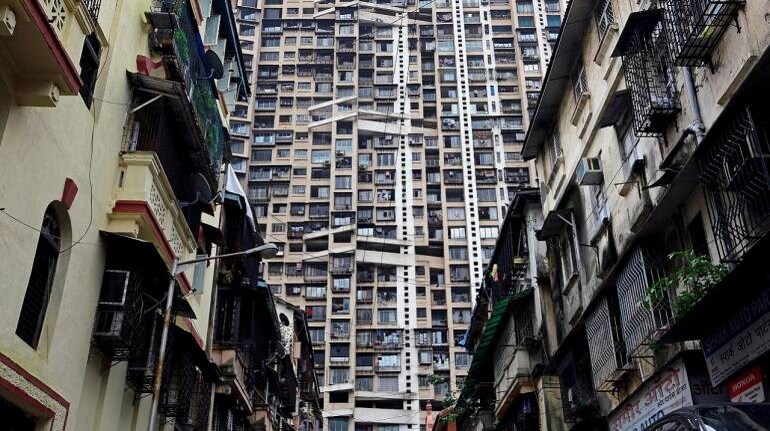
The specialised high-rise committee of the Brihanmumbai Municipal Corporation (BMC) was set up almost two decades ago and is responsible for vetting proposals/providing approvals to buildings of over 120 meters or 40 floors in height. The committee consists of soil experts, IIT structural engineers, chief fire officer, architects, and chief engineer, among others. This committee examines several aspects of a building’s proposal, such as fire safety, materials used and the most important aspect - structural stability.
Clearance procedure in Delhi-NCR and what needs to be done
In the Delhi-NCR market, most authorities ask the builder to submit the structural design at the time of submitting the plans. “This needs to change. Approvals given at this point in time are not structural approvals. These are approvals for construction planning ― land, height, density, space arrangement, setback, number of units planned; all from the planning perspective. That should be the first approval. Later, before the start of construction, a detailed structural design should be submitted,” said Abhay Gupta, structural engineer, and owner of Skeleton Consultants Private Limited.
Once construction begins, the authorities should clearly lay down the manner in which the quality of construction is to be monitored on-site and the intervals during which the water test reports are to be submitted. Once construction is over, the authority should ask for the as-built drawings and design. This refers to the final structural design report that should be submitted to the authority after which a competent engineer should inspect and give a report, before finishing work begins, he explains.
Quality control and ‘licensed engineers’ the need of the hour
There are experts who are of the view that structural safety is not a problem limited to Noida or Gurugram; it is an issue that is linked to the capability of the personnel concerned.
Following the construction of the building, a certification from a structural engineer is required to be submitted to the authorities. “There is no agency/authorised body to certify a structural engineer. There is no quality control over the type of people designing buildings. In the US, there is a certifying body for chartered engineers,” said Mukul Goel, a project management specialist.
In India, these engineers were earlier involved in designing ground plus three structures. The same set of people are now called upon to certify high-rise buildings. Also, there are no quality controls or processes in place to monitor the competency levels of contractors. Anyone can become a contractor. It is worth noting that in construction, a structural problem can arise due to the quality of materials supplied.
At the authority level too, most of the drawings only check the area and the real estate aspect of it, and not the structural aspect. Drawings should be cleared by specialised personnel, he added.
Builders’ take
Builders agree that it is the structural engineers empanelled by the authority who now have to provide certification for the structure that is expected to come up. “We are expected to utilise STP water that is treated for construction. The use of groundwater is not permissible. But there is no agency or body that tests the quality of treated water. There could be chemicals in the treated water that may be impacting the construction quality. The quality of water used for construction should also be checked at regular intervals,” said Praveen Jain, Chairman, Naredco, a real estate industry body.
Lessons Delhi-NCR can draw from Mumbai’s high-rise committee
The BMC set up a high-rise committee to look into building design and structural safety issues almost two decades ago. The development control and promotion regulation norms mandated that the commissioner constitute a high-rise committee to advise on issues related to buildings taller than 120 meters. The committee consists of soil experts, IIT structural engineers, chief fire officer, architects, and BMC's chief engineer of development planning, among others. This committee examines several aspects of a building proposal, including fire safety, materials used, and structural stability.
Experts suggest that Delhi-NCR could look at emulating this model as per its requirements. “The objective of the committee was that since structural engineers were attempting taller buildings by the day there needs to be a review in terms of safety of these buildings. Subsequently, it was built into Mumbai’s Development Control and Promotion Regulation 2034, the city's master plan for 2034. It is a committee that primarily look after the safety of these buildings. Earlier, high-rises referred to the committee were 70 m in height, which subsequently was relaxed to 120 m,” explains Shashank Mehendale, Member - Mumbai’s high-rise committee.
The independent committee gives a no-objection certificate (NOC) after reviewing the geo-technical foundation, as well as the structural and fire system designs of the building proposal. Following this, the building proposals department sanctions the plans, and permission is accorded to start construction.
The committee reviews these building plans, checks the designs and appropriateness of the various design codes applied, looks at the structural, geo-technical and foundation safety as well as the fire safety aspects, he said.
So, will this help the Delhi-NCR region keep a check on the quality of tall buildings? “Whether the committee will help or whether they would want some other mechanism depends on the authorities in NCR. But a committee of experts can help in resolving these structural safety issues. We started with 20 floors which were later revised to 40 floors. The consultants and builders practicing in this area are now used to the technical standards that are to be followed. Delhi-NCR will have to start with its own limit, and define its own height levels as the region falls in earthquake zone 4,” he added.
Yogini Deshpande, Technical Director of Renuka Consultants, points out that this is based on the concept of peer review. Every building of over 40 storeys must get approval from this committee comprising architects, structural engineers, and geo-technical experts. The peer review system ensures that these rules and regulations are followed. Delhi-NCR needs to evolve its own peer review system given that it comprises several states. The committee in Maharashtra is only for Mumbai city, she said, adding, this could be part of the clearance system inbuilt within the authority itself.
Focus on maintenance-free building design
Experts say that the focus of designers and engineers should be on maintenance-free design. A high-rise should be designed in such a way that it is able to endure the vagaries of weather and environmental conditions for 60 to 90 years without undergoing repairs.
High-rise committees should mandate a building life analysis for tall buildings, said Sharvil Alex Faroz, Structural Engineer and Founder, Infrastructure Risk Management (IRM).
This means that the structure should be able to perform its intended purpose without requiring major repairs for a fixed number of years. The committee should emphasise that the structure should be designed in such a manner that the building will need repairs only at the end of its service life, he explains.
In Mumbai, a structural audit of buildings is required every 30 years. This helps ascertain the current strength of the concrete, and the status of reinforcements used for such buildings.
It is important to know the actual life remaining of buildings. The high-rise committee should ensure that a remaining life analysis of existing buildings is conducted every 10 years, he said.

Discover the latest Business News, Sensex, and Nifty updates. Obtain Personal Finance insights, tax queries, and expert opinions on Moneycontrol or download the Moneycontrol App to stay updated!
Find the best of Al News in one place, specially curated for you every weekend.
Stay on top of the latest tech trends and biggest startup news.