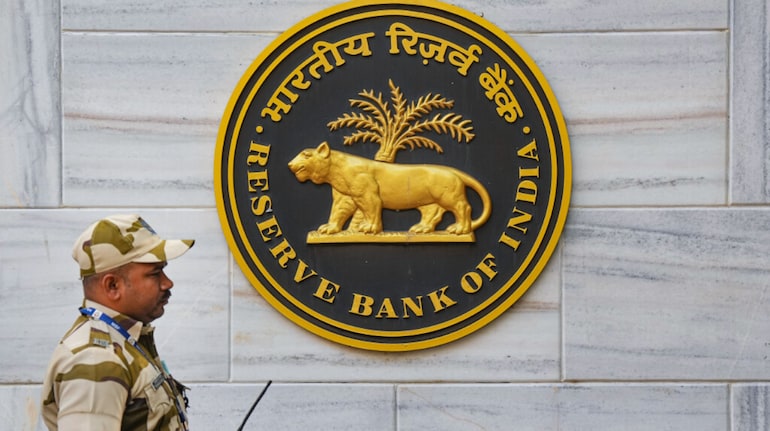
The Reserve Bank of India’s Monetary Policy Committee (MPC) decided to cut repo rate after keeping rates unchanged for two times in a row to 5.25 percent from 5.5 percent earlier, announced Governor Sanjay Malhotra on December 5.
The MPC kept the stance unchanged at 'Neutral'. The decisions were taken unanimously by the six-member rate-setting panel.
As a result, the standing deposit facility (SDF) rate remains changed to 5 percent and the marginal standing facility (MSF) rate and the Bank Rate at 5.5 percent.
A poll by Moneycontrol of 20 economists, bankers, and fund managers showed that the RBI’s MPC will cut repo rate by 25 basis points (bps) due to comfort provided by the lowest ever Consumer Price Index (CPI) Inflation in the last two months.
RBI will infuse around Rs 1.45 lakh crore ($16.15 billion) of liquidity into the banking system, Malhotra said on Friday.
The RBI will conduct open-market purchases of bonds worth up to Rs 1 lakh crore and a dollar-rupee buy/sell swap of $5 billion, Malhotra said earlier in the day.
Both these operations will take place in December, he added.
The Indian economy is facing a "rare goldilocks" period, Malhotra said in his monetary policy speech.
Since October, Indian economy has seen rapid disinflation leading to a breach of the central bank's lower threshold of tolerance, said Malhotra, adding that growth had remained strong.
India's foreign exchange reserves stood at $686 billion as of November 28, down slightly from $688.1 billion a week earlier, Malhotra said on Friday.
The reserves have declined over recent weeks, reflecting the central bank's efforts to support the rupee, which hit a record low of 90.42 on Thursday. It was last at 89.93, little changed on the day.
GDP revision
"Real gross domestic product (GDP) registered a six-quarter high growth of 8.2 per cent in Q2:2025-26, underpinned by resilient domestic demand amidst global trade and policy uncertainties. On the supply side, real gross value added (GVA) expanded by 8.1 per cent, aided by buoyant industrial and services sectors. Economic activity during the first half of the financial year benefited from income tax and goods and services tax (GST) rationalisation, softer crude oil prices, front-loading of government capital expenditure, and facilitative monetary and financial conditions supported by benign inflation," said Malhotra in his speech.
The RBI MPC revised GDP growth forecast to 7.3 percent for current fiscal year from 6.8 percent earlier, Q3 revised to 7 percent from 6.4 percent earlier; and Q4 revised to 6.5 percent from 6.2 per cent.
Inflation revised
"Headline CPI inflation declined to an all time low in October 2025. The faster-than-anticipated decline in inflation was led by correction in food prices, contrary to the usual trend witnessed during the months of September-October. Core inflation (CPI headline excluding food and fuel) remained largely contained in September-October, despite continued price pressures exerted by precious metals. Excluding gold, core inflation moderated to 2.6 percent in October. Overall, the decline in inflation has become more generalised," said Malhotra.
The inflation projection for FY26 was also revised to 2 percent from 2.6 percent projected earlier. The Q3 inflation projection was at 0.6 percent as compared to 1.8 percent earlier, and Q4 projected at 2.9 percent as compared to 4.0 percent earlier, and retail inflation for Q1 of the next fiscal is seen at 3.9 percent as compared to 4.5 percent projected earlier, and RBI projects Jul-Sept FY27 CPI inflation at 4%.
Expert speak
"By cutting the repo rate to 5.25% while maintaining a neutral stance, the RBI has aligned monetary conditions with the evolving disinflation trend, while also acknowledging the need to counterbalance rupee pressures via liquidity support. The OMO purchase guidance and potential FX swaps further underline the RBI’s intent to ensure orderly financial conditions amid global uncertainties.
"For markets, the policy framework reduces tail risks around liquidity tightening, and creates a constructive environment for duration strategies in fixed income. Overall, the central bank has struck the right equilibrium between growth nurturing and macroprudential vigilance. If inflation stays passively anchored and external flows stabilise, this decision could help prolong the current domestic growth cycle into FY27, with financial conditions becoming incrementally more supportive," said Anil Rego, Founder and Fund Manager at Right Horizons PMS.
"Inflation at a benign 2.2 percent and growth touching 8 percent in the first half of the year have already prompted the government to lift its full-year GDP estimate to 7.3 percent. In that context, the RBI’s unexpected 25 bps rate cut to 5.25 perent, along with a neutral stance, stands out as a bold move. It will certainly add more momentum to urban and rural consumption, which is already improving, and could further support capex and credit growth. However, stronger demand at this stage also raises the possibility of inflation drifting higher from current lows. The decision comes at a time when the rupee is hovering near all-time lows, and the probability of the RBI deploying FX swaps and OMOs to stabilise liquidity and currency pressures is high. While the near-term impulse is positive, investors should remain vigilant excess liquidity, a weak currency, and strong demand can quickly tilt the economy towards overheating if not managed carefully," said Divam Sharma,Co-Founder and Fund Manager at Green Port.
Discover the latest Business News, Sensex, and Nifty updates. Obtain Personal Finance insights, tax queries, and expert opinions on Moneycontrol or download the Moneycontrol App to stay updated!
Find the best of Al News in one place, specially curated for you every weekend.
Stay on top of the latest tech trends and biggest startup news.