






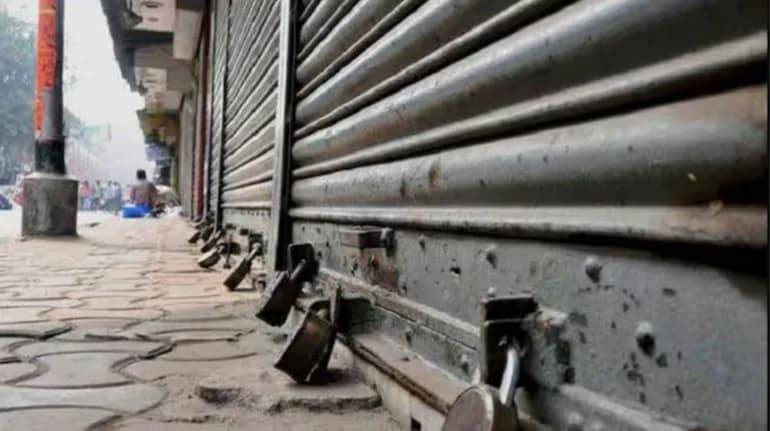
The union labour ministry doesn’t foresee any major impact on economic activity due to a nationwide strike, by about 25 crore workers, planned on Wednesday, two senior officials said on Tuesday. The strikes, known as 'Bharat Bandh', are a demonstration against many central policies including the four labour codes.
"The strike many not sustain for long, as the major labour unions (having most members) are not taking part in it," an official said. "The Bharatiya Mazdoor Sangh, along with 19 other trade unions (both central and state) are not supporting the strike," the person added.
"Why are these workers demonstrating against the Centre, when most of the states have already implemented several reforms linked to the four central labour codes," another official said told Moneycontrol. "They should demonstrate against the states."
On Tuesday, 20 trade unions--having more than 40 crore members--wrote to the labour ministry that they will not participate in the 'Bharat Bandh' strikes. The Bharat Bandh has been organised by 10 central trade unions, having members working in several sectors including banking, insurance, postal, mining, and construction.
The strike, which will also see participation from farmers and rural workers, according to Amarjeet Kaur from All India Trade Union Congress, will potentially disrupt public services across the country on Wednesday.
These unions had observed a similar strike in November 2024. They say that they have been demonstrating against privatisation of public sector enterprises, policies of outsourcing, and contractorization of workforce among other issues.
Another key ask of these central unions is to abrogate the four labour codes.
In a statement issued, earlier this week, the unions said that the four codes are meant to "suppress and cripple the trade union movement, increase working hours, snatch workers’ right to collective bargaining, right to strike, and decriminalise violation of labour laws by employers".
The four codes are: Code on Social Security 2020; Occupational Safety, Health and Working Conditions Code 2020; Industrial Relations Code 2020; and Code on Wages 2019.
The central government in 2019–2020 had undertaken a significant legislative reform to streamline the country’s labour laws. A total of 29 labour-related Acts were consolidated into four comprehensive labour codes. The aim was to promote trade and investment, enhance ease of doing business, reduce compliance burdens, support decriminalisation, address skill development needs, and improve mechanisms for dispute resolution.
'Labour reforms already in place'
Another official said: "There is no point of protesting against the codes as most states & UTs have already implemented internal reforms as envisaged in the four codes."
"What will the strikes achieve if the reforms are already in place," said the official, and added that the central government doesn’t see any immediate need to notify them.
Many non-BJP ruled states, such as Punjab, Himachal Pradesh, Karnataka, Jharkhand, Tamil Nadu, J&K, Mizoram, Telangana have also implemented most of the reforms, said the officials. Only two states--West Bengal and Kerala—have, however, undertaken only a few reforms linked to the central codes, which is related to allowing women to work in night shift.
Others have executed the changes in relation to fixed term employment, compounding of offences, increased overtime hours up to 125 hours in one quarter, increased threshold for number of workers for coverage under the Factories Act, increased threshold for layoff/closure and so on, say the officials.
Labour laws fall under the Concurrent List of the Constitution, which means both the Centre and the states have the right to frame rules. However, in case of conflict between central and state laws, the central legislation typically prevails—unless the state law has received presidential assent, in which case it can take precedence.
As per the legislative framework, the role of the central government is to frame the labour codes, draft and notify model rules or central rules under each Code. The role of the state governments is to frame their own rules under these codes, either based on the model rules or adapted to state-specific requirements and to notify these rules to operationalise the Codes within their respective jurisdictions, note experts.
Discover the latest Business News, Sensex, and Nifty updates. Obtain Personal Finance insights, tax queries, and expert opinions on Moneycontrol or download the Moneycontrol App to stay updated!
Find the best of Al News in one place, specially curated for you every weekend.
Stay on top of the latest tech trends and biggest startup news.









