Nitin Agrawal
Moneycontrol Research
Jamna Auto Industries (JAI) is in a sweet spot. The company, which provides suspension products to commercial vehicle makers, is a market leader and caters to top clients. Its operating efficiencies, reduced debt and strong financial performance provide the company improved earnings visibility. While unaffected by electric vehicle disruption, JAI is trading at a reasonable valuation and, therefore, beckons investors' attention.
Business provides suspensions to CVs
JAI is the largest manufacturer of tapered leaf and parabolic springs for commercial vehicles in India. Some of its major products also include air suspension, lift axle and bogie suspension. The company supplies its products to major OEMs (original equipment manufacturers) in India and has 70 percent domestic market share.
Strong clientele
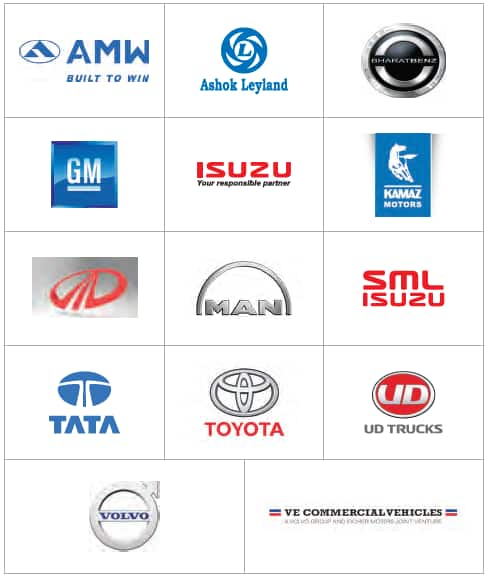
The company, being the leader in providing suspension to the CVs, boasts of having marquee clients in its kitty. It services almost 70 percent of OEMs' demand for suspension products in India.
Ahead of competition – focus on R&D
The company has been focusing on strong research and development and in the constant endeavour to improve it, the company has built its R&D center in Pune, which has been approved by the Department of Scientific and Industrial Research, Government of India. JAI is also making an investment in the information technology infrastructure which is being implemented across the organization.
Apart from this, JAI has a technical association with Ridwell Corporation, USA, a global leader in design and manufacturing of air suspensions and lift axles.
Capacity in place
Currently, the company has a capacity of 210,000 units across its 9 manufacturing units, which is the second-largest capacity globally. JAI had commissioned a new plant in Hosur in Q4FY17, which is now operational and would cater mainly to export demand. The company has incurred a capex of Rs 60 crore in FY16 and Rs 90 crore in FY17 to increase the capacity and modernization of the existing plant.
Ambitious yet achievable targets
The company has been focusing on setting up operational and financial targets for itself. Under operational targets, the company plans to generate 33 percent of total revenues from new products to de-risk its dependence on old products. In FY17, JAI generated 33 percent of its revenues from new products.
In addition to the above, the company has set itself a target to generate 33 percent of revenues from domestic and overseas aftermarket and OE exports to de-risk the dependence on the domestic market and OEMs. In FY17, JAI generated 16 percent of its revenues from new markets.
In terms of financial goals, the company is keen on achieving 33 percent RoCE and 33 percent dividend payout. In FY17, JAI had RoCE of 55 percent and paid 33 percent of earnings as dividends.
Industry tailwinds, unaffected by move towards EV
Commercial vehicle industry had a bumpy ride in FY17, as demonetization and BS-IV implementation impacted sales. And now GST-led de-stocking affected the companies in the space. Everything is coming back to normalcy and stocking has started taking place as is evident by the auto sales numbers for last two months. This will augur well for JAI, being the largest player in providing suspension to commercial vehicles.
Moreover, JAI is unaffected by the EV disruption, going forward, as the products it makes are immune to EV adoption.
Ownership – lends comfort
Promoters have their skin in the game and hold 47.88 percent of the total shares in the company and the remaining is held by the public. Mutual funds such as DSP Blackrock Micro Cap Fund, Birla Sun Life Pure Value Fund, L&T Emerging Businesses Fund together hold around 5.43 percent of the total shares, which also boosts the confidence of retail investors.

Product mix
JAI generates most of its revenues from leaf springs (conventional and parabolic) (74 percent of total) and from loose leaves segment (19 percent of total). After GST hangover, the commercial vehicle segment is posting healthy numbers, which is expected to get reflected in the current quarter numbers for JAI.

Financial performance – strong operational efficiencies, reduction in debt
From the financial perspective, though the revenues from operations (net) have posted a growth of 7.5 percent compounded annually over FY12-17, EBITDA has clocked the annual growth of 14.4 percent over the same period on the back of operational efficiencies and operating leverage. This also led to EBITDA margin expansion of 422bps over the same period. Going forward, with exports having around 10 percent portion of revenues, the margin is expected to expand further.
Moreover, the company’s net profit has registered a growth of 19.9 percent compounded annually over FY12-17 on the back of reduction in the debt. The company has reduced the total debt to equity ratio from 0.97 in FY12 to 0.19 in FY17.

On the back of operational efficiencies and reduction in total debt, the company has been able to improve its return ratios. Return on equity (RoE) and return on capital employed (RoCE) have witnessed expansions of 200bps and 2,400 bps in FY17 over FY12, respectively. Average RoE and RoCE are 22 percent and 32 percent over FY12-FY17, respectively.
In terms of valuation, the company is trading at 19.5 and 17.0 times FY18 and FY19 projected earnings.
Peer analysis
Peer analysis suggests that the JAI is currently trading at a discount compared to the average multiple of its peers.
For more research articles, visit our Moneycontrol Research Page.
Discover the latest Business News, Sensex, and Nifty updates. Obtain Personal Finance insights, tax queries, and expert opinions on Moneycontrol or download the Moneycontrol App to stay updated!

Find the best of Al News in one place, specially curated for you every weekend.
Stay on top of the latest tech trends and biggest startup news.