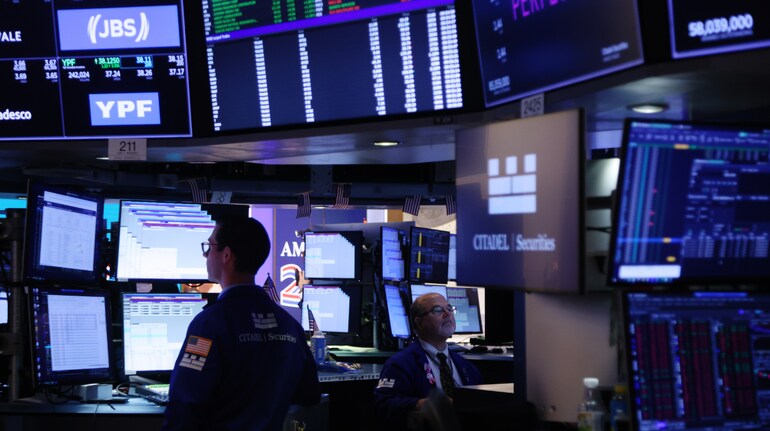

Wall Street remained on edge as Iran’s vow to retaliate against strikes on a key gas field lifted oil prices, with stocks and bonds falling on fears that could trigger further disruptions and fuel inflation.
As traders moved away from the riskier corners of the market, the S&P 500 halted a two-day gain. Brent hovered near $110. In the run-up to the Federal Reserve decision, Treasury yields rose as producer prices accelerated, with traders reducing bets on even a single rate cut in 2026. Markets are fully pricing in two European Central Bank hikes this year. Cryptocurrencies sold off.
“Each headline out of the Middle East causes knee-jerk reactions,” said Jay Woods at Freedom Capital Markets. “Crude is driving the bus and the longer it stays above $90 - or spikes higher - the ‘buy-the-dip crowd’ grows quieter and the ‘sell-the-rally narrative’ gets more dominant.”
Global markets were rattled anew as Iran warned Gulf countries that a number of energy assets are now “legitimate targets” after Israel attacked its giant South Pars gas field, sending shockwaves through the industry.
Crude prices have soared about 50% since the war in the Middle East began, with regional energy giants being forced to cut production amid the effective shuttering of the Strait of Hormuz. About a fifth of the world’s oil normally flows through the waterway.
Vice President JD Vance and other officials plan to huddle with oil executives to look for ways to tame fuel prices, according to people familiar with the matter. President Donald Trump temporarily waived a shipping mandate to lower the cost of transporting crude, gas and other commodities.
The spike in energy costs risks adding to inflationary pressures while restraining the economy.
Fed officials, who are widely expected to keep rates unchanged, now turn their attention to the supply shock. They will release a post-meeting statement at 2 p.m. in Washington. Jerome Powell will hold a press conference 30 minutes later.
“The latest inflation news complicates the Fed’s deliberations just ahead of its policy announcement, as it deals with potential inflation fallout of the war with Iran,” said Gary Schlossberg at Wells Fargo Investment Institute.
“Markets will want a balanced tone that acknowledges inflation risks without signaling a more hawkish path,” said Tom Essaye at The Sevens Report.
The bigger issue for the economy is that inflation is proving sticky while energy costs are rising, which compresses the Fed’s room to maneuver, according to Christian Hoffmann at Thornburg Investment Management.
“I will be listening closely to how Chair Powell frames energy prices, whether he treats them as a temporary shock or something that risks bleeding into inflation expectations,” he said.
One point that has not received enough attention is the disinflationary impact of high oil prices through weaker demand, Hoffmann noted. Energy is clearly an inflation risk, but also an economic headwind, he added.
The market remains unable to sustain momentum in either direction, and that pattern is likely to persist until there’s greater clarity, according to Mark Hackett at Nationwide.
“Despite the recent bout of volatility, the S&P 500 remains solidly in the trading range it has been in since September - ranging from 6,600 to 7,000 - with investor emotion expressed in stock-specific volatility rather than aggressive selling,” he said.
Discover the latest Business News, Sensex, and Nifty updates. Obtain Personal Finance insights, tax queries, and expert opinions on Moneycontrol or download the Moneycontrol App to stay updated!
Find the best of Al News in one place, specially curated for you every weekend.
Stay on top of the latest tech trends and biggest startup news.