




To paraphrase Yogi Berra, it’s déjà vu once again for the US Federal Reserve. Just a month after raising rates amid the smoking ruins of the Silicon Valley Bank implosion, the US central bank finds itself grappling with a familiar conundrum -- continue hiking interest rates and risk more bank failures, or maintain status quo and let inflation wreak havoc.
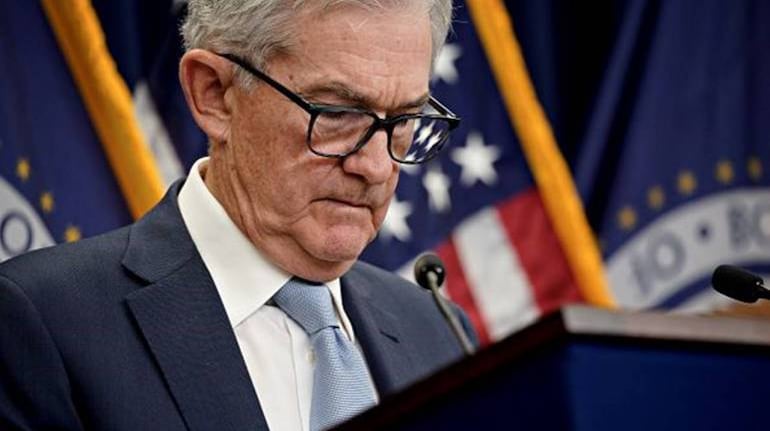
The Federal Open Market Committee, led by Fed chair Jerome Powell, will begin its two-day meeting on May 2 just a day after the tottering First Republic Bank was sold to JPMorgan Chase following frenetic government-brokered negotiations.
The second-largest US bank failure in history came just over a month after the third-biggest collapse (SVB). In fact, three of the four largest ever bank failures have occurred in the last two months.
What a time to be alive, right?First Republic Bank is being viewed as yet another martyr of the Fed’s policy tightening crusade. Its assets comprising bonds and loans worth a total of about $227 billion began losing value in tandem with rising interest rates. At the same time, depositors began chasing higher yields to park their funds. Feverish speculation about the health of regional US banks further stoked the fire, squeezing the lender on both ends.
With mounting evidence that the Fed’s aggressive rate hiking cycle is leaving a lot of sectors, from commercial real estate to consumer spending, gasping for breath, many analysts are clamoring for a pause.
The consensus view, however, is that the Fed will deliver yet another 25 basis point hike on May 3 to take the policy rate from close to zero just over a year ago to a range of 5-5.25 percent -- the highest level since 2007.
“The data strongly support another 25-basis-point hike in the May 2-3 meeting, and may even persuade some Fed policymakers that rates are not yet at a sufficiently restrictive level. Our baseline is for the Fed to go on an extended pause after next week’s hike, but we now see a growing risk that they may need to do more,” said Anna Wong, Chief US Economist at Bloomberg LP.
Macro MuddlesAccording to Commerce Department data released last week, the personal consumption expenditures price index excluding food and energy -- the Fed’s favoured indicator of underlying inflation – jumped 4.6 percent from a year earlier in March.
The overall retail inflation for the month stood at 5 percent YoY – extending its falling trend but still way above the Fed’s inviolable target of 2 percent.
The central bank also closely tracks the Labor Department’s measure of employment expenses, which rose 1.2 percent in the first quarter compared to the prior three-month period, defying expectations.
Market watchers say while a hike is already priced in, participants will be closely monitoring Powell’s speech for clues on whether it will finally pivot to a pause (or, better still, a cut) from June.
“Our sense is (Fed) would continue to adopt a data dependent approach and continue to say that rate cuts in 2023 are not part of their baseline estimates. If the Fed succeeds in getting markets to price out the 2 cuts that they are pricing in for 2023, it would be job well done as far as the Fed is concerned,” IFA Global Research said in a note.
Jitendra Gohil, Director–Global Investment Management, Credit Suisse Wealth Management, India, says the Fed will raise rates in May and keep it higher for longer versus the market expectation of a pivot in the later part of the calendar year.
"We expect once the Fed pauses, the headroom will open for the RBI to cut rates in the second half of FY24, as the inflationary pressure, most probably, will remain under control given base effect and slowing global growth. Hence, our buy-on-dip call on the market remains and with a view to a recovery in the second half of the year," he noted.
Also Read: Nifty valuation fair but not cheap enough to go overweight now, says Jitendra Gohil of Credit SuisseGohil added that once the Fed pauses, FPIs will have more incentive to buy Indian equities, given the attractive long-term potential of India.
Which means that the Fed's May policy meeting will be of special intertest for Dalal Street denizens.
It is worth remembering that Fed officials had recently indicated that 5-5.25 percent will be the peak interest rate, though experience suggests that a pinch of salt should be at hand while digesting pre-event policy pronouncements.
After all, didn’t Powell himself get the March’s post-policy presser going with these now memorable words – “Our banking system is sound and resilient…”

Discover the latest Business News, Sensex, and Nifty updates. Obtain Personal Finance insights, tax queries, and expert opinions on Moneycontrol or download the Moneycontrol App to stay updated!
Find the best of Al News in one place, specially curated for you every weekend.
Stay on top of the latest tech trends and biggest startup news.




