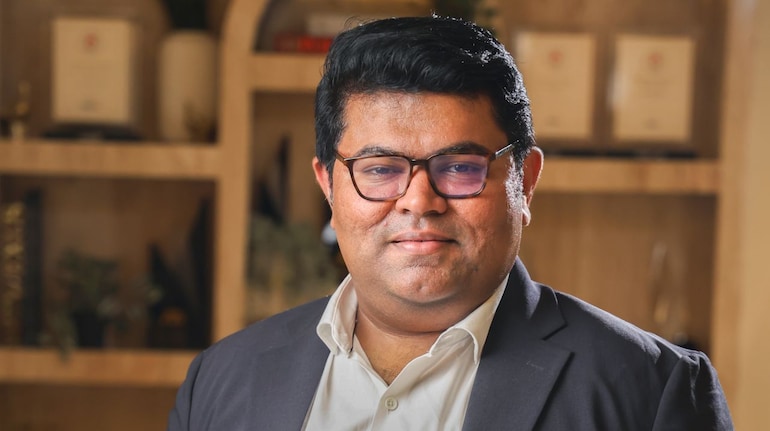
According to Vipul Bhowar, the Senior Director, Head of Equities at Waterfield Advisors, the US Federal Reserve is probably going to take a cautious stance in December. The central bank might decide to keep interest rates the same instead of lowering them, even though some members of the committee have suggested easing, he said in an interview with Moneycontrol.
Back home, he is of the view that the finalization of the India–US trade deal is very likely to establish a strong market floor, which could spark renewed interest from investors and provide an excellent opportunity for Indian equities to achieve sustained gains.
Further, the trade deal is anticipated to attract back foreign portfolio investors, who have been cautious due to tariff tensions and trade uncertainties, he said.
Do you expect the prospects for the IT sector to be strong in the coming calendar year after several quarters of consolidation?
Over the next 12 to 18 months, the information technology sector is expected to experience a gradual recovery and selective growth. While widespread double-digit growth is unlikely, a steady upward trend fueled by investments in cloud computing, artificial intelligence, infrastructure, and enterprise technology is plausible.
India's export-focused IT industry heavily depends on demand from international markets, notably the United States and Europe. Global economic uncertainties, interest rate changes, geopolitical tensions, and protectionist policies could adversely affect budgets and outsourcing demand.
Gartner projects that India's IT spending will reach $176.3 billion by 2026, a 10.6% increase over 2025, surpassing global growth. The move toward AI-driven automation might reduce traditional outsourcing and software service roles, risking erosion of profit margins and the decline of conventional service contracts, especially for companies slow to adapt.
Do you believe we are in an AI boom rather than an AI bubble?
All new themes are bound to bring a mix of successes and challenges. The AI industry is experiencing an exciting boom, fueled by increased investments, widespread adoption in businesses, and strong revenue growth.
In 2025, global AI spending reached $1.5 trillion and is expected to surpass $2 trillion in 2026, thanks to data centre expansions by hyperscalers, the development of AI semiconductors, and their integration into everyday devices like smartphones. More and more enterprises are adopting AI, with usage jumping from 55% to 75% between 2024 and 2025. Sectors like finance, manufacturing, and retail are already seeing real benefits, including significant cost savings.
Of course, there are concerns too, such as overinvesting in infrastructure without immediate returns, the high debt associated with data centres, and valuations that look quite lofty, sometimes even higher than during the dot-com bubble. If adoption slows down, there might be some corrections ahead, but overall, the outlook remains optimistic.
Do you see a major trade emerging in the financial space going forward? What is your order of preference within the sector?
A significant trend emerging in India's financial sector is the ongoing dominance and expansion of the Unified Payments Interface (UPI). UPI now powers over 80% of digital transactions and is being integrated into embedded finance, enabling seamless lending, insurance, and buy now, pay later (BNPL) services.
The key preferences within this sector would be InsurTech, digital insurance, and wealth management, areas that have historically been under-penetrated compared to developed economies, and are now gaining momentum through digitisation and regulatory changes. Wealth management and mutual fund adoption remain low, indicating a substantial growth potential as more individuals begin investing.
In the realm of digital payments and embedded finance, real-time payment systems, especially UPI, continue to dominate and enhance India’s payment infrastructure. Embedded finance, which refers to financial services integrated into other digital platforms (such as lending, payments, and BNPL), is becoming a vital area of growth as fintech companies evolve.
Do you think the finalisation of the India–US trade deal will form a solid bottom for the market?
The finalization of the India–US trade deal is very likely to establish a strong market floor, which could spark renewed interest from investors and provide an excellent opportunity for Indian equities to achieve sustained gains.
What will be the major triggers for the market once the uncertainty around the trade deal clears?
The trade deal is anticipated to attract back foreign portfolio investors, who have been cautious due to tariff tensions and trade uncertainties. As corporate earnings show signs of a strong recovery, the resolution of tariff issues through this deal could benefit sectors like textiles, pharmaceuticals, gems & jewellery, electronics, and automobiles that depend on US exports. These sectors might see improved margins and increased volumes, driving overall market gains.
Reduced market fears and uncertainties could unlock liquidity and encourage a greater appetite for risk. As a result, we could see a broad market rally, including sectors like real estate and cyclicals that have been under pressure, as investors regain confidence in India's growth prospects and structural reforms, such as GST 2.0, continue to support the economy.
Are you confident that the earnings upgrade cycle will pick up pace with the announcement of the December-quarter results?
The transition from 18 months of earnings downgrades to a noticeable upgrade cycle represents a significant change following the December quarter results. This shift has the potential to support market rallies and attract investment interest through 2026, particularly with domestic consumption and government infrastructure initiatives taking the lead.
Do you expect the Federal Reserve to proceed with a rate cut in the December policy meeting, even though Fed officials currently hold mixed views?
The Fed is probably going to take a cautious stance in December. They might decide to keep interest rates the same instead of lowering them, even though some members of the committee have suggested easing. Ultimately, the decision will really depend on how the economy is doing in the weeks before the meeting, especially in terms of employment and inflation.
Disclaimer: The views and investment tips expressed by experts on Moneycontrol are their own and not those of the website or its management. Moneycontrol advises users to check with certified experts before taking any investment decisions.
Discover the latest Business News, Sensex, and Nifty updates. Obtain Personal Finance insights, tax queries, and expert opinions on Moneycontrol or download the Moneycontrol App to stay updated!
Find the best of Al News in one place, specially curated for you every weekend.
Stay on top of the latest tech trends and biggest startup news.