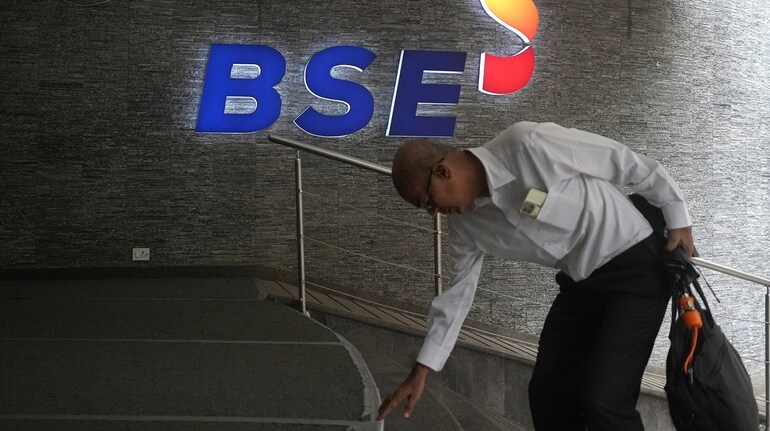

Shares of BSE and other capital market companies dropped between 2% and 10% on February 16 after the Reserve Bank of India tightened norms for bank lending to stock brokers and other market intermediaries.
On February 13, RBI issued revised norms on banks' lending to capital market participants, including higher collateral requirements for bank guarantees and a ban on lending for proprietary trading by brokers.
Jefferies said it sees BSE most affected by the new regulations on proprietary trading, which could result in a 10% earnings impact on the exchange operator.
The Reserve Bank of India's " new circular tightens banks' capital market exposures, and will raise costs for brokers and proprietary desks, curbing leverage and liquidity in derivatives, where proprietary trading drives 40% of futures and options turnover," said Devarsh Vakil, head of prime research at HDFC Securities.
On February 16, Nifty Capital Markets closed trading 1.4% lower. At day's close, stock exchange operator BSE dropped 7.3%, while brokers such as Groww and Angel One lost 1.7% and 4.7%, respectively.
Under the amended RBI (Commercial Banks – Credit Facilities) Directions, brokers will be required to provide full collateral against loans for proprietary trading. The framework also bars bank funding for acquisition of securities on a broker’s own account, except for limited market-making activities, and mandates that most exposures be backed by 100% collateral, including a significant cash component. Circular states, “Banks shall not provide finance to a CMI for acquisition of securities on its own account, including for proprietary trading or investments”.
Industry participants said the intent of the Reserve Bank of India to safeguard the banking system is understandable, but argued that a blanket approach could disrupt core liquidity functions performed by proprietary and arbitrage desks. These desks play a key role in cash–futures arbitrage, options market making and index arbitrage—low-margin, high-volume strategies that help narrow spreads and improve price discovery.
Proprietary trading, which involves using a company's own funds to trade, accounts for 50% of equity options premium turnover, according to Jefferies. Stricter collateral requirements for bank financing to such traders would raise costs.
The revised norms will take effect from April 1.
The new rules, in conjunction with the recently hiked transaction tax on equity futures and options, are expected to dampen derivative trading volumes. India's federal government and financial regulators have taken several steps to cool the derivative trading market, where retail investors have made losses.
Angel One would need to "immediately relook" its funding for the margin trading facility, JM Financial analysts said in a note, while Groww may need to raise funds from the market.
With inputs from Reuters
Discover the latest Business News, Sensex, and Nifty updates. Obtain Personal Finance insights, tax queries, and expert opinions on Moneycontrol or download the Moneycontrol App to stay updated!
Find the best of Al News in one place, specially curated for you every weekend.
Stay on top of the latest tech trends and biggest startup news.