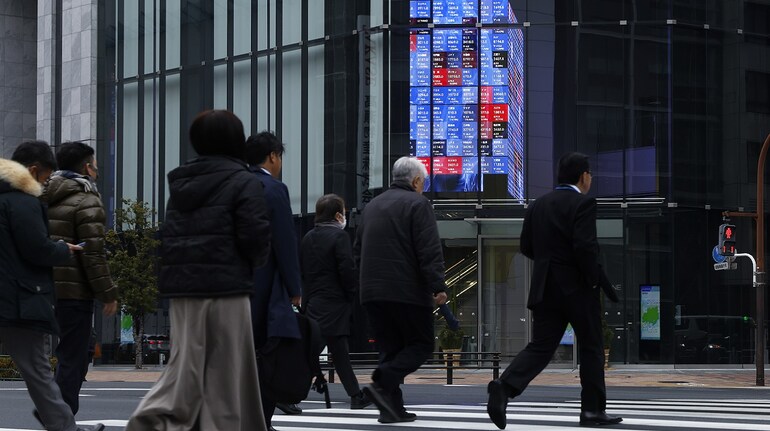
Asian shares dropped along with US stock-index futures as trade tensions dialed up, prompting investors to hold back on taking risky bets. Gold rose on demand for haven assets.
A gauge of Asian stocks fell 0.7% while S&P 500 futures slipped 0.3% after President Donald Trump said he would double tariffs on steel and aluminum imports. China and the US accused each other of violating their trade deal last month, sending Hong Kong shares down 2.2%. Treasuries dropped, with the yield on the 10-year rising three basis points. Gold advanced 0.5% after retreating last week.
A gauge of the dollar dipped 0.1% and the yen strengthened. Crude oil climbed 2.6% after OPEC+ agreed to lift output by less than some investors had expected.
Tariff headlines are once again dominating markets after a legal back-and-forth last week on the status of Trump’s century-high levies, which investors say may push the US into a recession. Amid the uncertainty about US trade policy and negotiations with countries including China, market participants are also monitoring a sweeping tax bill that threatens to boost the US deficit.
“The end of May is a precursor to the larger risks for June and the end of the second quarter,” Bob Savage, head of markets macro strategy at BNY, wrote in a note. “The shift in mood this month highlights how markets have gone from unpredictable to merely uncertain, as concerns about trade, fiscal spending and monetary policy continue to drive prices.”
The US president had also said China “violated a big part of the agreement we made” in Geneva. The Chinese Ministry of Commerce issued a statement on Monday rebuking the US president’s claim and vowed to take measures to defend its interests, dimming the prospect of an immediate leadership call that Trump wants to have to further bilateral talks.
The dust-up threatened to upend trade relations even as Trump expressed hope Friday he will speak with Chinese President Xi Jinping, with White House economic adviser Kevin Hassett expecting a call to take place this week.
Meanwhile, Asian steel and aluminum shares mostly declined after Trump said he would hike tariffs on steel and aluminum to 50% from 25%.
The tariff announcement capped a tumultuous stretch that saw a trade court rule Trump’s sweeping “reciprocal” tariff regime illegal, only for an appeals court to offer a stay keeping the levies temporarily in place.
The dollar extended its drop against the Group-of-10 peers Monday. The currency will tumble to levels last seen during the Covid-19 pandemic by the middle of next year, hit by interest rate cuts and slowing growth, according to predictions by Morgan Stanley.
The greenback fell in May for a fifth consecutive month, matching a similar losing streak in 2020.
US Treasuries delivered their first monthly loss this year in May, buffeted by renewed tariff uncertainty and growing anxiety over mounting levels of government debt. The 30-year yield rose for a third consecutive month, its longest losing streak since 2023, as Trump wrestles with Congress over a bill that promises to cut taxes.
Treasury Secretary Scott Bessent at the weekend said the US “is never going to default” as the deadline for increasing the federal debt ceiling gets closer.
“Shares are at high risk of renewed falls given the ongoing tariff uncertainties, concerns about US debt, likely weaker growth and profits and the risk of a US/Israeli strike on Iran’s nuclear capability if diplomacy doesn’t work,” Shane Oliver, head of investment strategy and chief economist at AMP Ltd., wrote in a note.
Discover the latest Business News, Sensex, and Nifty updates. Obtain Personal Finance insights, tax queries, and expert opinions on Moneycontrol or download the Moneycontrol App to stay updated!
Find the best of Al News in one place, specially curated for you every weekend.
Stay on top of the latest tech trends and biggest startup news.