





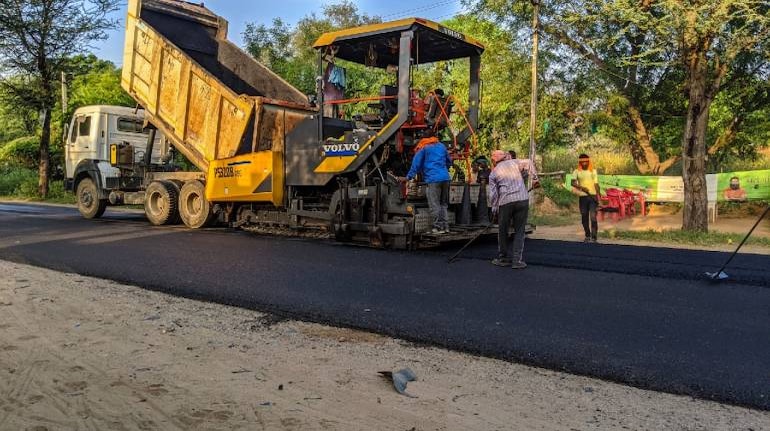
Indian citizens were more prone to fatal road accidents in 2022 than they were in 2000 despite steps taken to improve road safety in the country, according to road accident data from the National Crime Records Bureau.
In the past 22 years, accidental road deaths almost doubled to 155,622 from 80,118 as the country’s population increased about 36 percent to 1.39 billion.
About 12 people died in road accidents in every state every day last year, according to the NCRB. The figures would have been higher if unreported cases are added.

Also Read: In Bad Shape| India's most dangerous highways—why they are taking a toll on lives
India accounts for 11 percent of all crash-related deaths, the highest globally, according to a 2021 World Bank report, even though the country has only 1 percent of the world’s automobiles.
The Central government has stepped up efforts over the past three years to make roads in India safer. Union minister for road transport and highways Nitin Gadkari said last year that road accidents were “more serious than the Covid-19 pandemic.”
Gadkari has directed his ministry’s officials to reduce road accident cases by half by 2024.
Roads are critical in the growth of the Indian economy, carrying 70 percent of the goods and almost 90 percent of passenger traffic, Gadkari said in September. The length of highways in the country increased to about 147,000 km from about 91,000 km in 2014. The government is working to expand the national highway network to 200,000 km by 2025.
In the second story from Moneycontrol’s special series In Bad Shape, we look at what makes Indian roads unsafe and what can be done to improve them.
Steps taken so far
The National Highways Authority of India and the ministry of road transport and highways came out with detailed guidelines in December 2020 for taking up road safety audits on national highways. The efforts are focussed on carrying out more road safety audits and getting rid of black spots or areas prone to accidents.
Crackdown on quality
The NHAI said the frequency of road safety audits will be increased to once every quarter from one every six months, starting next year.
“The NHAI is training personnel to be qualified as road safety auditors and is aiming to start carrying out road safety audits across the country on a quarterly basis from 2023-24,” a senior NHAI official said.
The officials said road operators not meeting safety standards or construction quality standards will be directed to rectify the situation.
“We have given road operators until the next audit to review the quality of the roads and address concerns found in the earlier audit. In cases where the action taken by the operator is not satisfactory, firms and personnel are being fined and debarred,” the official said.
In 2021, the NHAI came out with a policy to fine companies or their personnel up to Rs 10 crore and also debar them for up to three years if concessionaires, contractors or consultants were found to have played a part in construction lapses of bridges, structures, and approaches to structures. The success of these measures would depend on how well they are implemented.
“The bane of this whole highways programme is corruption. The authority never penalises the contractors despite their shoddy performance and thus you cannot expect discipline from them,” said a senior government official.
The NHAI is also ranking national highways to prioritise improving quality standards of roads. An NHAI official said the ranking will give the highest weightage of 45 percent to highway efficiency, followed by safety (35 percent) and user services (20 percent).
The highway regulator has started deploying drones to survey road projects for better accountability of people working on the ground.
“We are already working on a standard operating procedure for strict adherence to quality standards by contractors, developers, and engineers in the construction of roads and highways. The new standards will be based on studies done in tropical countries to come up with all-weather roads of world-class quality," another NHAI official said.
Removing black spots
The Central government’s focus is on reducing the so-called black spots, areas that are prone to accidents, often due to poor design or quality of infrastructure.
Since 2019, an amount of Rs 4,512.36 crore has been spent on rectifying these black spots, which resulted in 57,329 road crashes in 2016-2018, the road ministry had said in a reply to the parliament in August.
At the end of August 2022, the NHAI had rectified 2,642 black spots while work is on to fix another 791 black spots, the NHAI official said. He added that 181 projects to rectify black spots were in the bidding stage, 188 were awaiting approval, and project reports were being prepared for 200 black spots.
The fixing of black spots involves adding safety features such as expanding roads and their shoulders, adding medians, installing reflectors and signage, and setting up culvert protection barricades.
“Each black spot is unique, depending on the location and type of counter-measure needed to rectify the black spot. The Indian Road Congress has guidelines to rectify black spots, which are implemented in each project to repair black spots,” the official added.
According to the guidelines, once black spots are identified, they are analysed for a month to select the correct remedial measure.
“Speed-calming measures including rumble strips, bar markings, speed breakers and speed tables with traffic signs have been used to rectify black spots,” the official said.
He added that other common counter-measures used to rectify black spots included improving drainage systems to prevent the formation of ponds and potholes on roads and improving skid resistance.
Clearing obstructions that hinder visibility at junctions, sharp turns and roundabouts is another method used to rectify black spots, as are the provision of turning lanes and the installation of mirrors to improve visibility.
Reaching out for help
NHAI plans to engage citizens across the country through its Sukhad Yatra mobile application to allow road users to provide feedback through complaints about road quality, which can be passed on to the agencies tasked with repairing them. This mechanism will also allow complainants to validate resolution of the issue.
Simultaneously, the government rolled out a Rs 7,270 crore state support programme for strengthening road safety. This will be implemented in Uttar Pradesh, Maharashtra, Madhya Pradesh, Karnataka, Rajasthan, Tamil Nadu, Andhra Pradesh, Gujarat, Bihar, Telangana, West Bengal, Odisha, Haryana, and Assam – states that account for 85 percent of the total road fatalities – over the next six years.
The Central government is working with state governments to install all traffic lights with speed cameras and red-light violation sensors at intersections, a senior government official said.
“Camera and red-light violation sensors will be a major step in improving road safety across the country. The estimated timeline to cover all major cities in India with traffic cams is by 2025,” the second NHAI official said.
The Central government will review fines for violating road safety guidelines in 2023 and may implement stricter norms to improve safety standards.
The NHAI is working with five local institutions and three international institutions to develop traffic management systems that can be monitored without on-field police officers.
Internal review
The NHAI has told its officials that they will be held liable if any mishap occurs due to poor national highway work.
The authority has taken a serious view of dereliction of duty by officials involved in issuing provisional certificates, thereby jeopardising the safety of users, in disregard of policy guidelines and contract provisions, the NHAI said in a circular last month.
The regulator said officials will be held liable if they issue provisional road safety certificates before the completion of a project or if fatal/serious accidents occur as a result of poor road engineering.
“It has come to notice that provisional completion certificates are being issued keeping safety works such as road marking, road signages, end treatment of crash barriers in the ‘punch list,’ which not only compromise the safety of users but also bring a bad name to NHAI upon the occurrence of accidents/fatalities,” the NHAI said.
However, the watchdog has not yet engaged an independent authority to carry out an internal audit.
Discover the latest Business News, Sensex, and Nifty updates. Obtain Personal Finance insights, tax queries, and expert opinions on Moneycontrol or download the Moneycontrol App to stay updated!

Find the best of Al News in one place, specially curated for you every weekend.
Stay on top of the latest tech trends and biggest startup news.




