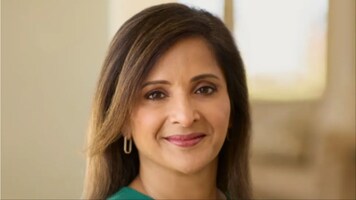
India has more than 1,020 universities and over 130 institutes of national importance but a very small number of them are headed by women. In an interview with Moneycontrol, Malabika Sarkar, vice chancellor (VC) of Ashoka University, talks about the dearth of women in leadership roles in Indian tertiary education, and how women need opportunities rather than quotas to climb the ladder in the academic world. Sarkar also talks about taking over from Pratap Bhanu Mehta whose exit from Ashoka was much talked about, and what it means to lead a liberal arts university funded through collective corporate philanthropy. Edited excerpts:
You took over the office of VC after the much talked resignation of Pratap Bhanu Mehta. Was it difficult to deal with the situation as Ashoka's first female VC, and as an academic leader?It was not difficult for the reason that I was associated with Ashoka University from 2015, and have been part of its growth story. Between 2015 and 2019, essentially I was building the institution with others. I did not want the responsibility attached to a vice chancellorship…I had been a VC before at Presidency University, Kolkata. A VC's position comes with a lot of responsibilities. When the Ashoka governing body asked me to take on the position (2019), I took it up, because I knew the university well, and I was convinced that Ashoka has a great future. When Pratap was the VC, I was the dean of faculty of research. We did joint planning and used to have daily interactions. It was exciting. So there was no abrupt change from the institution point of view. But of course, Pratap was a huge figure, very popular in media, and I had always preferred to be quieter.
We have 1,000 plus universities and scores of institutes of national importance, but very few women VCs. What’s holding back women from academic leadership roles and becoming VCs or directors at institutions like IITs?If you take mixed gender universities, there are very few women in VC positions. In the higher education world, women are perhaps not considered as leaders. They can be great academics, all of that. I don’t believe in quota for women, but women are very capable, they need opportunities. Leadership is all about nurturing…who can nurture better than a woman?
Higher education leadership means balancing and we all know women do balancing all the time at home and at work. Women are natural leaders, they need opportunities. But this perception and belief needs to grow.
When a woman candidate's name comes for selection, look at the qualification, quality and professional track record. Don’t look from the viewpoint of gender alone.
As a woman academic leader, do you practise this while hiring members for the faculty?Yes, I do. Where I have not always succeeded is finding top women scientists in some science disciplines, and for some senior positions. But we have got plenty of talent in several other areas. Gender balance among faculties in our university is absolutely good (almost 50:50). We are very mindful of quality and diversity.
Is there any policy level talk about how to raise female VC count, and promote women leaders in the higher education system?See, we have examples from top universities --Cambridge University, from where I studied, has seen women leadership, the present VC of Oxford is a woman. If top global universities can have women leadership, why cannot we do that here in India. Moving forward, if we devise a policy, we will see more women heading universities.
I think, mentoring for higher education leadership is something needed by both men and women. The policy I was talking about was a policy that will open doors, make higher education leadership an accessible area to more women. Policy to facilitate equal opportunity for women.
There is not much in terms of mentorship. I came to leadership almost accidentally – at both Presidency and at Ashoka, I was invited to lead. I learned from experience. But, training and mentorship is just not there for both men and women. Remember, running a university is a different kind of experience…awareness workshops, mentorship, training can all help.
Do you see a mindset change in the Indian academic world leading to a growing acceptance of women in leadership roles?It is changing for good. I remember my time at Jadavpur University when I was just 30+. Then it was not expected that I can think and speak for myself. People were surprised. Some used to think that women are decorative, but by now worldwide women are accepted. Given the opportunity, they are no less than men. I have attended VCs meet both while heading Presidency and here at Ashoka, but I don’t see that sense of kindness that I am a woman, and not much is expected from her, etc. That way we have significantly progressed.
Yes, we don’t have women heading IITs and IISERs, but we have started to see women leadership in universities. I believe this will bring change in IITs, too.
Coming back to Ashoka, what are the challenges to heading a liberal arts university set up via a collective philanthropy?It is exciting…I had taught at Jadavpur University, was the first women VC of Presidency University, but those are public universities and are bound by various government rules. Ashoka, being a liberal arts and private university, has much more flexibility. Some of the steps I wanted to take in Presidency and had manoeuvring difficulties – that became easier in Ashoka. But since there were opportunities (at Ashoka), it was challenging too because you are constantly thinking how to improve. When you have opportunities, you have to think several steps ahead, and are on your toes, always. In public universities, there are silos. Here there is flexibility, cooperation, cocreation, and exciting research projects. Ashoka’s founders are enablers, and when I turn to them for support, they are extremely supportive from funds to ideas. We are evolving as a liberal arts and science university.
(This is Part-1 of a series on women leadership in academia in the Indian higher education space. The series seeks to explore the various facets of women academic leadership, the challenges and the way forward.)

Discover the latest Business News, Sensex, and Nifty updates. Obtain Personal Finance insights, tax queries, and expert opinions on Moneycontrol or download the Moneycontrol App to stay updated!
Find the best of Al News in one place, specially curated for you every weekend.
Stay on top of the latest tech trends and biggest startup news.