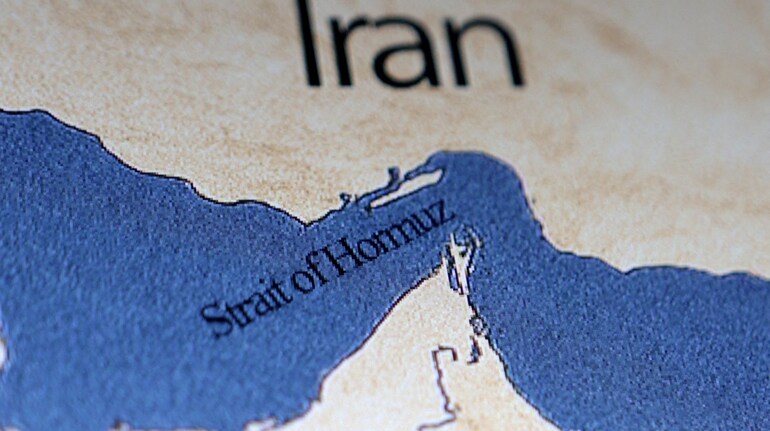

Indian refiners have stepped up imports through alternative routes, including Saudi and UAE pipelines, to bypass the Strait of Hormuz, which has now remained closed for more than 10 days as the war continues to rage in West Asia.
Around 50 percent of India’s energy supplies passed through the narrow but vital shipping route before February 28, when the US and Israel launched pre-emptive strikes on Iran, triggering a conflict that has since spread to other countries in the oil-rich West Asia.
Crude re-routed
Spread over 1,200 km, Saudi Aramco’s East-West pipeline transports 5 million barrels per day from Abqaiq to the Yanbu port on the Red Sea, bypassing Hormuz. Abu Dhabi National Oil Company’s 360-km Habshan-Fujairah oil pipeline can funnel 1.5 mbpd directly to the Gulf of Oman.
Both pipelines are operating at full capacity as the escalating conflict chokes energy exports through Hormuz.
Insights from data and commodity analytics firm Kpler show that tanker traffic through the Strait has fallen to almost zero, while Fujairah and Yanbu routes are operating at record capacity.
“However, these routes remain insufficient to fully compensate for the loss of shipments through Hormuz,” Sumit Ritolia, lead research analyst, refining and modelling at Kpler said.
India used to import 2.5-2.7 mbpd through Hormuz.
Saudi Arabia’s crude oil loading from Yanbu to India surged to 8.8 million barrels this month against zero in previous months. Preliminary Kpler data shows 4.2 million barrels scheduled for April, though figures can change as final destinations are confirmed.
“Saudi Arabia has started loading more cargoes from its west coast port of Yanbu, which allows shipments to bypass the Strait of Hormuz via its East-West crude pipeline,” said Nikhil Dubey, senior research analyst, refining and modelling at Kpler.
Earlier, most of India-bound crude was loaded from the east coast of the kingdom but now, Yanbu volumes are picking up. Indian refiners are also sourcing more barrels from other regions, such as West Africa, he said.
Crude exports to India via the Fujairah pipeline have reached 4.3 million barrels so far in March against 5.3 million barrels in February, Kpler data shows.
“UAE is also exporting to India via Fujairah but volumes have not passed previous levels,” Dubey said.
Analysts expect Fujairah’s export volumes to rise but tracking remains difficult. Some tankers may be switching off transponders to obscure their movements as Fujairah is close to Hormuz, say analysts.
More on the way
Government sources confirmed arrivals through Yanbu and Fujairah. They also said India secured 20 very large gas carriers (VLGCs) to carry around 1 million tonnes, primarily from the US. The supply will arrive via Yanbu and Fujairah.
“Shipping activity suggests most shipowners remain reluctant to transit the Strait of Hormuz, with only a handful of vessels entering or leaving the Middle East Gulf in recent days,” said Muyu Xu, senior crude analyst at Kpler.
She said storage pressure continues to build across Gulf producers, raising the likelihood of further output cuts or well shut-ins as tanker availability remains constrained.
Fujairah and Yanbu not enough
While alternative routes are helping, their capacity remains insufficient. Even with record loadings at Fujairah and Yanbu, West Asian exports are still at about one-third of normal levels, she said.
Kpler estimates Asian refiners to step up purchases of long-haul cargoes from the Atlantic Basin, as the reopening of Hormuz appears distant.
There are reports of Iran trying to mine the Strait of Hormuz. The US military "eliminated" 16 Iranian mine-laying vessels near the Strait of Hormuz, the Central Command said in a statement on March 10, as President Donald Trump warned that any mines laid in the Strait by Iran must be removed immediately, a report by news agency Reuters said.
Middle Eastern crude and condensate outages have reached 5 Mbd due to the Hormuz closure and Kpler projects the outages to accelerate to 8 mbd by late March if ships are unable to pass.
According to S&P Global Commodities at Sea data collected on March 9, the number of ships transiting Hormuz has continued to taper, falling to just four ships on March 8 from 91 on February 28.
Discover the latest Business News, Sensex, and Nifty updates. Obtain Personal Finance insights, tax queries, and expert opinions on Moneycontrol or download the Moneycontrol App to stay updated!
Find the best of Al News in one place, specially curated for you every weekend.
Stay on top of the latest tech trends and biggest startup news.