India being the fastest growing major economy doesn’t make it a "dead economy" in any sense, reckon economists and analysts. They say the country is poised to be the only second country after China that will drive the global GDP growth by 2030.
To be sure, India’s economy is expected to grow at 6.5% in FY26, according to the Reserve Bank of India (RBI) – a rate same as in FY25.
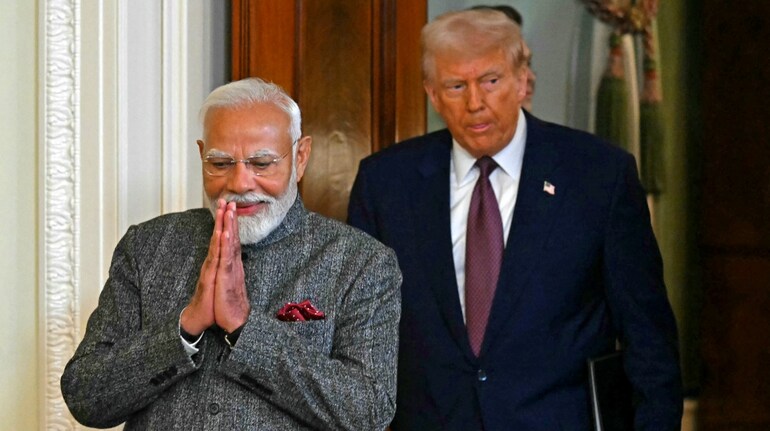
On Thursday, US President Donald Trump called India and Russia a "dead economy".
"I don’t care what India does with Russia. They can take their dead economies down together, for all I care. We have done very little business with India, their Tariffs are too high, among the highest in the World," Trump wrote on Truth Social.
Economists, however disagree, and say the world’s fourth largest economy can’t be called "dead" in any sense. IMF has projected India’s GDP to cross $6.8 trillion by 2030.
"A country with the potential growth of 6.5-7%, which will soon be the 3rd largest economy in the world, driven by a young workforce…is far from a dead economy," Dhiraj Nim, economist, ANZ Research. At present, India is fourth largest economy in the world with GDP exceeding $4.187 trillion.
India’s general government debt is 81% of its GDP, while that of US is 120%. India’s household debt is also lower, at 42% of the GDP, while that of US is 69%. The former’s household (HH) savings rate, on the contrary, is much higher at 18.1% (of GDP), as compared to 4% of US.
"The HH savings rate gives India a clear edge," noted NR Bhanumurthy, director, Madras School of Economics. "High savings powers consumption, and helps in financing domestic investment requirements. If savings are high, you don’t have to depend much on external financing, which is volatile," he added.
India’s debt-to-GDP ratio, in fact, is much lower than other advanced economies, such as Japan and China – both having debt over 200% of GDP. "India’s government much more fiscally prudent, which makes is not a dead economy," noted Paras Jasrai, senior economic analyst, India Ratings and Research (Ind-Ra).
Analysts say India’s progress on the digital payment framework empowers the country’s growth to accelerate and be inclusive. In June, Finance Minister Nirmala Sitharaman had said India has 87% fintech adoption rate compared to 67% globally.
Sitharaman had noted that India has achieved 80% financial inclusion rate in "just six years" which in normal course will take 50 years. "Nearly half of all real time digital transactions of the world are happening in India with 35 crore active users being a part of UPI system," said the FM.
"Financial inclusion helps in reducing cost of borrowing, and increase the money multiplier effect, which propels growth," said Bhanumurthy.
Analysts say, India will become one of the largest consumption markets in the coming years given it positive demographic dividend. For the next 20 years the working age population of India will continue to rise, and in contrast the US is an aging economy, they say.
"India is also key provider of skilled services such as software which keeps cost of funds for US companies contained," noted Gaura Sen Gupta, chief economist, IDFC FIRST Bank. "India’s macro stability indicators are much healthier than the US with low external debt, low current account deficit and central fiscal deficit on a consolidation path," she added.
Discover the latest Business News, Sensex, and Nifty updates. Obtain Personal Finance insights, tax queries, and expert opinions on Moneycontrol or download the Moneycontrol App to stay updated!
Find the best of Al News in one place, specially curated for you every weekend.
Stay on top of the latest tech trends and biggest startup news.