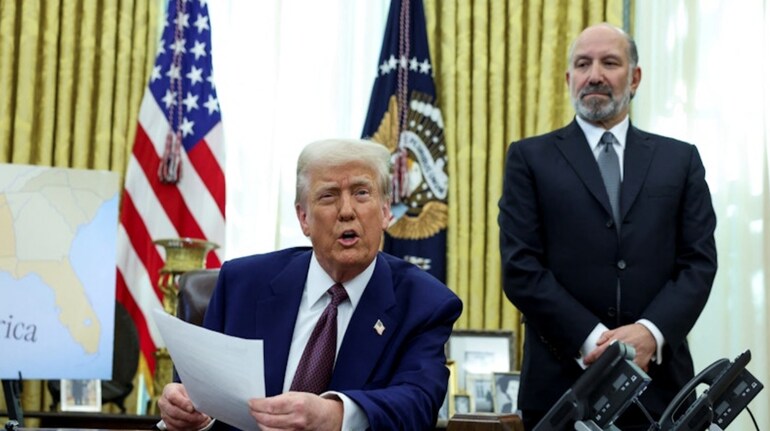
With a little more than a week to go for the Trump administration’s reciprocal tariffs to kick in, American pharma and healthcare groups have sought an exemption for pharmaceutical products, especially low-cost generic drugs, saying higher duties will push up prices and also disrupt supply chains.
India’s pharma industry, too, is closely watching President Donald Trump’s tit-for-tat tariffs, which are expected to come into effect on April 2, as the US is the biggest market for Indian generics.
The administration thinks that tariffs will encourage pharmaceutical companies to shift manufacturing to the United States and balance the trade with countries that impose “higher” tariffs on American goods.
“We are concerned that distributors and generic manufacturers cannot absorb the rising costs of broad tariffs,” the Healthcare Distribution Alliance (HDA) has said in a statement.
The Washington-headquartered HAD, which represents primary pharmaceutical distributors, has asked the administration to consider exemptions for pharma products and long implementation timelines to maintain the safe and efficient delivery of approximately 10 million medicines and healthcare products a day.
The US pharma companies, trade bodies, distributors, and hospitals are worried about the potential increased costs due to reliance on foreign manufacturing and raw materials, leading to higher drug prices for American consumers and disruptions in the supply chain.
“It is worth noting that distributors operate on low-profit margins — 0.3 percent. As a result, the US will likely see new and worsened shortages of important medications and the costs will be passed down to payers and patients, including those in the Medicare and Medicaid programs," the HDA said.
Medicare and Medicaid are health insurance programmes run by the US government.
The Association for Accessible Medicines (AAM), the body that represents generic manufacturers in the US, has similar concerns.
“Generic manufacturers simply can't absorb new costs. Our manufacturers sell at an extremely low price, sometimes at a loss, and are increasingly forced to exit markets where they are underwater," AAM said.
Though there is no clarity on how tariffs would be structure, according to a PwC report, a 28 percent additional tariff would lead to a tariff increase of $3.4 billion.
Currently, the US charges almost zero duties on pharmaceutical imports. India imposes about 10 percent tax on pharma imports from the US. India largely exports low-cost generic drugs, whereas the US exports ships mostly patented and innovative drugs.
In 2024, India exported drugs worth around $8.73 billion to the US — about 31 percent of its total pharma exports. In the same period, the US exported $635.37 million worth of pharmaceuticals to India.
Indian generics save billions for the US
Over 90 percent of all US prescriptions were for generic medicines. Four out of every 10 prescriptions filled in the US were for drugs manufactured by Indian firms.
Indian drug makers export about $8 billion worth of medicines annually, mostly generic drugs, saving money for patients and the US exchequer.
Indian generics saved the US healthcare system $219 billion in 2022 and $1.3 trillion between 2013 and 2022, according to analytics firm IQVIA.
Indian drugmakers provide nearly half of the generic medicines covered by US federal medical insurance Medicare and commercial insurance plans.
Indian drugmakers are worried, too. They are weighing portfolio rejig, and manufacturing realignment to survive US tariffs, as they typically operate on thin EBITDA margins of 5-15 percent on average for their base business. Even a 10 percent reciprocal tariff will make them unviable if they fail to pass on the increased import duty to the consumers in the US.
The India Pharmaceutical Alliance, the industry body that represents large pharmaceutical companies with significant exposure to the US, has said reducing tariffs on US imports to zero wouldn't cost a lot to India and may even convince Trump to offer relief.
Moneycontrol learns that within the government, there is a section that believes India should negotiate from a position of strength rather than succumbing to US pressure.
"Generic drugs is our strength, we should negotiate from strength, and shouldn't kneel before the US government," Uday Bhaskar, former director general, Pharmexcil India, told Moneycontrol.
"India has the largest number of USFDA compliant manufacturing facilities outside the US, it supplies quality medicines at very affordable prices, the US made billions of dollars in savings. It's not that easy for someone to replicate this, India should play on this," Bhaskar said.

Discover the latest Business News, Sensex, and Nifty updates. Obtain Personal Finance insights, tax queries, and expert opinions on Moneycontrol or download the Moneycontrol App to stay updated!
Find the best of Al News in one place, specially curated for you every weekend.
Stay on top of the latest tech trends and biggest startup news.