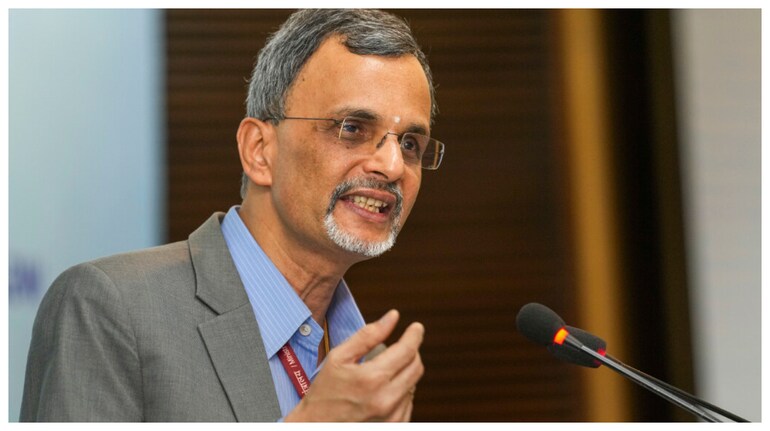
India must realign its development model to reflect its core strength, labour abundance, rather than persist with a capital-intensive template, Chief Economic Advisor V Anantha Nageswaran said on May 29, stressing that there is a need to create jobs and expand manufacturing at scale.
“We have inherited a model of development which is capital-intensive; but we are a labour-rich country. So this is alien to our core strength,” the CEA said, calling for targeted policies that focus on labour-intensive manufacturing to generate employment and boost equitable growth.
Nageswaran also said India’s long-term development vision must prioritise national goals like Viksit Bharat 2047 before chasing net-zero emissions targets for 2070.
“There is room for protection in developing countries, because they are competing with a handicap,” he said, referring to the need for calibrated trade policies and support to domestic industry.
In a wide-ranging address, the CEA flagged low societal trust, especially between citizens and the government, as a barrier to scale and competitiveness.
“Trust is still relatively low within society and between society and government. We have to ensure trust across various networks—public and private. Without that, we can’t transcend the barrier of scale,” he said.
He also noted that despite AI and robotics boosting productivity, distributional fairness would determine their long-term benefits.
“We need to think seriously about what we are offering the youth,” he said, adding that issues like ultra-processed food and increased screen time could threaten the country's demographic dividend.
Nageswaran noted the importance of lowering the cost of doing business, not just improving ease of doing business, and flagged the widening gap between capital formation and profitability growth.
“We are discussing how to approach regulation by balancing compliance with economic activity,” he said, endorsing regulatory impact assessments as essential for future policymaking.
He also flagged India’s critical dependence on minerals and rare earths, warning that every new solar panel installation increases reliance on the outside world.
The CEA also highlighted positive tailwinds for the Indian economy, moderating energy prices, a supportive monetary environment, tax reliefs, and a favourable monsoon.
“We will be able to achieve a growth rate between 6.3 to 6.8 percent and sustain it for a considerable period,” he said.
He also dismissed fears of a sharply weakening rupee: “Do not expect the rupee to weaken as it did over the last 30 years. We will have to live with a stronger currency.”
Private players, he said, must now focus on improving competitiveness through innovation and productivity, rather than relying on currency depreciation.
Adding “trust, deregulate, and reciprocate” as the mantras to avoid the middle-income trap, Nageswaran said India must also transition from fossil fuels to cleaner alternatives in a phased manner.
He called for harmonising best practices across Indian states, improving infrastructure, and developing a skilled workforce to fix the inequitable investment flow across regions.
Discover the latest Business News, Sensex, and Nifty updates. Obtain Personal Finance insights, tax queries, and expert opinions on Moneycontrol or download the Moneycontrol App to stay updated!
Find the best of Al News in one place, specially curated for you every weekend.
Stay on top of the latest tech trends and biggest startup news.