Calls for a budget that lends greater support to consumption have become more pronounced after India’s GDP growth slumped to an almost two-year low in the second quarter of the current fiscal.
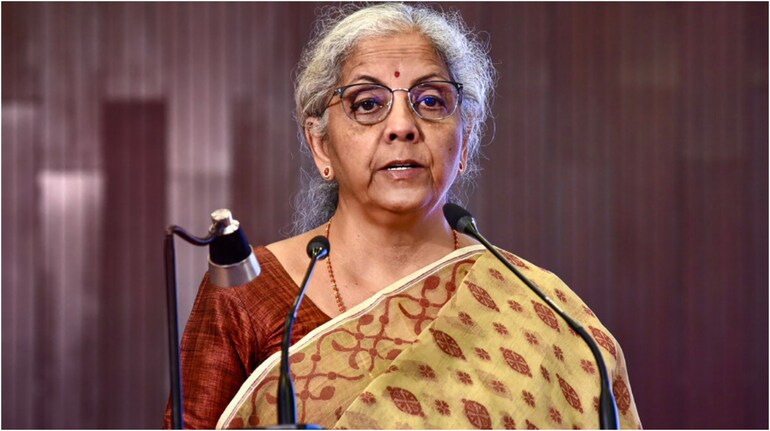
Economists have called for the Budget 2025, which will be presented by finance minister Nirmala Sitharaman on February 1, to be more supportive of growth in its fiscal policies while going slow on consolidation.
“Given the loss of growth momentum in FY25, it’s essential that the pace of fiscal consolidation slows in FY26. The focus of fiscal policy on capital expenditure needs to be revived, both at the Centre and state level,” IDFC First Bank chief economist Gaura Sengupta said.
The Centre is targeting a fiscal deficit of 4.9 percent of the GDP in the current fiscal and aims to bring it below 4.5 percent by FY26.
“The upcoming Budget faces an acute policy trade-off between nurturing the fading growth and diminishing fiscal space with challenging debt dynamics. Certainly, activity is still below the pre-pandemic path, consumption gears are missing and the private capex cycle has yet to inflect convincingly,” Emkay Global’s Madhavi Arora and Harshal Patel said.
While private capex has been waiting for demand conditions to improve, the government’s spending on infrastructure has slowed down in the current fiscal.
Capex spending during April-November was at Rs 5.13 lakh crore, or 46.2 percent of the budgetary goal of Rs 11.1 lakh crore, compared with 58.5 percent during the yer-ago period.
Net tax revenues rose a marginal 0.5 percent on-year during the first eight months of FY25 due to frontloaded devolution of taxes to the states. Non-tax revenues expanded by about 50 percent, thanks to the Reserve Bank of India’s blockbuster dividend payout.
Barclays said the government might have to budget faster growth in capex, given the likely undershooting of target in FY24-25 and the need to support growth in the absence of broad-based private capex.
In November, revenue expenditure grew just 1 percent from year-ago period.
The space to support capex and consumption is limited, “given that a large part of revenue expenditure is sticky”, IDFC First Bank’s Sengupta said.
Around 60 percent of revenue expenditure is largely pre-determined — subsidies, pay, pension and interest expenditure — while performance on the disinvestment front has been subpar with actual collections significantly undershooting target over the last few years, she added.
While on the receipts side, Barcalys is of the view that despite a higher-than-expected RBI dividend and double-digit growth in income tax revenue, total receipts may undershoot the budget target of Rs 32.1 lakh crore by Rs 70,000 crore.
Weaker nominal GDP growth, a decline in corporate profits and likely slippage on the divestment front has affected overall receipts collections adversely, Barclays said.
Ways to boost consumption?
While most economists agree on the need for measures to boost disposable incomes, especially to give urban consumption a boost, some question the effectiveness of a cut in income tax to meet this aim.
While an income tax cut is being speculated to boost urban disposable income, the efficacy of such a move is limited given that only 2 percent of population pays tax, Sengupta said. Capital expenditure remains far more effective in boosting growth and creating jobs.
Soumya Kanti Ghosh, group chief economic adviser, State Bank of India, too, said the sensitivity of consumption demand is more responsive to indirect taxes vis-à-vis direct taxes, thereby calling for a further rationalisation of the indirect tax structure.
Barclays said to support consumption, the finance minister could provide an effective personal I-T rate cut by further tweaking the slabs.
“This is unlikely to have a sizable fiscal cost. That said, improved tax buoyancy will likely make up for revenue foregone under this announcement. We think a boost to consumption is needed, especially with private investment also now awaiting the increase in demand growth,” Barclays said.
No room for freebies
Despite the resounding need for consumption-boosting measures, economists say the Centre is unlikely to take the route taken by states when it comes to cash transfers.
To woo women voters, many states have announced schemes involving direct cash transfers ranging from Rs 1,000-2,000 a month.
SBI’s Ghosh said the total cost of eight states amounts to Rs 1.5 lakh crore.
Ghosh said “with income transfer to women likely to be promised competitively by states in future, even the Union may be tempted to follow suit…It would be worth taking course to adopt a universal income transfer scheme (matching grant from Centre to states) towards substantially reducing several market disturbing subsidies”.
Sengupta said in FY25, loans to state governments are expected to fall short of target levels at Rs 1.1 lakh crore. After states announced targeted income schemes, there is a deterioration in expenditure quality with rise in revenue spending and decline in capex.
Sengupta recommended measures to disincentivise further deterioration in state governments’ capital expenditure.
Emkay Global’s Arora and Patel said the Centre is unlikely to attempt to replicate welfarism as done by a few states. Some personal income tax-slab tweaks may still likely trigger supply-side economics.
Barclays, too, said that on the expenditure side, “we do not think the cash-handout schemes that were heavily used during state polls will find a mention at the national level. The subsidy bill is likely to modestly rise amid the free food-grain scheme’s extension.”
Discover the latest Business News, Sensex, and Nifty updates. Obtain Personal Finance insights, tax queries, and expert opinions on Moneycontrol or download the Moneycontrol App to stay updated!





Find the best of Al News in one place, specially curated for you every weekend.
Stay on top of the latest tech trends and biggest startup news.