






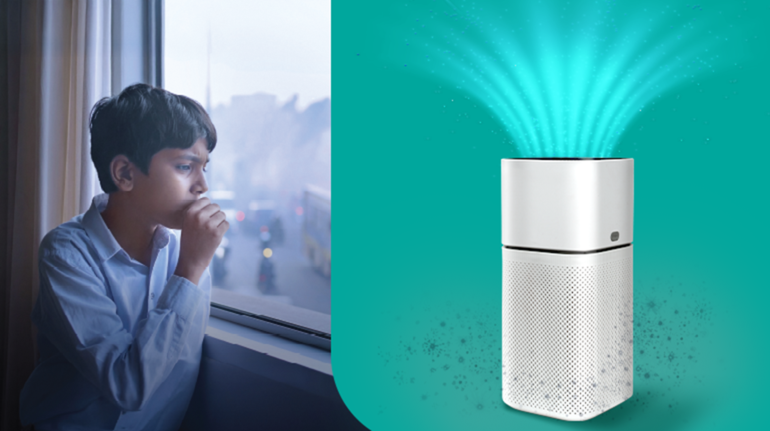
Air pollution in Indian cities is not something people face only during the winter smog months. For many people living in urban areas, air pollution has become an everyday reality that is quiet, persistent, and largely unavoidable.
Cities like New Delhi, Gurgaon, Noida, and Kolkata often dominate headlines during high-pollution months, but the issue is not limited to North India. Bangalore, Mumbai, Chennai, and Pune also experience elevated fine particulate levels across the year, driven by traffic, construction, power generation, and atmospheric chemical reactions.
This growing awareness has led many households to ask a practical question: Is an air purifier really necessary, or is it just a lifestyle upgrade?
Understanding PM2.5 (The Pollution You Don’t Always See)
When people think about air pollution, they often picture visible dust, smoke, or vehicle exhaust. In reality, some of the most harmful pollution is invisible.
Fine particulate matter, known as PM2.5, is small enough to enter deep into the lungs and even pass into the bloodstream. Recent scientific analysis shows that a large share of PM2.5 in India does not come directly from exhaust pipes or dust, but forms chemically in the air from gases such as sulphur dioxide and ammonia. One of the most common outcomes of this process is ammonium sulphate, a secondary particle that remains suspended in the air for long periods.
This matters because chemically formed particles are present across seasons, not just during peak winter pollution. Even when the air looks clear, PM2.5 levels can remain high, especially in dense urban regions.
Why This Affects Homes in Major Cities
In cities like Delhi NCR (Delhi, Gurgaon, Noida), PM2.5 levels often remain well above recommended limits for extended periods. But even relatively “cleaner” metros such as Bangalore, Pune, Chennai, and Hyderabad are not immune. Traffic congestion, continuous construction, industrial activity, and regional pollution transport all contribute to sustained exposure.
Outdoor air does not stay outdoors. Fine particles easily enter homes through doors, windows, ventilation gaps, and even during short periods of airing. Over time, indoor air quality tends to mirror outdoor pollution levels, sometimes remaining worse due to poor ventilation.
Since most people spend the majority of their day indoors (sleeping, working, and relaxing), this prolonged indoor exposure becomes a real concern.
What an Air Purifier Actually Does
An air purifier does not eliminate outdoor pollution, nor is it a replacement for clean air policies. What it can do is reduce the concentration of fine particles inside enclosed spaces where people spend most of their time.
A good air purifier works by continuously pulling indoor air through a multi-stage air filter system. At the core of this system is a True HEPA filter, which can trap up to 99.97% of particles as small as 0.3 microns, including PM2.5. As air circulates through the unit, particulate levels gradually drop, most noticeably in spaces such as bedrooms and living rooms.
Many modern air cleaners are engineered for faster air circulation. In suitable room conditions, they can deliver noticeable improvement within a short period, sometimes in as little as 10 minutes, depending on pollution levels and room size. For this reason, choosing the best air purifier for home use, matched to room size and usage, matters as much as owning one.
Effectiveness Depends on How You Use It
Air purifiers work best when matched to the room size and used consistently. Large living rooms, for example, require higher-capacity models, while smaller bedrooms can benefit from compact units.
They are most effective in enclosed spaces with limited air leakage. Leaving doors and windows open continuously reduces their impact. In real-world use, many families run air purifiers overnight or during peak pollution hours to maintain better indoor air quality.
Cost vs Long-Term Value
Air purifier prices in India vary depending on coverage area, filtration quality, and added features. While cost is often seen as a barrier, many households now compare portable air purifiers to other everyday health appliances rather than luxury items.
For urban families in cities like Delhi, Gurgaon, and Noida, where pollution levels can stay high for months, the value lies in reducing daily exposure rather than reacting to extreme episodes. Even in cities like Pune, Hyderabad, or Bangalore, where pollution may fluctuate, indoor protection offers year-round benefits.
In areas with persistent air quality issues, premium air purifiers provide practical advantages. These models typically feature more advanced filtration systems, higher air delivery rates, smarter airflow control, and durable components built for sustained use. Over time, this leads to more reliable performance, faster purification, and stronger long-term value, and not just additional features.
From Optional to Practical
India remains one of the world’s largest emitters of sulphur dioxide and ammonia, two key contributors to secondary PM2.5 formation. While long-term solutions depend on stronger emission controls and cleaner energy systems, individuals have limited control over outdoor air quality.
What they can control is the air inside their homes.
Therefore, using an air purifier isn’t a discretionary purchase, but a practical step toward everyday well-being.
The Bottom Line
Air purifiers are not a cure for India’s air pollution problem, but they are a realistic, evidence-based way to reduce indoor exposure to fine particulate matter. With PM2.5 present across seasons and cities, cleaner indoor air is less about reacting to peak pollution and more about making everyday urban living healthier.
For households looking to choose an air purifier that fits their space and usage, Eureka Forbes offers a range of options designed for Indian homes. These air purifiers cover compact rooms of around 200 sq. ft. as well as larger living spaces up to 670 sq. ft. They are equipped with True HEPA filters, smart air monitoring, and advanced multi-stage purification systems to capture fine particles, allergens, and airborne pollutants.
With air purifier prices ranging from ₹6,400 to ₹19,500, the Eureka Forbes range caters to different room sizes and everyday needs, making reliable indoor air protection accessible for a wide variety of home environments.
Moneycontrol Journalists are not involved in creation of this article.
Discover the latest Business News, Sensex, and Nifty updates. Obtain Personal Finance insights, tax queries, and expert opinions on Moneycontrol or download the Moneycontrol App to stay updated!



