

India’s wedding industry, valued at USD 130 billion (₹10.8 lakh crore) in 2025 and projected to reach USD 228 billion (₹19 lakh crore) by 2030, according to a joint report by KPMG India and WeddingWire India (2025), has become a glittering marketplace of promises, but also of disputes. Behind the lavish celebrations, families increasingly face nightmares: photographers withholding albums despite full payment, decorators disappearing after advances, caterers delivering substandard services, and vendors threatening couples with copyright claims over their own memories.
Consumer forums and helplines have reported a surge in wedding-related complaints. In 2022 alone, India recorded over 1.73 lakh consumer disputes, according to data tabled in Parliament by the Ministry of Consumer Affairs, Food and Public Distribution, many linked to service deficiencies in weddings. The National Consumer Helpline continues to log thousands of complaints annually against event managers, photographers, and caterers. What should be a sacred milestone often spirals into harassment, broken contracts, and financial loss. In a sector this vast yet largely unregulated, the imbalance of power between emotionally invested families and commercially driven vendors has created fertile ground for exploitation, making legal awareness not just useful but essential.
The legal framework
The Consumer Protection Act, 2019 (CPA), provides the backbone of remedies available to families.
- Section 2(11) defines “deficiency of service,” covering delays, non-delivery, or refusal to edit promised work.
- Section 2(47) defines “unfair trade practice,” including coercive clauses such as mandatory tagging or exclusivity.
- Section 35 empowers consumers to file complaints in District Commissions.
Rahul Hingmire, managing partner at Vis Legis Law Practice, who has advised clients on copyright and IP disputes, emphasizes: “Consumer courts have consistently held that withholding deliverables or threatening clients amounts to deficiency of service. Families should not hesitate to seek legal intervention when vendors misuse advances or weaponize copyright.”
The Copyright Act, 1957, further complicates matters.
- Section 17 makes photographers the first owners of copyright unless rights are contractually transferred.
- Section 52 provides “fair dealing” exceptions, allowing couples to use wedding photographs and videos for private, non-commercial purposes, such as sharing with family or posting on social media, without infringing copyright.
- The Information Technology Act, 2000 and the Bharatiya Sakshya Adhiniyam, 2023 (Section 63) recognise electronic records, including WhatsApp chats and emails, as admissible evidence, subject to certification requirements. This ensures that even informal agreements can be enforced.
Judicial precedents on wedding service deficiency
Consumer forums and courts have consistently upheld the rights of families in wedding disputes:
- Bangalore District Consumer Commission, Withholding Wedding Video: Held that withholding a paid wedding video beyond the stipulated time constitutes a deficiency of service under the CPA.
- Koppal District Consumer Commission, Substandard Photography/Videography: Compensation awarded where the quality of delivered photography/video fell well below the agreed standard.
- Delhi Consumer Forum, Extreme Delay in Wedding Photo Delivery: Compensation for mental harassment where photographs were not delivered even years after the event.
- Multiple Consumer Forum Orders, Photo/Video DVD Not Delivered: Albums and video DVDs not delivered despite payment were treated as deficient service.
- Hyderabad Consumer Commission, Banquet Service Deficiency (Menu Substitution): Compensation for failure to serve agreed-upon menu items at a banquet hall event, relevant to catering disputes.
- NCDRC, 2022: Directed a wedding photography firm to refund ₹1.2 lakh and pay damages after failing to deliver promised videos, holding this as “deficiency of service.”
- These rulings establish that vendors cannot escape accountability by hiding behind informalities or restrictive clauses.
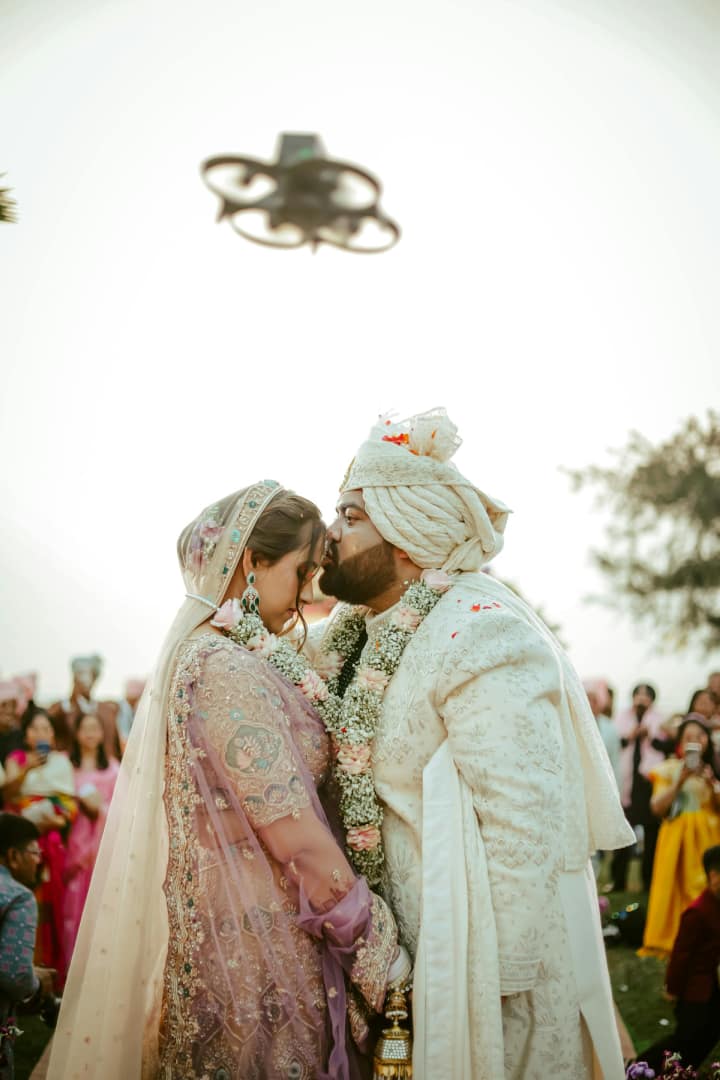 Wedding photography: When couples hire and pay for services, the work is considered a commissioned service. Contracts can, and should, transfer usage rights to the client. (Image credit: thel0stkidd via Pexels)
Copyright misuse in wedding photography
A troubling trend has emerged: photographers insisting that all wedding photos and videos remain their copyright and intellectual property, even after couples have paid in full. Families are told they cannot post images, edited or raw, on social media without the photographer’s consent. In some cases, vendors go further, forbidding couples from crediting decorators, designers, or other professionals, claiming the wedding is “their project.”
Legally, this position is misleading and exploitative.
- Commissioned work: When couples hire and pay for services, the work is considered a commissioned service. Contracts can, and should, transfer usage rights to the client.
- No registration requirement: Copyright exists automatically upon creation; registration is not mandatory. Vendors cannot use registration as a weapon to block couples from using their own memories.
- Fair dealing exceptions: Couples are entitled to use photos for private purposes, including sharing with family or posting non-commercially.
- Consumer Protection Act, 2019: Restrictive clauses that deny deliverables or block usage rights can amount to “deficiency of service” and “unfair trade practice.”
Couples are not just buying a service; they are entrusting vendors with their memories. When those memories are held hostage under the guise of copyright or branded as ‘their project,’ it is exploitation. Families must know that the law protects their right to use and share their own wedding documentation.
 Before signing a wedding photographer, ask how they will transfer the usage rights to your wedding photos and videos to you, and if you will need their permission to post professionally shot wedding images online. (Image credit: Sabir Khan via Pexels)
Remedies available to families
Families can:
- File complaints under CPA 2019, Section 35 in District Commissions.
- Seek compensation for the deficiency of service and mental agony.
- Enforce contracts in civil courts.
- Assert privacy rights under Article 21 of the Constitution against unauthorized posting.
- Negotiate copyright licensing for unrestricted personal use.
How to file a complaint
Weddings can be a very busy time for the families, and no one hires wedding vendors expecting to litigate for poor service or copyright at a later date. But it is prudent to make note of some of the documents you could need in case things go awry. Here's a list, along with the basics of how to file a complaint:
- Documents required: Contract copies, WhatsApp/email exchanges, payment receipts, and evidence of deficiency.
- Jurisdiction: File in the District Consumer Commission where the family resides or where the vendor operates.
- Filing Fee: Nominal, based on claim value (₹200–₹1,000 for most wedding disputes).
- Timeline: District Commissions are mandated to resolve complaints within 90–150 days.
- Relief available: Refunds, compensation for mental agony, litigation costs, and directions to deliver pending work.
Red flags in vendor contracts
While every service provider can have their own SoPs for working, some clauses in vendor contracts may be a cause for concern:
- Exclusivity clauses blocking other vendors
- Mandatory credit/tagging requirements
- Copyright retention without options
- Rigid editing control
- Option to withhold deliverables after full payment
- Ghosting or non-responsiveness
- Non-refundable advance clauses
- Short correction windows
- Restrictions on family participation
- Limited liability disclaimers
Checklist: Questions to Ask Your Photographer Before Signing
Ask your shortlisted wedding photographers:
- Who owns the copyright to the images and videos?
- Will usage rights be transferred to the couple, and in what form (license, assignment)?
- Can the couple post raw or edited pictures on social media without prior consent?
- Are there restrictions on tagging or crediting other vendors?
- What platforms/websites can the couple use to share their photos (Instagram, Facebook, personal blogs, wedding portals)?
- What is the timeline for delivery of albums and videos?
- Are edits included, and how many rounds of corrections are allowed?
- What happens if the photographer fails to deliver on time?
- Is there a refund/compensation clause for deficiency of service?
- Can couples restrict or prevent photographers from posting their pictures online or using them in portfolios? If so, how is this documented in the contract?
Policy recommendations
The scale of India’s wedding industry demands oversight. Just as real estate reforms curbed builder malpractices, weddings, too, require regulation. Possible measures include:
- Vendor registration: Mandatory licensing for service providers handling large advances.
- Standard contracts: Templates approved by consumer authorities to ensure fairness.
- Ethical codes: Industry associations should adopt guidelines on deliverables, copyright, and client rights.
- Awareness campaigns: Government and consumer bodies should educate families on their rights before peak wedding seasons.
Closing note
Weddings are meant to be remembered for love and celebration, not for disputes over advances, edits, or copyright notices. By understanding the Consumer Protection Act, 2019, the Copyright Act, 1957, and the enforceability of digital agreements, families can safeguard their rights.
This awareness empowers consumers and reminds vendors that practices exploiting their custodial role over memories are legally indefensible. The law is clear, and families are increasingly prepared to assert their rights. Equally important, couples should do a thorough background check of vendors before hiring. And when it comes to photography services, choose someone who views your wedding not as a mere business transaction, but as a once-in-a-lifetime event deserving care, respect, and integrity.
Discover the latest Business News, Sensex, and Nifty updates. Obtain Personal Finance insights, tax queries, and expert opinions on Moneycontrol or download the Moneycontrol App to stay updated!
Find the best of Al News in one place, specially curated for you every weekend.
Stay on top of the latest tech trends and biggest startup news.