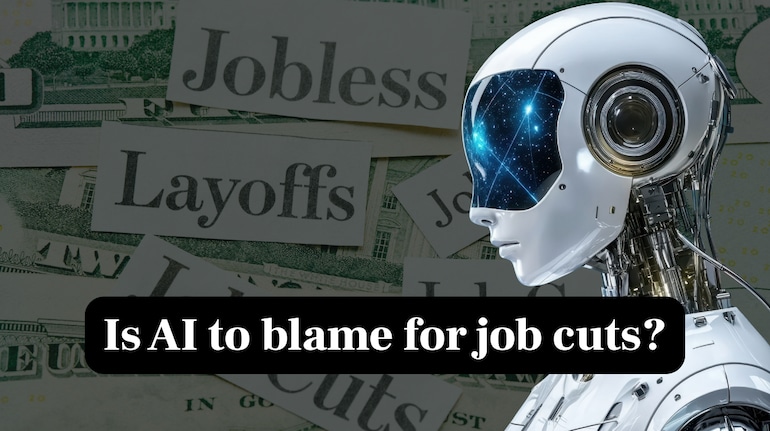
A new wave of large-scale layoffs is sweeping across corporate America, with major employers like Amazon, UPS, and Target announcing thousands of job cuts in recent weeks. The development has reignited a pressing question in the global workforce: Is artificial intelligence (AI) beginning to replace human workers?
The layoffs, which span industries from retail to logistics and technology, reflect a broader shift in the post-pandemic economy, one shaped by efficiency drives, automation, and the accelerating adoption of AI tools.
Thousands of Jobs Cut Across Major Corporations
Amazon confirmed that it would reduce its corporate workforce by around 14,000 roles, affecting teams across multiple departments. The company said affected employees would receive severance packages, healthcare benefits, and access to internal job placement opportunities.
At UPS, the scale of cuts was even larger. The logistics giant revealed that it had eliminated approximately 34,000 operational jobs in the first nine months of 2025, along with an additional 14,000 management positions, as part of its effort to streamline operations and adapt to shifting demand.
Meanwhile, Target has announced plans to lay off about 1,800 corporate employees, citing the need to eliminate redundant roles and simplify decision-making processes. Reports also indicate that Paramount Skydance and Rivian are preparing similar workforce reductions, adding to growing concerns about widespread job instability.
Even companies seen as leaders in the AI-driven economy are not immune. Meta has reportedly reduced positions within its own AI division, while Chegg, the education technology firm, announced plans to cut nearly half of its workforce as AI tools like ChatGPT impact its core business model.
While AI adoption is a significant factor, experts say it’s not the sole reason for these sweeping job cuts. Many companies expanded aggressively during the pandemic years, hiring at an unsustainable pace as e-commerce and digital services surged. As demand normalized and interest rates rose, firms began reevaluating their staffing needs.
The latest layoffs, therefore, are seen as a mix of overhiring corrections, cost-cutting measures, and efficiency drives, with AI now playing an accelerating role in redefining how work gets done.
For instance, automation in logistics and retail has reduced the need for certain repetitive tasks, while generative AI tools are enabling corporate teams to perform with smaller headcounts. Executives at several firms have openly stated that AI is helping “do more with less,” leading to fewer human roles in areas like marketing, customer support, and data management.
Is AI Really to Blame?
Economists remain divided on whether AI is directly replacing workers or simply reshaping the labor market. A recent study by the Federal Reserve Bank of St. Louis found that occupations with a higher exposure to AI have seen a measurable increase in unemployment since 2022.
However, analysts caution that many of today’s layoffs are part of cyclical economic trends rather than an immediate “AI takeover.” The tech and retail industries, in particular, have been adjusting from pandemic-era growth and are now focused on profitability and automation-driven efficiency.
In other words, AI may not be the only cause, but it is increasingly the enabler of change.
Discover the latest Business News, Sensex, and Nifty updates. Obtain Personal Finance insights, tax queries, and expert opinions on Moneycontrol or download the Moneycontrol App to stay updated!
Find the best of Al News in one place, specially curated for you every weekend.
Stay on top of the latest tech trends and biggest startup news.