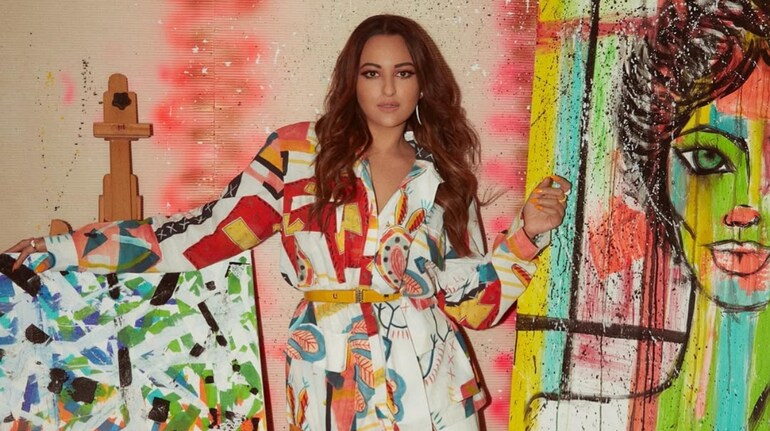
For many people, finding a creative outlet is one of the simplest ways to deal with stress. Some turn to music, others to journaling — for Sonakshi Sinha, it has always been painting. Over the years, the actor has often spoken about her love for art and how it helps her unwind. But what many may not know is that painting was also her quiet form of therapy during difficult times.
In a conversation with Ranveer Allahabadia, Sonakshi opened up about how painting became her refuge when emotions felt overwhelming. “When I used to get sad, I used to paint. My mind used to completely calm down. I used to disappear into a different world,” she shared.
For years, art offered her peace and grounding. The act of mixing colours, playing with textures, and surrendering to the rhythm of a brush brought meditative stillness — a way to process emotions without words.
The Healing Science Behind Her Art Habit
What Sonakshi discovered intuitively aligns with what psychologists recognise as art therapy — a form of psychotherapy that uses creative expression to help people process emotions, manage stress, and build self-awareness.
Psychologist and expansive art-based therapist Shatarupa Chakraborty tells Moneycontrol that art therapy integrates creative expression with traditional therapeutic approaches. “It helps with expression and comes out as an additional form of insight building and goal setting.”
Unlike traditional therapy, art therapy turns abstract feelings into something visible. “A medical professional dealing with someone with a person suffering from anxiety may ask a person to visualise or create a sculpture of how anxiety looks or feels to them, and then have a conversation with that created being,” Chakraborty says. “It becomes more vivid for the person and does not remain just a concept but something outside of you.”
According to Chakraborty, art therapy can be especially helpful for people who find it difficult to articulate emotions. “With traumatised people, it often happens that they cannot articulate what is going on with them. In such cases, using art, movies, or music they are consuming makes the experience more visceral than literal,” she adds.
And even for those who are highly verbal or overthinkers, art can act as a grounding tool. “Sitting down and making art with the idea that this is calmness — looking at what calmness or this feeling looks like to you, drawing it out and interacting with it — can help people have a deeper relationship with that emotion,” she explains.
Is Art Therapy Right for You?
While anyone can benefit from creative self-expression, not every case calls for art therapy. “If you are extremely creative — a 9 or 10 on that scale — and tend to live in your imagination, I would recommend starting with a more structured therapy like CBT,” Shatarupa notes. “But if your creative side is dormant or you rarely engage with art, art therapy can help you reconnect with that part of yourself and grow holistically.”
Also Read: 5 myths about mental health therapists wish everyone knew
She adds that art therapy may not be suitable for people going through a psychotic episode or those experiencing delusions and hallucinations. “If your divergent thinking is already high, you need more grounding structure than creating art,” she cautions.
Sonakshi’s story is a reminder that healing doesn’t always look like meditation or therapy sessions. Sometimes, it’s simply doing something that helps your mind rest — whether that’s painting, dancing, or even tending to plants.
FAQs on Art Therapy
1. What is art therapy?
Art therapy is a form of psychotherapy that uses creative expression, such as painting, sculpture, or music, to help individuals process emotions, manage stress, and build self-awareness.
2. How does art therapy work?
Art therapy involves turning abstract feelings into visible forms, like paintings or sculptures, which can then be discussed and examined. This process makes emotions more tangible and easier to understand.
3. Who can benefit from art therapy?
Art therapy can be beneficial for anyone, particularly those who find it challenging to articulate emotions. It can also aid highly verbal individuals or overthinkers by providing a grounding tool through creative expression.
4. Are there any limitations to art therapy?
Art therapy may not be suitable for individuals experiencing psychotic episodes or severe delusions and hallucinations. Those with extremely high divergent thinking might benefit more from structured therapies like CBT.
5. Do I need to be artistic to benefit from art therapy?
No, you do not need to be artistic. Art therapy can help you reconnect with your creative side, even if it has been dormant or rarely engaged.
Disclaimer: This article, including health and fitness advice, only provides generic information. Don’t treat it as a substitute for qualified medical opinion. Always consult a specialist for specific health diagnosis.

Discover the latest Business News, Sensex, and Nifty updates. Obtain Personal Finance insights, tax queries, and expert opinions on Moneycontrol or download the Moneycontrol App to stay updated!
Find the best of Al News in one place, specially curated for you every weekend.
Stay on top of the latest tech trends and biggest startup news.