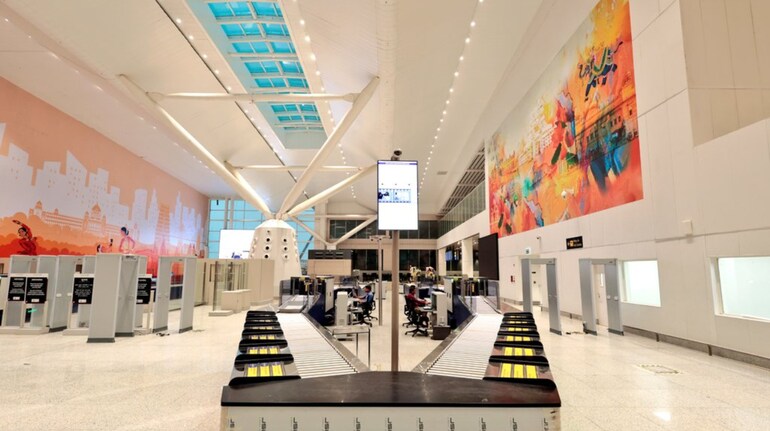
Delhi’s Indira Gandhi International Airport (IGIA) is set to reopen Terminal 2 (T2) by the end of September, after nearly five months of closure for repair work. The move is aimed at easing passenger movement, especially for those transferring between domestic and international flights of Air India and IndiGo, The Times of India reported.
T2 was closed on April 15 for renovation, while the airport’s main runway was shut on June 15 for the upgradation of its Instrument Landing System (ILS). Though the runway was expected to reopen by mid-September, it might become operational a week earlier. Both T2 and the runway are likely to reopen in time for the festive travel rush, according to the TOI report.
Once T2 is back in use, IGIA will become the first airport in India with the capacity to handle over 10 crore passengers a year. This will be possible due to the operation of all three terminals, T1 (4 crore passengers annually), T2 (1.5 crore), and T3 (4.5 crore), along with four runways and supporting infrastructure.
In 2024, the airport handled 7.8 crore passengers, indicating it still has room to grow. Eventually, T2 will be demolished to make space for a larger Terminal 4, which will further increase the airport’s annual capacity to nearly 14 crore passengers.
As per TOI, the Delhi International Airport Limited (DIAL) had considered keeping T2 shut for a longer period to assess how the upcoming Noida International Airport would impact IGIA’s passenger numbers. However, since T2 is located right next to T3, the only terminal handling international flights, it was decided that reopening it would benefit the growing transfer traffic of Air India and IndiGo, both of which have placed large aircraft orders and are expanding rapidly.
T2’s reopening also addresses a major concern, which is the poor connectivity between T1 and the other terminals (T2 and T3). The 7-km distance between them makes inter-terminal travel difficult, especially without an air train. Reopening T2 will improve the domestic-to-international transfer experience for many travellers.
Meanwhile, Mumbai Metropolitan Region (MMR) will also get its second airport around the same time in Navi Mumbai, but the situation there is different. The megacity's Chhatrapati Shivaji Maharaj International Airport has already peaked out and the new hub opens with a capacity of 2 CPA. So from Day 1, MMR's demand for air travel will be more than the capacity of the two airports combined.
In contrast, the National Capital Region will have extra capacity with two major airports, IGIA and Noida. This added flexibility means T2 may continue operations for another 3 to 5 years before being taken down to build Terminal 4, which will take about three and a half years to complete, TOI reported.
Discover the latest Business News, Sensex, and Nifty updates. Obtain Personal Finance insights, tax queries, and expert opinions on Moneycontrol or download the Moneycontrol App to stay updated!
Find the best of Al News in one place, specially curated for you every weekend.
Stay on top of the latest tech trends and biggest startup news.