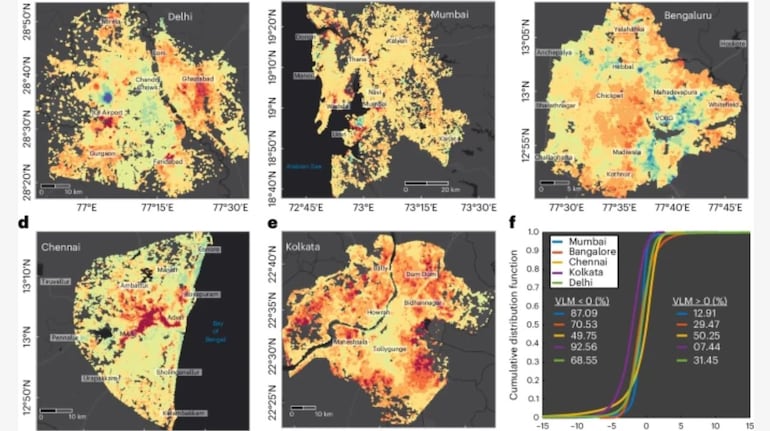
A landmark study has revealed that Delhi is sinking at a faster rate than any other Indian megacity, exposing nearly 1.7 million residents to the effects of land subsidence and placing thousands of buildings at high risk of structural damage.
Published in the prestigious journal Nature, the research identifies the relentless over-extraction of groundwater as the primary cause, creating a "complex and critical nexus" of risk when combined with climate change and extreme weather.
Unprecedented subsidence rates uncovered
The study, titled “Building Damage Risk in Sinking Indian Megacities,” utilised satellite radar observations between 2015 and 2023 to analyse urban areas across the country. It found Delhi exhibited a maximum subsidence rate of 51.0 millimetres per year — the highest recorded.
An area of 196 square kilometres in the capital is affected, the third largest among the megacities studied, after Mumbai (262 km²) and Kolkata (223 km²). Within the National Capital Region, significant subsidence hotspots were identified in Bijwasan, Faridabad and Ghaziabad. The report also noted a localised area of uplift near Dwarka, where the land is rising at a rate of 15.1 mm per year.
Groundwater depletion the primary driver
The scientific analysis directly links the sinking land to the compaction of alluvial layers underground caused by extensive groundwater withdrawals. As explained by the research team, which included scientists from the University of California, Virginia Tech and the United Nations University, when cities pump more water from aquifers than can be naturally replenished, the ground literally sinks.
This problem is exacerbated by shifts in monsoon patterns. The study notes that a "delayed onset and earlier offset" of the monsoon, coupled with variable rainfall intensity, has placed considerable stress on India's aquifers in recent decades.
India is already the world's largest user of groundwater, extracting more than China and the United States combined, according to a separate World Bank report.
A looming catastrophe for urban infrastructure
The immediate and future projections for building damage are stark. The capital currently has 2,264 buildings categorised as being at high risk. The Nature study projects this figure will soar to 3,169 buildings within 30 years and a staggering 11,457 buildings within 50 years.
The researchers cautioned that "differential land subsidence" — where the ground sinks unevenly — poses a particular threat, as it can weaken building foundations and damage critical utility lines. They stressed that not all structural damage is immediately visible, making large-scale assessment and preventive action a "formidable obstacle" for policymakers.
The compounding effect of sinking land, climate change and weather extremes is set to exponentially increase the risk of structural damage across India's urban landscape. As the study underlines, the toll of these interconnected crises is already increasing.
Discover the latest Business News, Sensex, and Nifty updates. Obtain Personal Finance insights, tax queries, and expert opinions on Moneycontrol or download the Moneycontrol App to stay updated!
Find the best of Al News in one place, specially curated for you every weekend.
Stay on top of the latest tech trends and biggest startup news.