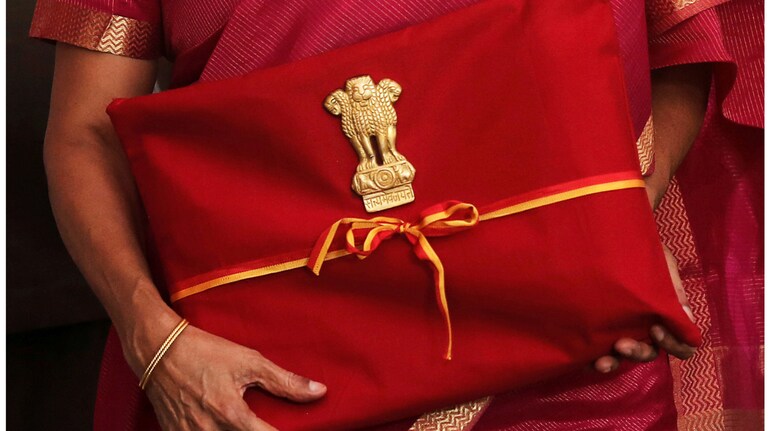
Budget 2025-26’s historic tax rate cuts, making taxable income upto Rs 12 lakh per annum free of income tax was an idea that came from the Prime Minister, Narendra Modi. Finance Minister Nirmala Sitharaman had to convince her team of bureaucrats for six months to be able to announce what is being termed as a ‘historic move’ for the middle class.
“I think the Honorable Prime Minister gave the overall guidance: make it a pro-growth, pro-people, pro-taxpayer budget. These were the overall guidance. The Finance Minister spent hours and hours with the team, considering different options and looking at various imperatives. We have a certain geopolitical situation. We have a global environment that is not so favorable for anyone—it is unpredictable, there are headwinds, and there is geo-economic fragmentation. And we have our own internal aspirations and we have also aspirations to grow, grow faster towards Viksit Bharat. So, we have to really balance various imperatives. But within the overall, the guidance set by the Prime Minister. So, that is how our team went about searching options, working options and doing that. And I think the Prime Minister was very clear that it has to be a taxpayer-friendly budget,” Finance and Revenue Secretary, Tuhin Kanta Pandey told Moneycontrol in an interview.
On boosting consumption through tax cuts
The expectation and hope is that the tax rate cuts will boost India’s fledgling urban consumption. Consumption loans have dropped from 25 per cent growth in FY 24 to 15 per cent in FY 25. On concerns that the tax rate cut would impact about a 4 crore Indians and if the ministry had carried out an assessment of the consumption impact, Pandey added.
“Actually this is a very balanced budget. Because it does not really say that this is, rather than putting it in a binary, this is a consumption budget or this is a capital budget. I think it takes care of everything. Now, you know, consumption, investment, savings are very interlinked. You can't really in a purely segmented way. A lot of consumption leads to investment. A lot of investment creates jobs and also promotes consumption. It's a cyclical. So, we have to really see how the cycle is actually favorably pushed up.”
On the fiscal consolidation plan announced in the budget – for FY 27, India is hoping to achieve 4.4 per cent as against the earlier target of 4.5 per cent.
“On fiscal consolidation path, we have stuck to what we said. I would say it is a non-inflationary. If we were to just stimulate through increasing fiscal deficit, it will have implications for inflation control which we think that the RBI and the government must act in tandem in order to see whether inflation remains under control, if inflation is coming down, we want it to go down further because that will also give another kind of a cycle for boost, which means bringing down the rate. As and when the interest rates come down, that will give another boost to investments as well as consumption."


Discover the latest Business News, Sensex, and Nifty updates. Obtain Personal Finance insights, tax queries, and expert opinions on Moneycontrol or download the Moneycontrol App to stay updated!





Find the best of Al News in one place, specially curated for you every weekend.
Stay on top of the latest tech trends and biggest startup news.