Book Extract
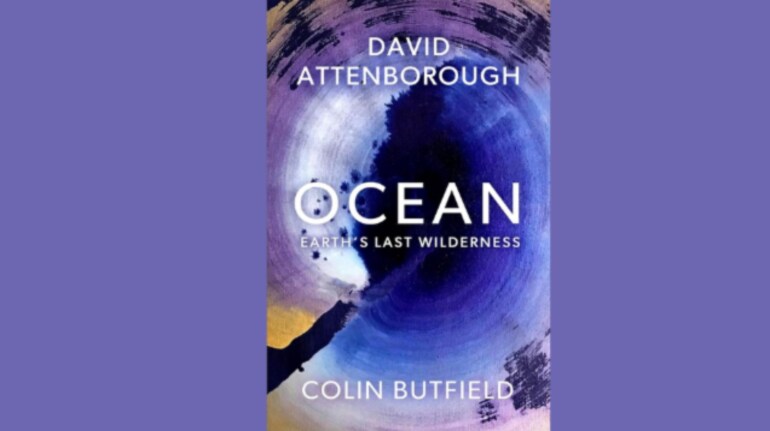
Excerpted with permission from the publishers Ocean: Earth's Last Wilderness Sir David Attenborough and Colin Butfield, published by John Muray/Hachette India
*******
Sending new technology to the deep transformed our perspective on the ocean, but so too did sending it to space. In 1957 we launched our first satellite. Over the next sixty years satellite technology advanced to such an extent that it could be used to discover thousands of seamounts previously hidden below the ocean surface, track tagged animals to reveal their migrations and provide insights into ocean hot spots and superhighways for marine wildlife. A combination of visual sightings and tagging built up a picture of blue whales across the world. Distinct subspecies and populations were identified and some truly massive migrations recorded that revealed hitherto unknown connections between different parts of our ocean: for example, research showed that our whale, a subspecies called the northern blue whale, would probably spend her entire life in the north-east Pacific travelling from as far north as Alaska to as far south as Costa Rica.
But satellites and submersibles could only provide part of the picture. To understand the connections between features in the ocean and species migration – why certain species take the routes they do – requires detailed mapping, and for this sonar has once again been transformational.
Since the late 1980s multibeam sonar has been providing highly detailed images of a large area of the sea floor. The most recent versions send out over 1,500 sonar soundings a second from a ship. The sonar beams fan across the bottom creating a sound map that a computer can turn into a visual representation of the sea floor. In fact, by the end of 2023, 25 per cent of the entire sea floor had already been mapped to a resolution of 100 metres or more, and a major project is currently under way to map the entire seabed by 2030. The picture is complemented by split-beam sonar, which sends and receives sound pulses in the water column and as a consequence can detect and create sound maps of the species that are swimming in that area, although of course it can only detect what is there at that exact moment.
Even that limitation can now be addressed by advances in DNA sampling, which enables scientists to detect what has passed through a water column. Environmental DNA tests sample the water for traces of marine species – skin, faeces, mucus – analysing the DNA of the species that have swum through an area in the preceding few hours without ever needing to catch or even see them.
These astounding technological advances, combined with ships that can stay at sea for months at a time and remote monitoring systems in buoys that provide constant year-round information on waves, water temperature and chemistry, have revolutionised our understanding of the ocean. In the lifetime of a single blue whale we have gone from skimming the surface of our ocean to deeply compre- hending its importance. Yet while these new technologies have given us a whale’s-eye view of the ocean over the last ninety years, they have also enabled us to change that whale’s world beyond recognition.
It is little surprise that when we overlay a map of global fishing effort (where we have fished the most) on a world map it correlates with where science has recorded the greatest concentrations of nutrients and most significant gatherings of marine life. Rather like whales, fishing boats can also now travel for months, detect seamounts and use sonar to locate their prey. We have become so good at catching fish that, it has been calculated, as of 2024 humans have reduced the biomass – the life – in the ocean by 2.7 gigatonnes. For context, the entire human population consists of about 0.4 gigatonnes of biomass, so one can imagine the imbalance created by removing almost seven times that amount of life from the ocean ecosystem.
But the changes in our whale’s world are not limited to overfishing. The blue whale, like many other open-ocean species, has changed its diet, behaviour and navigational ability over millions of years to efficiently exploit its place in our planet’s diverse and complex ocean – and, as we have seen, this niche is particularly narrow in that the whale predominantly feeds on krill and its body is perfectly evolved to collect this source of food. This makes it a highly efficient predator but also highly susceptible to anything that changes the availability of krill or its ability to find it. We still don’t know exactly how blue whales blend their different senses to traverse the ocean, but we do know that sound is extremely important and that there are broad routes along which they migrate at different times of year.
Further, we will have affected their senses and those routes in more ways than we can possibly comprehend.
Tens of thousands of large ships transporting goods around the world generate noise and accidentally but inevitably strike migrating whales. The warming, acidifying ocean is changing the distribution of life within it, making time-worn feeding and breeding patterns unreliable. By deliberately removing the larger species in the ocean for food, our nets, trawls and dredges often also destroy or damage entire habitats, disrupting intricate food webs in ways we have yet to fully discover.
But with our newfound understanding we have also learnt about the ocean’s power of regeneration. We now understand so much more about where life flourishes and how we can help it to do so. We have recorded examples of restoration and recovery, and we can – if we choose – monitor and alter our fishing practices to achieve a balance where the ocean can both provide for our needs and thrive. If a calf were born to our blue whale today then it could very well live into the twenty-second century. In a world where we apply the same foresight and understanding that once saved her species to protecting her home, she could live to see a wondrous transformation. Her feeding grounds in the cold, high-latitude seas will be full of plankton, krill and countless species of fish. Her calves will be born in safe waters fringed by mangroves and corals. When she crosses the open ocean her migration routes will be free of nets and the seamounts she passes will be full of life. And when she comes close to shore, the seabed will be alive once again with kelp, corals, mussels, lobsters and oysters. Perhaps on her voyages she will also pass our descendants – members of a society in balance with the natural world that provides it with food, livelihoods and inspiration, living in a time in which humankind has grown beyond trying to rule the waves and instead has finally succeeded in thriving alongside the greatest wilderness on Earth.
Over the lifetime of a single blue whale we have discovered more about our ocean than in the rest of human history combined. But will we discover the foresight to help the ocean recover from the damage we have inflicted upon it during the same period?
*********
Sir David Attenborough and Colin Butfield, Ocean: Earth's Last Wilderness John Muray/Hachette India, 2025. Pb. Pp.352
From the icy oceans of our poles to remote coral islands, Sir David Attenborough has filmed in every ocean habitat on planet earth. In fact, he is known to be (probably one of the rare few) who has been engaged with all kinds of audio-visual technology, across formats, from the time television was launched till date (2025). In his centenary year, with long-term collaborator Colin Butfield, he shares the story of our last great, critical wilderness, and the one which shapes the land we live on, regulates our climate and creates the air we breathe.
Through one hundred years, eight unique ocean habitats, countless intriguing species - and through personal stories, history and cutting-edge science — Ocean uncovers the mystery, the wonder and the frailty of the most unexplored habitat on our planet. And it shows its remarkable resilience: it is the part of our world that can, and in some cases has, recovered the fastest, and in our lifetimes we could see a fully restored marine world, even richer and more spectacular than we could possibly hope, if we act now.
Ocean: Earth's Last Wilderness is the book accompanying the last film that Sir Attenborough will ever make. In India it was released on 8 May 2025 by Jio Hotstar. We are honoured that Sir Attenborough gave us permission to publish this book extract. It is from the opening chapter wherein he ruminates about the discoveries in the oceans that have been noticed and documented by humans. The vast advancements in technology have helped tremendously. Whether it is the ability to scan the depths of the ocean and map the ocean bed to relying upon satellite imagery to spot sea mounts.
In this chapter, Sir Attenborough uses the lifetime of a blue whale – some ninety years -- as a handy benchmark to mark the timeline of modern ocean discovery. Apparently, blue whales have been recorded in all the ocean basins; only the frozen parts of the Arctic and Southern Ocean were out of their reach, something that he is convinced will surely change over the coming years as whale numbers recover and the sea ice retreats. Ocean is a fascinating film and an equally fascinating book. For once, the print product accompanying a film is perfect.
It is a book almost a century in the making, but one that has never been more urgently needed.
Sir David Attenborough is a broadcaster and naturalist whose television career is now in its seventh decade. After studying Natural Sciences at Cambridge and a brief stint in publishing, he joined the BBC in 1952 and spent ten years making documentary programmes of all kinds, including the Zoo Quest series. In 1965, he was appointed Controller of a new network, BBC2, and then, after four years became editorially responsible for both BBC1 and BBC2.
After eight years of administration, he returned to programme-making to write and present a thirteen-part series, Life on Earth, which surveyed the evolutionary history of animals and plants. This was followed by many other series which, between them, surveyed almost every aspect of life on earth.
Colin Butfield is co-founder of Studio Silverback, Executive Producer of the WWF's Our Planet project and an advisor for the Earthshot Prize.
Discover the latest Business News, Sensex, and Nifty updates. Obtain Personal Finance insights, tax queries, and expert opinions on Moneycontrol or download the Moneycontrol App to stay updated!
Find the best of Al News in one place, specially curated for you every weekend.
Stay on top of the latest tech trends and biggest startup news.